



Ah, Chief Dwasaho! I come bearing gifts. I have hounded you all year for failing to do right by the people of this land. We mourned the deaths of whistleblowers together, or was it just me? I exposed the duplicity of those who earn a living from the public purse yet deploy public power for private benefit. I told sections of the political establishment that their shallowness is only outweighed by their ignorance.
I crunched the numbers to expose the lie of the so-called New Dawn. I went all in to understand the characters in Khumalo Productions™, that so-called Big Five cartel parading as leadership. I laughed at those who insisted that I, a son of Mamlambo, did not matter. Yet here I am. A talking head on television and, dare I say, radio, unpacking the long-running telenovela that is South Africa’s politricks (sic).
We have hardly ever agreed on anything, my leader. I am no fan of leaders who lie about their people while invoking their names. I have never been persuaded by slogans that collapse under the weight of lived reality.
But as Christmas cheer descends on the Republic of the Guptas, I feel a twinge of something unfamiliar. Not forgiveness. Not relief. Just a pause.
As Christmas cheer wafts over the Republic, I agree to give you a break.
Just not your flowers.
Not yet.
Green Shoots Economy
Comrade Leadership, I bumped into Green Shoots Economy by accident, the way one often collides with inconvenient hope in South Africa. In your case, the way you bump into the tenderpreneur’s house while jogging. It happened after reading my colleague Stephen Grootes’ early December column, After the Bell: Of 0.5% growth and my undue optimism. Readers of this column know that we do not have an Official Policy of Undue Optimism, except on Mondays, and even then, it is provisional, fragile and subject to cancellation by lunchtime.
Grootes’ intervention was sobering in its restraint. No trumpets. No manufactured triumphalism. Just the cold arithmetic of 0.5% growth, presented not as salvation but as a statistical twitch in a country accustomed to paralysis. In context, South Africa’s economy expanded in the third quarter of 2025, growing 0.5% on a quarter-on-quarter, seasonally adjusted, basis, following a 0.9% rise in the second quarter. This marked the fourth consecutive quarter of positive growth.
That is how I arrived at the language of Green Shoots. Not as a slogan, but as a question. Who is seeing them, who is naming them, and who benefits from insisting they are real?
Thinking zone: No intellectual laziness allowed
And yet, dismissing the concept entirely is also a form of intellectual laziness, my leader. Beneath the noise, beneath the politics of permanent crisis, something uneven and tentative is stirring. Not an economic miracle. Not a turnaround. Just movement.
What makes Green Shoots Economy intriguing is that it does not ask us to suspend disbelief. It does not demand applause. It does not pretend that 0.5% growth reverses decades of structural failure, State Capture or the daily grind of poverty. Instead, it forces an uncomfortable reckoning: what does recovery look like in a country where collapse has become normal?
Perhaps it looks like marginal improvements that do not trend on social media. It looks like stabilisation rather than acceleration. It seems like a state relearning the basics of governance while citizens remain rightly impatient.
But neither is cynicism a substitute for analysis.
Cautious optimism
For now, I remain cautious, my leader. Curious, but unconvinced. Willing to look, but not ready to celebrate. In a country where hope has been repeatedly weaponised against the poor, undue optimism is not just naive, it is irresponsible.
Still, accidents happen. Sometimes you stumble into an idea not because you were looking for it, but because it refused to stay buried.
So when I read that South Africa had been removed from the Financial Action Task Force (FATF) grey list in October, my first reaction was an involuntary shrug. So, what?
Yet, the development is significant. South Africa is no longer classified as a jurisdiction under increased monitoring for weaknesses in its anti-money laundering and counter-terrorism financing regimes. It signals that the country has satisfied the FATF by addressing a defined list of technical and enforcement deficiencies that led to greylisting in February 2023. You, my leader, were quick to frame the decision as a vote of confidence: investor sentiment, financial credibility and global standing. The usual triumvirate of official reassurance made its appearance, polished and ready for deployment.
Poor, but got standards
Then something happened that felt entirely unrelated to a country bogged down by illiteracy, its own economic / political goals, and the sheer inertia of its political leadership: Standard & Poor’s (S&P) Global Ratings upgraded South Africa. The announcement landed without fireworks, confirming that S&P had lifted the country’s long-term foreign-currency sovereign credit rating by one notch, from BB- to BB, the first upgrade in almost two decades, while maintaining a positive outlook. According to the agency, the decision reflected improved fiscal discipline, stabilising debt dynamics and the return to a primary budget surplus.
The upgrade does not rewrite the country’s sorry story. It does not cancel unemployment, inequality or political decay. But it does interrupt the neat narrative of unbroken decline. It is not redemption yet. It is something rarer and more awkward: a pause in the fall.
Numbers are numbering
In the 2025 budget cycle, the National Treasury projected a primary budget surplus—where government revenue exceeds non-interest spending – at about 0.8% of gross domestic product (GDP). That would be the first back-to-back surplus of its kind in roughly 16 years, signalling a rare moment when the state’s accounts produce more than they consume before debt interest is counted. This surplus is a core pillar of the fiscal strategy embedded in the Medium-Term Expenditure Framework: stabilise debt, reduce reliance on borrowing and build a buffer for future shocks.
Another uncomfortable fact has crept into the picture, largely ignored in the noise. The South African Revenue Service (SARS)collected more than was budgeted. By the end of September 2025, SARS had collected a net R924.7-billion in revenue against the estimates in the 2025 national budget, creating an R18-billion surplus on expected collections at that point in the fiscal year. Much of that over-performance came from stronger compliance efforts and higher receipts from personal income tax, corporate levies and VAT. Nearly half of the better-than-estimated result was attributed to improved enforcement.
Investor confidence uptick
And the cherry on top, my leader, South Africa’s first sovereign Infrastructure and Development Finance Bond drew bids well in excess of the National Treasury’s offer. Investors placed more than R26-billion in orders against an issuance of about R11.8-billion, more than twice subscribed. The success of the auction also reflects a rare alignment of fiscal credibility with investor appetite at a time when other emerging markets struggle to attract long-term capital.
Owing to your reform agenda through Operation Vulindlela, South Africa has begun to see a rare injection of private capital into the country’s long-neglected rail network. Traxtion has committed about R3.4-billion to buy and modernise 46 diesel-electric locomotives and 920 wagons, the most significant private freight-rail investment in the nation’s history and a vote of confidence in rail reforms. This rolling stock, sourced from KiwiRail in New Zealand and upgraded locally in Rosslyn, is intended to ease chronic capacity constraints that have hobbled freight logistics and weighed on export corridors critical to the economy.
At the same time, Transnet has signed a 25-year concession with International Container Terminal Services Inc to operate and modernise Pier 2 at Durban’s container terminal with about R11-billion in private capital, signalling a broader pivot towards public-private partnerships to revive infrastructure. Pier 2 matters because it is the beating heart of South Africa’s trade gateway. It handles roughly 72% of the Port of Durban’s total throughput and about 46% of all container traffic in South Africa, making it the country’s busiest container facility.
Together, these deals signal that where policy clarity and credible governance exist, private capital will flow. Oh yes, we had only four days of load shedding this year, and Eskom made a profit.
Till next year, my man. Send me to meet the Son of Man.
This column returns in the New Year. Season’s greetings to all our readers. DM
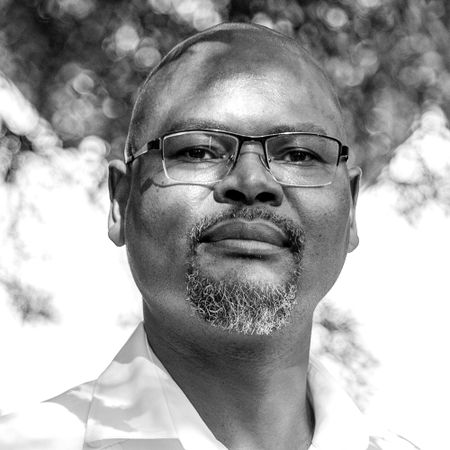
Bhekisisa Mncube is an author and columnist who won the national 2024 Standard Bank Sikuvile Journalism Award for columns/editorials, as well as the same category at the regional 2020 Vodacom Journalist of the Year Awards.