



For years, 16-year-old Akhona Ndlela has walked more than 12km daily along unsafe gravel roads to reach her school in the rural Eastern Cape. Her grandmother, who relies on an old-age grant, must often choose between putting food on the table or paying to use a neighbour’s car during the rainy season.
Although human rights such as the right to education and food exist on paper, they are often difficult to claim in practice. As we observe Human Rights Day internationally under the theme “Human Rights, our Everyday Essentials”, we reflect on the origin of this day, its application to the South African context, and the role of public interest legal services organisations in helping individuals and communities claim their rights.
A milestone in the modern story of human rights took place when the world, reeling from the horrors of World War 2, in 1948 adopted the UN Universal Declaration of Human Rights that is observed annually on Human Rights Day. Nations collectively declared that every human being has inherent dignity and the rights to work, housing, equality, and to participate in the life of their community, among others.
In that same year, South Africa took a different path, formalising and institutionalising racial segregation, discrimination and dispossession through apartheid. It took nearly five decades of struggle against the apartheid government and its discriminatory laws before the values embodied in the Universal Declaration of Human Rights would reach South Africa’s legislative framework.
Struggle for dignity and equality
Even under the repression of apartheid, the struggle for dignity and equality continued. In 1955, the Freedom Charter was drafted, expressing the aspirations of South Africans for a just and inclusive future. In the years that followed, activists in townships and underground operations carried forward the principles of the charter. These principles affirmed equal human rights, decent living conditions and shared citizenship. They would later shape the Reconstruction and Development Programme and guide the negotiated transition to a democratic Constitution.
The political transition in 1994 was a moral reckoning and presented the promise of a better future. Our Constitution, adopted in 1996, was hailed globally for being progressive as it drew on the Universal Declaration of Human Rights, weaving the declaration’s ideals into a Bill of Rights that recognised not only civil and political rights, but also socioeconomic rights. The Constitution’s promise was clear: never again would anyone’s humanity be negotiable.
Thirty years into South Africa’s democratic dispensation, our progress is visible but uneven. Discriminatory laws have been struck down, and communities have used the Constitution to uphold their rights. Yet inequality, unemployment and gender-based violence continue to shape daily life. The everyday essentials, the rights to adequate housing, healthcare, food and basic services remain elusive for millions, and corruption has eroded the public’s trust in the government.
In the face of these challenges, human rights and public interest legal services organisations play a vital role, existing at the intersection of the law and lived experience. These organisations ensure that the rights enshrined in the Constitution are realised in practice by using a combination of litigation, research and advocacy to challenge systemic injustice and amplify the voices of those who are often ignored by the state.
They support communities and individuals at the forefront of this ongoing struggle and help protect and advance their rights across a range of areas, such as affirmation of the right to housing and the state’s obligation to realise this right, promoting gender equality, securing access to healthcare, and safeguarding communities affected by environmental harm.
They have been central in victories that have positively affected the lives of millions of people, such as the roll-out of anti-retroviral treatment, the provision of school meals during the Covid-19 pandemic, and the expansion of access to social protection.
Public interest legal services organisations have used the law as a vehicle for change, ensuring that the voices of everyday South Africans are reflected in the policies that affect their daily lives. They support the agency of individuals, community-based organisations and social movements and provide them with expert legal support that would otherwise be unaffordable.
First point of contact
The sector extends well beyond the large, well-known organisations and encompasses hundreds of community advice offices across the country, which often serve as the first point of contact for marginalised and vulnerable communities.
Despite their importance, the work of these organisations has increasingly become contested or perceived as a threat. They and the movements they support bear the brunt of the hostility from both the state and some sectors of society.
They have faced death threats and intimidation, and in extreme instances human rights defenders and social movement leaders such as those of Abahlali baseMdjondolo have been assassinated for defending the rights of ordinary people. They have been labelled as “anti-South African”, accused of advancing foreign agendas or serving the interests of their funders rather than those of South Africans.
The spreading of misinformation has become another tool used to undermine these organisations and the communities they serve. False narratives, particularly disseminated through social media, distort public understanding and discourse, misdirect frustrations, and weaken trust in institutions that were designed to protect vulnerable people.
The harm caused by such misinformation goes beyond the organisations. A stark example is the aftermath of the Usindiso building fire, in which early narratives blamed the residents and focused heavily on the idea of “hijacked buildings”.
Systemic failures
However, the Khampepe Commission of Inquiry into the fire, established by Gauteng’s premier to investigate the circumstances surrounding the tragedy found that only a small fraction of inspected properties involved such activity, while the overwhelming drivers of the tragedy were systemic failures and the absence of safe and affordable housing options.
When these misleading narratives take hold, they obscure the real structural causes of injustice, hinder accountability and deepen stigmas attached to marginalised communities, thereby posing a threat to human rights and our democracy.
Three decades since the transition to democracy, and seven decades since the adoption of the Universal Declaration of Human Rights, global and national human rights records remain mixed. Around the world, democratic spaces are shrinking, while conflicts, displacement, inequality and authoritarianism are testing the resilience of human rights systems. As we observe Human Rights Day, we are reminded of those globally and nationally who fought for the rights we enjoy.
We are also reminded of the many Akhonas in our country who cannot fully realise their dreams because they must choose between survival and the enjoyment of their rights. These rights cannot be taken for granted – they are lived realities, measured in the kilometres walked, meals sacrificed and futures placed at risk.
Upholding our own rights as well as respecting the rights of others is our collective responsibility. Basic actions we can take include learning more about these rights, speaking out when rights are being violated (ours and others), and countering misinformation and inflammatory speech on social media.
Human rights are our everyday essentials, and when any rights are eroded, we are all poorer for it. DM
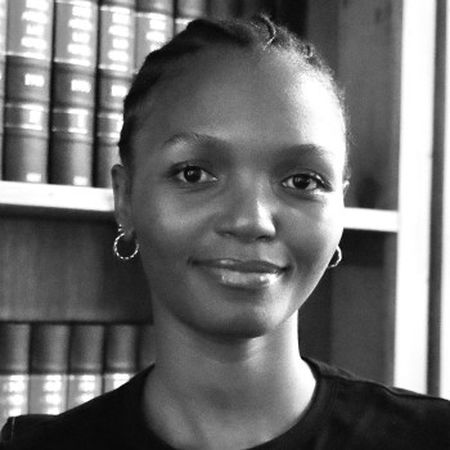
Boitumelo Mabogoane is a research intern at the Socio-Economic Rights Institute.
Comments
Scroll down to load comments...