



Secretary Rubio,
I have read your Substack post from 3 December 2025.
From the outset, let me extend congratulations to the US on assuming the G20 Presidency. We offer our sincere wishes for a successful term, one that we hope will serve the cause of global unity and inclusive progress.
Your words, however, compel me to speak – not merely as a representative of a government, but as a voice from a nation whose very existence is a testament to a profound truth: that the deepest divides can be bridged. Not through dictation, but through dialogue, not through power alone, but through unwavering principle, not through unilateral action but global solidarity.
On the nature of true leadership
South Africa is a founding member of the G20. No single member of the G20 has a unilateral right to exclude South Africa from the G20.
You draw a contrast in our approaches to G20 leadership. Let us discuss that contrast honestly, guided by the wisdom that today’s adversary can indeed be tomorrow’s partner in peace.
South Africa’s presidency was built on a simple, powerful belief: that treating Africa and the Global South as equal partners and honestly addressing the systemic macroeconomic issues that impede their growth is not an act of charity, but a strategic imperative for a stable, prosperous world.
We reaffirmed multilateralism and the United Nations because our own liberation was won not in isolation, but through the solidarity of a global community that recognised a shared stake in justice. We understand, in our bones, that the world is an interconnected whole. The poverty, instability, or environmental distress in one corner of it does not remain there; it becomes a burden – or a crisis – for all.
The success of our G20 presidency was a result of the conducive environment for the free flow of ideas that South Africa has created. The people of South Africa created a hospitable environment in the true spirit of Ubuntu, which led to the South African G20 being a people’s G20, and many delegations attested to this in their public comments.
For example, as our President Cyril Ramaphosa noted recently in a speech:
- A German delegate is said to have commented: “I’ve attended summits on six continents. I’ve never experienced warmth like this”;
- A Japanese delegate had this to say: “Your security guards smile while being vigilant. Your drivers share stories while navigating. Everyone – from the protocol officers to the coffee vendors – treats us like welcomed family, not foreign dignitaries”; and
- A French delegate shared something profound: “We came to discuss economic frameworks. But what we’ll remember is how your people made us feel. That’s not soft power – that’s real power.”
World leaders, diplomats, delegates and observers have been sharing their impressions online as well. For example, Prime Minister of India Narendra Modi said: “Thanks to the wonderful people of South Africa and the government of South Africa for organising the summit.” The managing director of the International Monetary Fund, Kristalina Georgieva, praised South Africa’s “incredible hospitality”.
Germany’s Chancellor Friedrich Merz posted: “In a difficult international environment, it is important to preserve the G20 as a forum for global coordination – and to integrate Africa firmly. Thank you for your hospitality and ambitious presidency in these turbulent times.” The UN Development Programme’s South Africa Representative wrote: “South Africa delivered a G20 that showed the world what African leadership looks like – dignified, strategic and people centred.”
It is a matter of public record that the US chose not to attend our G20 meetings. Given that absence, the notion of our “sabotaging” consensus is not just incorrect, it misunderstands the very purpose of a forum like the G20. Our role as host was not to force agreement, but to create the conditions for it: a table of equals, governed by the spirit of Ubuntu.
That spirit – “I am because we are” – is not a slogan. It is the philosophy that steered our nation away from the precipice of bloodshed and towards reconciliation. It is what led delegates from across the world to describe our gathering as a “people’s G20”. True leadership doesn’t mean everyone leaves getting everything they want; it means everyone leaves feeling they have been truly heard.
On our sovereign path of healing
You then turn to critique our domestic policies and by extension our national interest. Here, I must speak with clarity, for to misunderstand our journey is to misunderstand the enduring scars of inequality and the long road to healing.
South Africa today is governed by a 10-party Government of National Unity, not the ANC alone. Ours is a vibrant, contested and living democracy, a definitive repudiation of the tyranny of a single race that once ruled us.
Our policies of redress are not a political invention. They are the fulfilment of a promise made to all South Africans as we emerged from the darkness of apartheid. That promise is enshrined in our Constitution, a document born from what many called a miracle of negotiation, or to borrow from your Supreme Court justice, the late Ruth Bader Ginsburg, the best constitution in the world. Its preamble is a vow to “heal the divisions of the past and establish a society based on democratic values, social justice and fundamental human rights”. The Constitution of South Africa enjoins us to transform our society for the better through the rule of law.
Thirty years into our democracy, we are not a perfect society, and it is still not uncommon to meet a beneficiary of our transformative policies who is the first of their family, or even their community, to enter a particular profession. That is the living legacy of apartheid, a systemic racial inequality that once permeated every walk of life and whose shadows we are still dispelling.
Do not take my word for it. Listen to the words of our founding president, Nelson Mandela. In 1997, he stated: “If we are genuinely interested in ending the old social order and bringing in a new one, characterised by justice and equity… the economic power relations represented by the reality of the excessive concentration of power in a few white hands have to change. We make this demand… because we cannot see how it would be possible to pull our country out of an economic crisis… while we perpetuate this power structure.”
And in 1995, he reminded us: “With freedom and democracy, came restoration of the right to land. And with it the opportunity to address the effects of centuries of dispossession and denial.”
As you can see, in Madiba’s political imagination, reconciliation and redistribution were two sides of the same coin, not opposites nor mutually exclusive.
This is the same Nelson Mandela who spent 27 years in prison for fighting that system of racial tyranny, and for much of that time, until the year 2008, his name remained on a US official list as a “terrorist”. History, we have learnt, often renders a different judgment. It reminds us that one nation’s “terrorist” can be another’s – and ultimately, the world’s – moral beacon. It teaches us profound humility in judging the complex, painful journeys of other nations towards justice.
Our democratic journey is but 30 years young. It asks an immense task: to dismantle the entrenched architecture of more than 300 years of colonialism and apartheid. No nation on Earth has performed such radical surgery on itself overnight. We are building, brick by brick, the foundation of a new society. Yes, our economy has faced profound challenges. But new green shoots are emerging – historic investments in a just green energy transition, a renewed and systemic fight against corruption, and the resilient determination of a people finally claiming their rightful place in their own land.
Emerging from a challenging past, South Africa builds on this to ensure that living standards improve for all. South Africa’s growth performance has strengthened substantially since the end of Apartheid in 1994. For example, in 1994, South Africa’s GDP was R3.6-trillion (in constant 2023 prices), and by 2024 the size of our economy was R7.3-trillion. Indeed, like many countries, we had our domestic challenges, including State Capture, and we are rebuilding from that, but to suggest that our economy is a failure is an exaggeration.
I must also state that, because of the democratic government, South Africans, as individuals, are, on average, 1.5 times better off, by monetary measure, than in 1994, the dawn of democracy. More importantly, when we measure using the Human Development Index, which combines health and education indicators, we have advanced from a Medium to a High HDI profile.
Today, more than 95% of households have access to electricity, and piped water now reaches close to 90% of households. This was not the case in 1994, when access to basic services was structured along racial lines, with white South Africans given preference over all other groups. Consider this for a moment: in 1994, only 40% of black South Africans had access to electricity, compared with virtually universal access for white households. This skewed picture has only changed because successive democratic administrations did not waver on redistribution.
You also state that “President Trump has rightly highlighted, the South African government’s appetite for racism and tolerance for violence against its Afrikaner citizens have become embedded as core domestic policies. It seems intent on enriching itself while the country’s economy limps along, all while South Africans are subject to violence, discrimination, and land confiscation without compensation.”
This could not be further from the truth. In the farming sector you highlight, where Afrikaner farmers continue to dominate and power the country’s food security, along with other farmers, we have made progress. South Africa’s farming sector has more than doubled in value terms since 1994. It saw significant growth from 2000 onward under the democratic government. South Africa is now the only African country in the top 40 global agricultural exporters, and exports are reaching record levels, just under $14-billion in 2024, and set to surpass this figure in 2025. No country with land grabs and invasion would reap such success.
Indeed, we continue land reform through a just and equitable approach to ensure the farming sector is inclusive. We cannot have a farming sector where the majority of African farmers produce only 10% of the commercial output. But to build a shared prosperity environment, the South African government is utilising a market-based principle of land reform and securing property rights. To show that farmers are not threatened, the farming sentiment in the country remains robust, and commercial banks continue to invest in the agricultural sector. This is a show of confidence in our system.
We must all appreciate that, given the history of racial discrimination in South Africa, which excluded black people from the mainstream economy and also excluded black people from critical economic areas, the inclusion programmes and prioritisation of Black people’s inclusion remain fundamental, transformation is a constitutional imperative that Mandela stood for.
Read more: What is to be done? It’s time for SA to ditch its failed approach to Washington
A final word of shared hope
Secretary Rubio, the world is watching. It is growing weary of double standards. It is tired of lectures on democracy from those who seem to have forgotten that democracy, at its best, must listen as much as it speaks.
We do not seek your approval for our path. Our path is our own, chosen by our people and guided by our sovereign laws. But we do seek – and we will always extend – a hand of respectful partnership.
We believe in a world where nations can disagree yet still find common ground for the sake of a child’s health, a community’s stability and our planet’s future. That is the world Madiba fought for. That is the world we, in South Africa, are still building every single day.
In that spirit of shared humanity and clear-eyed hope, we remain open to dialogue, committed to maintaining our overall relations.
Yours in mutual respect. DM
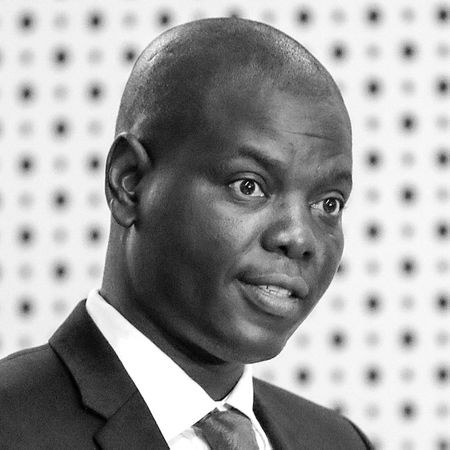
Ronald Lamola is Minister of International Relations and Cooperation.