



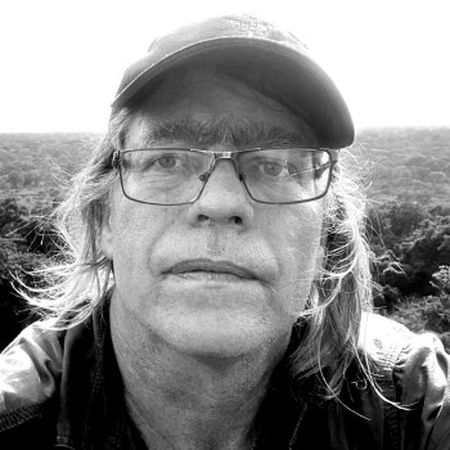
Twenty-five years ago, Dr Ruth Kansky and I began a programme that we believed would become a global model for urban wildlife coexistence: protecting the last wild baboons of the Cape Peninsula. We wrote the first comprehensive baboon management strategy for the Peninsula at the turn of the millennium, funded by the Table Mountain Fund, and set out a simple goal: keep baboons wild, keep people safe, and keep conflict tolerable on both sides of the fence.
Against all odds, the animals survived two decades of urban expansion, recreational pressure, shrinking habitat and intensifying human conflict. In many respects, the programme initially worked. When systematic counting began in the mid-2000s, there were roughly 248 baboons living in troops bordering urban areas. By 2020 that number had climbed to about 445, and by 2022 to just under 500, with estimates of 600 or more across about 16 to 17 troops on the wider Peninsula.
On paper, this looks like a conservation success. In reality, the story is a lot messier – and the baboons of the southern Peninsula are now closer to disappearing than at any point since this work began.
Today, authorities are actively considering the removal of the Waterfall and Seaforth troops from Simon’s Town – together about 58 baboons. If these removals proceed, the number of baboons south of Ou Kaapse Weg will fall below the level it was when Ruth and I first started this work. This would happen in a national park, inside a Unesco World Heritage Site, in a city that markets itself globally on the strength of its nature.
After a quarter of a century of management, research and millions of rands spent, we are going backwards.
There is a persistent misconception that baboons raiding houses are “thriving”. They are not. Urban areas offer high-energy food – bread, fruit, ice cream, pet food, overflowing wheelie bins – which is easier to access than spending hours foraging on the mountain. But we know from the City’s own educational material that such diets have negative health consequences and can alter population dynamics in ways that ultimately increase conflict and harm.
When baboons enter neighbourhoods, they are hit by cars, attacked by dogs and shot with everything from air rifles to live ammunition. Welfare reports from the Cape of Good Hope SPCA detail injuries from dogs and firearms, drowning in swimming pools, poisoning and a high rate of human-caused mortality in troops that spend significant time on the urban edge. Infants die during desperate escapes across roofs and balconies. The constant stress of being chased, harassed and punished erodes their health cohesiveness as a troop and their ability to raise young.
On the human side, families are frightened in their own homes, unable to leave windows open or food unattended. People invest in increasingly extreme security measures. Property is damaged. Social media fills with videos and outrage. Neighbours turn on one another – “baboon huggers” versus “shoot them all” – and the conflict between humans can become as toxic as the conflict between humans and baboons. Independent surveys of resident attitudes show deeply polarised communities living with daily anxiety, anger and fatigue.
This is not coexistence. It is a slow-burning crisis.
While this unfolds, another threatened species is caught in the crossfire. At Boulders Beach, one of the world’s best-known African penguin colonies, penguins are occasionally losing eggs and chicks to baboons entering the colony in search of food. The same access routes are used by caracal, which have been implicated in mass penguin killings – in one documented case, two caracals killed nearly 130 penguins over two months, and other events have seen dozens of birds killed in a single night.
African penguins have already declined to about 2% of their historical numbers and are classified as endangered on the IUCN Red List. A 2018 study suggested that West Coast colonies could be functionally extinct by the mid-2030s if current trends continue. The birds naturally prefer offshore islands, where they are safer from terrestrial predators such as caracal and baboon, but at Boulders and other mainland sites the proximity to human settlement has changed the risk landscape completely.
So we now have one threatened species damaging another threatened species in a national park, largely because we have failed to manage the human-wildlife interface properly.
Ecologically, losing baboons would be catastrophic for the Peninsula. Chacma baboons are not simply charismatic primates and a drawcard for tourists; they are major seed dispersers and ecosystem engineers within fynbos and move nutrients from low-lying areas to nutrient-poor high-lying areas where they sleep. Studies and ecological assessments emphasise their role in dispersing seeds and potentially aiding germination, especially in post-fire landscapes where they forage on exposed seeds and early regrowth. They are part of the machinery that keeps this globally unique vegetation type functioning. Remove them, and you erode the resilience of the entire system. There is no neighbouring baboon population waiting to recolonise the southern Peninsula. Once they are gone, they are gone.
How did we get to the point where, having increased the Peninsula’s baboon population, we are now debating mass removals and even culling?
The original management model relied heavily on field monitors initially meeting the baboons at their sleeping sites, maintaining group cohesiveness and herding them away from residential areas when the troops were moving into them, then pulling back when the troop started foraging. This changed to aversive conditioning (herding baboons away from town with non-lethal deterrents) and attempts to secure waste and food sources. These tools did reduce raiding in some areas and allowed the population to grow numerically, particularly in the northern subpopulation around Constantia and Tokai, which has increased by nearly 65% since 2012. By contrast, the southern subpopulation, which includes Simon’s Town, has grown by only about 10% over the same period.
At the same time, urban sprawl, vineyards, tourism and recreational use of baboon habitat all intensified, tightening the squeeze on the animals’ natural foraging grounds. The Cape Peninsula Baboon Strategic Management Plan, finalised in 2023, clearly acknowledges that baboons prefer low-lying land for foraging and high cliffs or trees for roosting, and that most of that low-lying land has now been transformed into residential and agricultural development.
We created a landscape in which the most nutritious, easily accessed food is now in people’s kitchens and vineyards, not on the mountain – and then we are surprised when baboons choose those resources. Management reports, theses and City documents have warned for years that relying solely on changing human behaviour or “baboon-proofing” individual houses is naïve as a primary strategy. The incentives for the animals are too strong.
As conflict grew, so did frustration. Recent reporting from Constantia and other suburbs describes residents firing paintball guns and “bear bangers” at baboons, and in some cases resorting to live ammunition, with several alpha males presumed killed. In parallel, a Daily Maverick investigation in mid-2025 detailed proposals to remove or kill up to 120 baboons from their ancestral range, and noted that the death rate of Peninsula baboons is now higher than ever recorded.
Read more:
Cape Peninsula baboons face uncertain future with culling, removal on the cards
In response to this escalating crisis, the City of Cape Town, SANParks and CapeNature established a joint task team and produced the new Cape Peninsula Baboon Strategic Management Plan. On paper, this plan aims to “have a wild baboon population that is sustainably managed and conserved on the Cape Peninsula”, primarily by encouraging baboons to remain in natural areas and reducing conflict through education, waste management and law enforcement.
But buried within the consultation documents is a telling debate. Public comments and expert submissions stress that structurally separating baboons and people is essential in certain high-conflict zones, and that strategically placed fencing is “one of the most successful measures” available. The final plan acknowledges that strategic fencing has been proposed by experts as a viable solution and has been extremely successful where implemented, but it is not yet embraced as a central pillar.
Yet we already have proof that fencing works – and not just any fencing, but exactly the kind we need in Simon’s Town.
The Zwaanswyk baboon fence in Tokai has been operating for more than a decade. Designed to be both a security and baboon-proof fence, it has dramatically reduced baboon incursions into the Zwaanswyk residential area and is widely recognised by the Baboon Technical Team, animal welfare organisations and researchers at UCT’s Baboon Research Unit as a prototype for effective conflict mitigation.
The evidence from Zwaanswyk is clear: a well-designed, electrified perimeter fence can keep baboons wild and residents sane, while allowing the troops to use the full extent of their natural range right up to the fence line. It is exactly this approach that independent experts and monitoring organisations have repeatedly recommended for other hotspots on the Peninsula, including wine farms and urban edges.
In Simon’s Town, the solution is similarly straightforward: an electrified baboon-proof fence along the existing firebreak above the town, bundled with the firebreak maintenance that is already needed for safety. This would shrink the “battlefield” from 7km of rugged cliffs and ravines to two manageable strips of about 70m to the north and south of the town. It would make it possible for local monitors and residents to prevent incursions without a small army of field staff patrolling the mountain every day. It would confine baboons to their natural habitat while still allowing them to forage right up to the fence, which actually increases their effective home range by removing the constant need to be chased off the lower slopes.
The fence is designed to protect fleeing animals from the fire, situated as it is in an integrated fire break. It is designed to safely allow unhindered access to mammals such as grey mongoose and genets, and allow access to the mountain through gates at trailheads, ensuring continued public access to the mountain.
It would also protect the Boulders penguin colony by closing off the most-used baboon and caracal access routes from the mountain into the colony, removing a chronic source of predation pressure that penguins – already battling overfishing, climate change and pollution – can ill afford.
So why has this fence not been built?
The official answer is that authorities do not want to “risk” about R6.5-million on a fence whose design they claim is unproven, and which they fear might simply shift the baboons to other suburbs. This is difficult to reconcile with the published evidence that baboon-proof fences of similar design have been successfully implemented in Zwaanswyk and other settings, and with SANParks’ own technical report acknowledging that such fences have been developed, refined and demonstrated in South Africa.
As a primatologist who has spent decades studying these animals, I have assessed the terrain, troop behaviour and likely movement patterns around Simon’s Town. While no intervention is ever risk-free, the probability of the Waterfall or Seaforth troops abandoning the rich foraging of their current home ranges to establish new ones in distant suburbs is low. By contrast, the risk of doing nothing is precisely known: more conflict, more injuries, more deaths – and ultimately the permanent removal of the southern Peninsula baboons.
To break this deadlock, I have proposed a simple and fair financing model: a philanthropic donor, corporate or foundation funds the fence upfront. If the fence demonstrably works – measured in objective reductions in urban incursions – then the authorities reimburse the cost over time. The funder can then use that repaid capital to finance the next strategic fence elsewhere on the Peninsula under the same model.
This removes financial risk from government agencies, accelerates the implementation of a tool that is already recommended in principle, and creates a revolving mechanism for scaling up a proven solution.
It is also important to be brutally honest here: even if authorities remove the baboons from Simon’s Town tomorrow, the need for a fence does not disappear. Residents will still require long-term protection against future incursions from other troops or dispersing males. Authorities will still face pressure to allow baboons back into former ranges once tempers have cooled. The ecological need to keep baboons in the system will not go away. The fence is not a luxury; it is an inevitability. The only real question is whether we build it in time to save the baboons we already have.
Which brings us back to the present moment.
We have reached the point where one of the most charismatic and ecologically important species in the Cape is being framed as a “security risk” and a “problem animal” whose removal is somehow a reasonable price for suburban comfort. We have a strategic management plan that acknowledges their ecological role and the need to keep them wild, but which has not yet fully embraced the one structural intervention with a proven track record.
We have, in Zwaanswyk, a living demonstration that good fences really can make good neighbours. And in Simon’s Town, we have a town that could become a global case study in how to balance biodiversity, tourism, safety and welfare – or a cautionary tale about how quickly a city can lose the wildlife that once defined it.
I am asking, as plainly as I can, for a brave funder to step forward.
Not to rescue a sentimental idea of “cute” wildlife, but to underwrite a scientifically grounded, ethically defensible and ultimately inevitable piece of infrastructure. To invest in a fence that protects people, baboons and penguins. To ensure that a quarter century of work is not wiped out in a single administrative decision. To help Cape Town choose coexistence over eradication.
We know how to solve this. We have tested the tools. The cost is modest compared with almost any other major infrastructure project. The risk is manageable. The stakes – for biodiversity, for animal welfare, for our own relationship with nature – are enormous.
The southern Peninsula’s baboons are one decision away from survival or disappearance. I have spent 25 years trying to keep them on this landscape. I am not willing to accept that they should vanish now, not when the solution is within such easy reach.
Cape Town must decide what kind of city it wants to be: one that fortifies itself by killing or removing everything that is inconvenient, or one that leads the world in showing how humans and wildlife can share a constrained, changing planet with intelligence and compassion.
A fence on the firebreak above Simon’s Town will not answer every difficult question about how we live with wildlife. But it will give us something immeasurably precious: time, space and the breathing room to turn a rancorous conflict into the conservation success story it was always meant to be. DM
Dr David Gaynor, a conservation biologist and primatologist, holds a PhD in baboon foraging ecology and, with Dr Ruth Kansky, authored the first individual-based census and management plan for Cape Peninsula baboons. They developed the first management plan for baboons on the Peninsula, and their two-year trial of monitors on the Slangkop and Da Gama Park troops formed the basis of the monitor programme.