



Trust remains the most important currency in journalism. Once it disappears, it is almost impossible to rebuild. And right now, as more people walk away from mainstream media, the question becomes urgent. How do we make news feel accessible again? How do we earn trust back?
In the year leading up to the G20 Summit, journalists and media practitioners gathered across the country to reflect on the state of the media. One theme dominated those discussions. AI. The power of it. The promise of it. And the danger of it.
Media today is not what it used to be. Journalists who once carried the responsibility of documenting the first draft of history now compete with influencers, comment sections and anyone with an internet connection. Mis and disinformation spread faster than corrections. Think of the “white genocide” narratives pushed online in South Africa.
A follower messaged me privately: “Not everyone watches mainstream media now. At most, you are the mainstream I trust.”
There is something remarkable about the fact that everyone has a voice. The arrival of the World Wide Web in 1991 opened doors we never dreamed of. But it has also made journalism more dangerous than it has ever been.
The 2025 State of the Newsroom report raises uncomfortable, but necessary questions about who owns the AI companies shaping our information environment. Information has always been power.
With AI embedded in daily life, that power is consolidating. We cannot avoid the debates about ethics, influence and control. We should be asking who funds a newsroom. But also who funds an influencer, and what agenda sits behind their content.
Dinesh Balliah, director of the Wits Centre for Journalism, writes in the report that the world urgently needs sustainable and independent media funds to protect editorial freedom. She also notes that AI should enhance learning, not replace human judgement.
As someone who uses AI daily, I understand the complexity. Not a single day goes by without me consulting my AI assistant. If it disappeared tomorrow, my workflow would collapse. It has become a thinking partner, a second brain, a tool that helps me manage overwhelming volumes of information. In many ways, AI has been the best thing to happen to journalism.
Not the robots we see playing soccer in China. I mean AI that can search thousands of documents in seconds, extract a crucial line, help with transcripts or timelines. AI that allows a journalist with limited resources to do the work of a fully staffed newsroom.
AI gets things wrong
But AI must stay in its lane. It cannot replace the journalist. It cannot become the journalist. It must be supervised and interrogated.
Journalists know how long it takes to build a reputation. Years of graft and showing up. And we know how quickly it can evaporate. One mistake. One unchecked detail. In understaffed and underfunded newsrooms, the margin for error is razor thin.
Community newsrooms are trying to survive on budgets that would not cover a weekend petrol tank. Journalists are working across multiple beats with almost no support. Influencers are now viewed as more trustworthy than trained reporters.
Recently, I found myself at the centre of another lose-lose situation created by unchecked AI. A local newsroom, short-staffed and rushing to meet a print deadline, used AI to speed things up. Something went wrong. Information shifted. A crucial detail became untrue. And the article went to print under my byline. My name. My career. The paper apologised publicly, but ignored the one thing that caused the mistake. AI.
At the launch of the 2025 State of the Newsroom report, Sipho Kings, co-founder of The Continent, explained why his newsroom avoids AI editorially. Simply put: “It gets things wrong.” The report confirms this. AI is being used inconsistently across South African newsrooms, often quietly and without oversight. And that inconsistency is dangerous.
That stayed with me. Because it captures exactly where audiences are. Exhausted. Suspicious. Curious. And desperate for honesty.
Journalist safety
But there is another crisis unfolding at the same time. Journalist safety.
The State of the Newsroom report documents a frightening rise in cyberbullying, doxxing and coordinated online abuse aimed at silencing journalists. The pressure is no longer only editorial. It is personal. It is violent.
I experienced this myself. Recently, after publishing a story, criticism turned into trolling. Trolling turned into targeted attacks. Then the threats began. Messages about me. Messages about my family. Racial slurs. Gendered insults. Comments about my appearance, my movements, my location. My phone lit up with hundreds of notifications a day. It followed me everywhere. Into every room. Into the night.
This is not the first time I have experienced violence as a journalist. But this time it resurfaced differently. Through a screen I carry everywhere. Online harassment is real harassment. The fear is real. The adrenaline is real. The exhaustion is real.
Peril for women
And there is another layer we do not speak about enough. South Africa is one of the most dangerous countries in the world to be a woman, and that danger does not vanish when we step online.
Just two days after President Ramaphosa declared gender-based violence a national state of emergency again, the messages targeting me became even more violent. Most came from men. A reminder that digital violence is part of the same continuum as physical violence. The internet is simply where the attacks begin now.
The police advised me to “expose” these private message threats. “You are the journalist,” they said. I cannot speak more on this now.
I am a proud advocate for free speech and for the technology that connects the world. But this space is difficult to navigate because we are still figuring it out. We are building ethical guidelines while the attacks are already happening. For women in journalism, especially in South Africa, every choice about visibility feels like a negotiation between doing our jobs and protecting our lives.
What do you do when the people attacking you hide behind fake accounts? When the profile pictures are cartoons or stolen selfies. When the names are fabricated. When the threats come from someone who does not exist, yet has the power to destabilise you. Because that is the goal. To force us out of the online space. To silence the voices that challenge power or explain complexity. To make journalists afraid to operate in the digital newsroom, which is now where most of us work.
AI can strengthen or destroy journalism
AI can help us. It can save time. It can keep newsrooms alive. It can support journalists who are doing everything with almost nothing. But AI without transparency risks everything. Reputations. Credibility. Public trust. The future of the craft.
The goal is not to reject AI. The goal is to make sure AI serves journalism rather than erasing it. Newsrooms need clear guidelines. Editors need oversight. Journalists need protection. And the public deserves transparency.
Kings added something quite powerful: “Many of the solutions we need already exist in Africa. We simply lack the resources to scale them.”
“The stakes could not be higher. Most journalism will not survive the next decade unless we adapt courageously and honestly.”
AI can strengthen journalism. AI can destroy it. The difference will depend on whether we choose transparency over silence. Trust takes years to build and seconds to lose.
AI is not the enemy. Silence is. DM
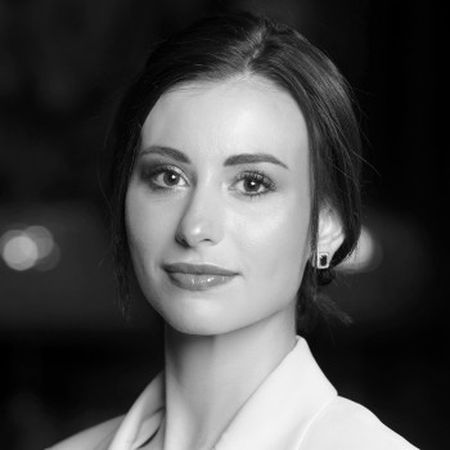
Catherine White is a South African journalist, media trainer and director of Cat White Media. She works across newsrooms in South Africa and abroad, specialising in digital storytelling, editorial strategy and freedom of expression. She also heads communications at the Campaign for Free Expression.