



Earlier in this year, in peak winter, a group of eight men working hard to heal from homelessness were displaced from their home on a quiet cul-de-sac. A neighbour had complained. Their issue wasn’t unneighbourly behaviour or noise, they just felt that the residents on the other side of the fence were “totally unsuited to the area”.
The men were residents of a transitional home run by the local nonprofit I work for. Our team includes trained social workers (like me), counsellors, 24-hour support from a house supervisor, and a far-reaching network of healthcare, education, and job-training professionals. Together, we make up a community of care that helps people recover and rebuild from homelessness. Since 2020, our graduating residents have secured stable jobs, reunited with family, signed leases for their own apartments, and even landed international work with promising career paths.
But these facts are beside the point. Worn down by the neighbour’s pressure, our landlord eventually declined to renew our lease. The guys were forced to split up across multiple sites. Friends and partners stepped in to provide emergency housing. Months later, with rental stock and prices being what they are, we remain in limbo. We’re fractured but carrying on, providing services and celebrating milestones; last month, for example, two of our residents managed to secure new jobs, even while displaced.
But our situation isn’t why I’m writing. I’m not worried about organisations like ours, even though some months it can feel like we’re hanging on by a thread. We’ll keep going because what we’re doing is needed and it matters; like many in our sector, we do this work because we can’t not.
Losing time
What I worry about is all the time we’re losing and all the progress we’re missing out on because the journey to a better, fairer future makes some of us uncomfortable. What I’m worried about is my neighbours. Especially those who resist the messy but hopeful world beyond their front door.
I want to address reluctant neighbours. Whether you live on a quiet cul-de-sac or in a bustling block of flats, please know this: you live in South Africa. We’re a country in many ways shaped by pain, but also one that invites all to be part of healing.
If you seal yourself off into a bubble, maybe for fear of the unknown, you also cut yourself off from connection and compassion. You lose the chance to find some freedom from your fear. And whether you acknowledge it or not, you very likely reproduce the racialised patterns of exclusion that defined our worst days. This harms all of us.
In our case, the irony is painful. Because it’s precisely in spaces like that peaceful cul-de-sac — ordinary neighbourhoods, not hidden-away facilities — that real integration and healing can happen.
What was unsuitable to our reluctant neighbour, I believe, was the fact that the guys’ presence — poor, black, healing, trying — burst an imaginary bubble. Who they were and where they were was inconvenient, confronting. It didn’t have to be. But prejudice and fear got in the way.
Maybe one day the reluctant neighbours will look beyond the edge of their fences and realise that the world outside had invited them into something far greater than a bubble, something brave and meaningful. Maybe they’ll wish they’d taken part in the shared project of building a country and realising the lofty promises we make to each other as citizens. Maybe one day they’ll realise they lost the opportunity to extend humanity, curiosity and grace. Maybe not.
A safe, dignified, affordable place to call home
I’ve avoided describing the eight men who were displaced this winter because that shouldn’t really matter. Every one of us deserves a safe, dignified, affordable place to call home.
But for what it’s worth, they’re an ordinary, lovely group of guys — friendly, warm, helpful. In the house, they’d cook dinner together, take turns cleaning up, and disagree about what to watch on TV. They’d always greet my young sons with a smile and high-five. Living and healing together, they were a found family.
Their childhoods and experiences might be different from yours or mine, but what they need and what they dream of is the same as anyone: a warm, steady home, people to love and be loved by, a place to belong and feel included.
If you felt a bit uncomfortable or implicated reading this, and maybe even stopped to wonder, let me ask you directly: who do you want to be in a story like ours? Who do you want to be in a city like ours, a barrier or a bridge? In a thousand different ways, big and small, every single day, you get to choose. DM
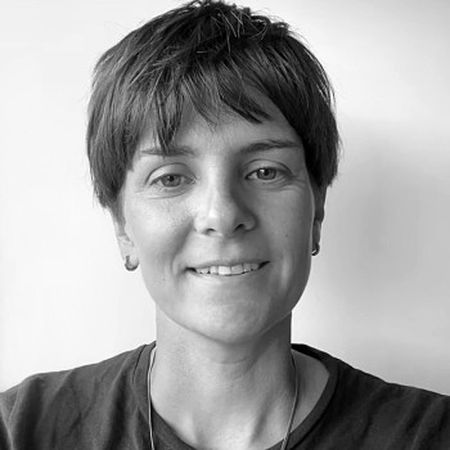
Leanne Porter is a social worker and former managing director of New Hope SA, an organisation based in Cape Town dedicated to finding holistic solutions to homelessness.