



In 1977, fourteen years after Kenya’s independence, Ngũgĩ wa Thiong’o and Ngugi wa Mirii staged “I Will Marry When I Want”. The play follows Kiguunda and Wangeci, a working-class couple whose modest dream to improve their lives through honest labour is crushed when elites who once stood beside them in the struggle for freedom conspire to take their land. It is a story of betrayal in a young democracy, where the promise of liberation is diverted into the stomachs of the politically connected.
Ngũgĩ’s work was set in rural Kenya, but its truth spans time and borders. Today it speaks directly to South Africa (SA), where the victory over apartheid delivered the vote, the Constitution and the hope of a more equal society, yet where too often political settlements have served to entrench the positions of the political and economic elites.
Suppose Ngũgĩ’s village was the stage for disillusionment in Kenya. In that case, our imagined place is Kicktown, where poverty does not just shadow the young but kicks them to the ground, leaving them to crawl toward a future that keeps retreating. Brook Benton sang in “Heaven Help Us” about a “man who kicks a man who has to crawl”, down and out. In Kicktown, that crawl is lifelong, much like places called Kwamshayazafe (beat him to death) in Inanda and Soweto. Both physical and economic hard knocks beat men and women to crawl to death. In Kicktown, Kwamshayazafe, lives the 35-year-old South African who has never had a decent job, whose democratic dividend is a dream deferred, whose horizon is marked by hustles, piecework and the fading hope of a respectable standard of living. He has no tradeable skill. He is young and willing, but without opportunity.
Yet, that is not what preoccupies our land’s political and economic elites. Often, it feels like they have given up on thinking about the inclusive future of our country. Thus, we wonder: what happens to the polity when the ideas factory is mothballed and thinking is no longer the preoccupation of those who lead society? It is almost as if the great wheels of thought stand still, their nuts seized in the rust of sterility. The once busy floor where transformative ideas were generated is silent save for the distant thud of marching feet. When this sets in, the state becomes a parade ground where advancement is measured not in insight but in sycophancy, where the price of entry is the willingness to join the battalion of drum majorettes, twirling and smiling on cue.
In this creeping carnival of the un-think, the uniform is choreography and the creed is spectacle. Truth and science are no longer foundations but costumes, worn for effect and discarded when the next act of ridiculousness begins. The artisans of reason have downed their tools, while the stage fills with baton spinners and noise makers. A hall of mirrors replaces the metaverse of thought, endless distorted reflections where even the emptiest vessel shines if it catches the light, all aided by social media. In such a theatre, virality is the highest office. Here, even the morons go viral not for what they know but for the ease with which they can echo the slogans of the hour. Meanwhile, Kiguunda, Wangeci of Kenya, and Kwamshayazafe look on, the pang of hunger knocking them down.
Our ‘Democratic brainstorming session’?
The National Dialogue is meant to be the country’s democratic brainstorming session. According to earlier propositions by Eddie Maloka, it can map a path towards the second republic. In such a platform, the full spectrum of South Africans can face each other and confront our national problems directly. Yet it risks becoming another elite gathering in mirrored halls, producing thick communiqués and memes but no real change for the people of Kwamshayazafe. Some political parties have already walked out. Legacy foundations have warned that the process has strayed from its original citizen-led vision. The President insists the show will continue, but beyond the rhetoric, there is no real prospect of assuring a Kliptown moment; no common understanding of what the dialogue should deliver. The agenda swells and shifts, without a framework to focus debate or a mechanism to turn talk into binding commitments. We are in a fog without a compass, drifting toward a set-piece event that will make headlines for speeches, not for the measurable outcomes SA needs.
This lack of clarity is more than a procedural weakness. It is a dangerous manifestation of closing the ideas factory. Without focus on the people of Kwamshayazafe, the dialogue will avoid the real contest at the heart of our national story, whether SA will live up to its founding democratic promise of equity, redress and shared prosperity, or whether political settlements will continue to preserve the privileges of the few while structural exclusion endures. This is no abstract quarrel. It lives in the 33.2% unemployment rate, the collapse of basic services and the corrosion of state legitimacy. It is sharpest in the fate of the youth, who make up most of the unemployed and whose energy and demographic weight could be our most significant advantage if we invested in them with urgency.
The Presidency’s NDP Review and the 30 Years of Democracy report have already told us what the fundamental threats to our democracy are. Mass youth unemployment. A stunted economy. Failing institutions. The decline of the rule of law. Captured state-owned enterprises. Eroded state capacity. Hollowed-out local government. Deep inequality. Weakened parliamentary oversight. These are not unknowns. The problem statement is clear. What is missing is the national will to confront them in a way that shifts power and opportunity beyond the imaginations of the narrow elites that are squabbling about the national dialogue.
Most compacts forged in democratic SA are elite pacts that preserve privilege and maximise gain. They rarely emerge from the lived realities of Kicktown, townships and rural villages where the democratic dividend is elusive. For millions, life is a daily negotiation with precarity, unreliable electricity and water, schools without resources, clinics without medicines, and roads cratered with neglect. Every year, for the 35-year-old without a job feels like a narrowing of options.
Must be a people’s process
If the National Dialogue is to matter, it must be a people’s process. SA has done this before. A closed committee of retirees did not draft the Freedom Charter at Kliptown in 1955. Kliptown became the assembly of the people. Very historic decisions were taken there, including declaring that SA belongs to all who live in it. The settler became a citizen at Kliptown. It was built from thousands of submissions gathered in meetings across the country.
More recently, Parliament’s public hearings on the NHI Bill, Section 25 amendment and the Kgalema Motlanthe Panel showed that participatory democracy is not just a compliance matter mandated by the constitution; it is what South Africans need as they negotiate a liberal democracy that is widening poverty and inequality. The nine provincial legislatures, representing the will of the people in all their diversity, along with the national Parliament, are the most legitimate platforms for public participation. If they are mobilised, the dialogue could cascade down to ward-level hearings, community assemblies, sectoral forums, and a 21st-century Kliptown that hears from real SA before it decides the country’s course. Anything else is a farce. Hence, there are accusations and innuendos about the process being hijacked by bureaucrats.
This would mean using the GNU Statement of Intent not as a vague aspiration but as scaffolding for a new plan, beyond the limitations of the current National Development Plan. A national development and reconstruction programme must be forged in the open, with trade-offs debated honestly. Skills and jobs for the youth must be central. Rebuilding state capacity must be non-negotiable. And the process must be transparent, with every choice explained and justified in public. Land must be shared. Jobs must be created. We know from the NDP Review, the 30 Years of Democracy report, that the current NDP is out of sync with national realities. It is time to replace it. The real dialogue concerned with national questions of poverty, inequality and unemployment should produce the new NDP with concrete plans to alter the country’s economic misfortunes. A responsive NDP cannot be produced by these squabbling elites in government, foundations and political parties. They are neither willing nor capable.
The alternative to a genuine, inclusive national dialogue is not stability but rupture. SA has already seen glimpses of this in violent protests and the destruction of July 2021. These were warnings from our social fault lines. If we squander this moment, the next eruption may not be containable, and the cost will be measured in lives lost and the unravelling of the fragile democratic promise we still hold.
Ngũgĩ’s couple lost their land to the forces they believed were on their side. The moral of their story is clear. Freedom without vigilance can become another word for dispossession. SA now faces its own test. Will the National Dialogue be a theatre for the powerful, or will it be the forum where the many finally speak and decide? As the Inanda proverb reminds us, if the drumbeat changes, the dance must also change.
Let this be a Kliptown moment, for life is hard in Kicktown, Kwamshayazafe. DM
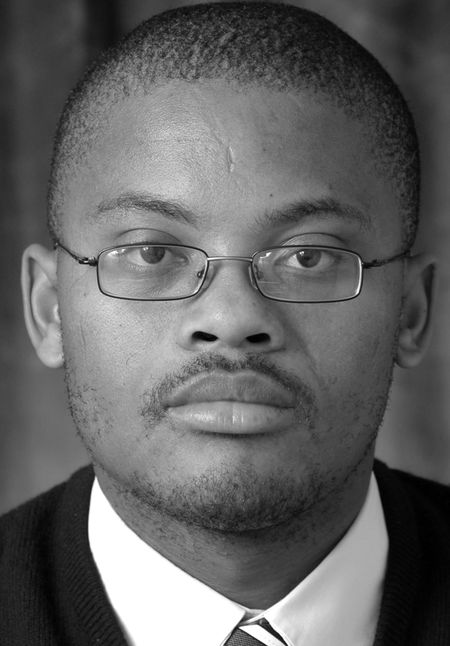
Busani Ngcaweni is Director of the Centre for Public Policy and African Studies at the University of Johannesburg and Visiting Professor at China Foreign Affairs University.