



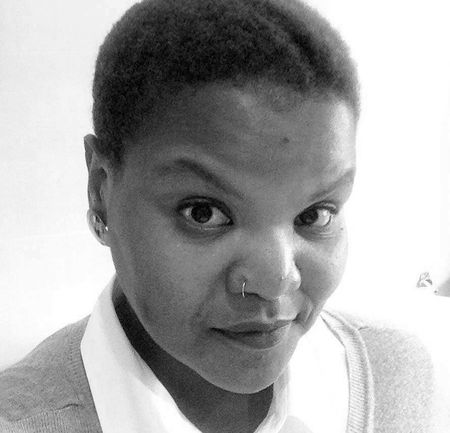
Basic education has been very much in the spotlight these past weeks for various reasons, and it has made me reflect on my own basic education journey.
It started its foundational stage with five-year-old me, who only knew how to speak isiXhosa, having to speed-learn how to speak and read English in just three months so I could attend an English-speaking preschool while we were exiled in a country that did not have isiXhosa as a language of instruction.
Little did I know that this language immersion of reciting “I am jumping” and “I am eating” while doing the activities would begin a lifelong fascination and love of reading and writing. In addition to the rudimentary learning of vocabulary, the words were brought to life with light, shade, texture and feeling by reading storybooks when I was at home and back from school.
My parents, in between their efforts for the country’s liberation, would read to me before bed, and in time I started reading by myself without being prompted and was transported to many fantastical worlds. I also became quite adept at Scrabble, further boosting my vocabulary.
I didn’t have any toys, making me quite a serious child, so the books played the important role of both entertainment and flowering my imagination.
I often tell the story of how, as I got older, in addition to the homework set by my teachers, I had to get home every day and pick a letter from the encyclopaedia’s alphabetised set to find a topic to read about. I would then prepare to tell my parents about the topic when they got home from work. They would quiz me on it to make sure I had read for understanding as opposed to just regurgitation. This also resulted in me being a repository of general knowledge.
This memory of how I learnt to read for meaning speaks particularly to one of the issues in contention at the Department of Basic Education, which is that pupils need an extra year of education. This is because it has been found that many children are in fact not school-ready and often struggle to comprehend basic school teachings such as recognition of the alphabet and their own names at the age of seven.
While, yes, an additional year of education is necessary, I think doing this without the necessary emphasis on parental and home teaching to supplement it would be an incomplete solution.
What I have learnt, not only from my personal experience but also from having worked with people in the education sector, is that learning usually only sticks when one goes beyond the curriculum – and that takes time.
In a world where, for various reasons, there seems to be less time to dedicate to reading to children and helping them cultivate their imaginations and general knowledge, what is to be done?
With libraries also closing down as public spaces fostering a love and culture of reading for leisure and entertainment, the situation is even more worrying.
We need to ask ourselves how best we can be holistically responsive to this challenge of ensuring that children are able to learn more than what they are taught at school. DM
Comments
Scroll down to load comments...