



The killing of Mandla Simon Mxinwa, Zanisile Zenith Mjobo, Zola Alfred Swelani, Jabulani Godfrey Miya, Christopher Piet, Themba Mlifi and Zabonke John Konile, has been written about extensively, including in Antjie Krog’s There Was This Goat, while Lindy Wilson’s 1999 documentary, The Guguletu Seven, remains a seminal account.
TRC amnesty hearings exposed the full inhumanity of those who had participated and how they had glibly lied, planted weapons and gloated at their work and their lawlessness.
Until a journalist, Chris Bateman, who could speak fluent Zulu and who happened to be a colleague of mine at the Cape Times, found eyewitnesses in nearby hostels who had seen through their windows the assassinations of the young men by police, at point-blank range.
The beginning
At around 7.30 on the morning of 3 March 1986, during what was known as a “partial state of emergency”, an explosion rocked Gugulethu at an intersection at NY1, the main artery leading to the township. This was followed by volleys of bullets and then silence.
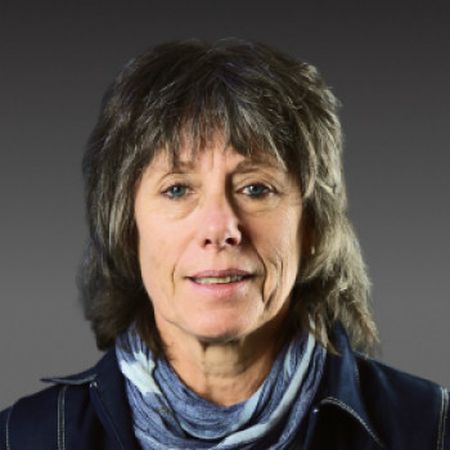
Beverley Roos-Muller’s just-published Hunting the Seven — How the Gugulethu Seven Assassins were exposed, is a first-hand account of what went down in the aftermath. She was there in the thick of it. She saw it all.
The former UCT academic, anti-apartheid activist and journalist and broadcaster revisits the story, plucking it out of the blood, guts and rage of the TRC and tossing it into new light.
The assassinations were, she writes, akin to South Africa’s Watergate, only worse.
A state cover-up of a well-planned and orchestrated ambush by the South African Police (SAP) and members of the Vlakplaas death squad was only thwarted because of good journalism and intervention by Progressive Federal Party MP for Green Point, Tian van der Merwe, and others.
Van Der Merwe was a practising attorney and had been in Parliament for nine years as its youngest member.
Solid and fearless on-scene reporting, encouraged by courageous editors such as Tony Heard, who died on 27 March this year, drove this story alongside a committed legal team, who launched a full-scale defence when the mighty state attacked.
Heard was my first editor and the man who poured courage into my veins.
This is why Roos-Muller’s book is so necessary at present, where the trust factor in the media is being eroded by grifters and fake members of the fourth estate.
It also reminds us of the absolutely crucial role of journalism in the face of serious state persecution and prosecution. It is a masterclass.
Both Bateman and another former Cape Times colleague, Tony Weaver (now a Daily Maverick colleague), understood from the start that the Gugulethu massacre was an unusual event.
Weaver’s time covering the Namibian war had taught him about Koevoet, the notorious counter-insurgency unit of the South West African Police, and its operations in the region.
These were men, black and white, seconded from the Security Branch’s Special Task Force. Their brutality and their modus operandi was well known and documented.
It was the sight of a Casspir in Gugulethu, seen usually only in the Namibian deserts, that heightened the spoor the journalists, including Roos-Muller, and Van Der Merwe began to follow.
The lies and the cover-up
The official line by the SAP was that they had been ambushed in a “terrorist” attack and had simply retaliated, killing all the insurgents who were, they claimed, members of MK, the ANC’s banned armed wing.
It was a victory for the SAP, and they were lauded for their swift work defending the state from terrorists now operating the Western Cape, a region not known for this kind of operation.
Roos-Muller takes us into the homes of the grieving mothers, their confusion at seeing their son’s bodies for the first time on national television during the news.
Hunting the Seven reminds us that resistance is in the DNA of South African media, and we should look to our institutional memory of the power of shining a light of truth in the face of even the threat of death, detention or a prison sentence.
We have countless examples apart from Bateman and Weaver. There is Peter Magubane, Henry Nxumalo, Ruth First, Noni Jabavu, Juby Mayet, Aggrey Klaaste, Joyce Sikhakhane-Rankin, Zwelakhe Sisulu, Allister Sparks, Harvey Tyson, the list is long.
The blurb for Roos-Muller’s book sets out that “never have seven people been so hunted. By assassins. By journalists, lawyers and activists in search of the truth and TRC investigators wanting justice for the victims’ families”.
The entire operation, it was finally revealed, was planned by Eugene de Kock’s Vlakplaas death squad, but the motive has always been unclear.
Revisiting the matter, researching from scratch, sifting through evidence, interviews, affidavits and statements, she reveals that the operation by Vlakplaas was “an elaborate and deadly scheme designed to keep the money rolling into the death squad’s slush fund”.
The Gugulethu Seven had been lured to their death by members of the unit, one of whom later confessed to this. The dead were not members of MK, neither were they heavily armed.
In the end, it was all about money and depravity. Both of which are never quite out of sight, ever, anywhere. Roos-Muller’s book is an excellent read and highly recommended for anyone working in the media space. DM
This story first appeared in our weekly Daily Maverick 168 newspaper, which is available countrywide for R35.
