



Perhaps Nelson Mandela did not intend to use “never” three times in his inaugural address to the nation in 1994, as the first democratically elected president.
“Never, never and never again shall it be that this beautiful land will again experience the oppression of one by another,” were Mandela’s famous words spoken from the Union Buildings.
History has a habit of repeating itself, and maybe this is the warning that lay at the heart of Mandela’s oft-quoted remark.
With the Bill of Rights and the Constitution in place, perhaps the elder statesman hoped we could break free from the cycles of violence, neglect and oppression.
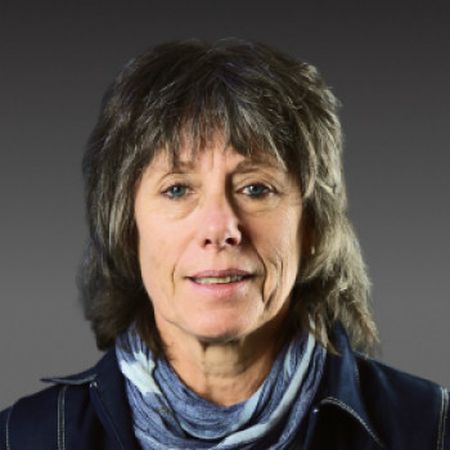
Someone who would have lived through and survived the daily assault of the apartheid years is Ellem Francis, now a high court judge, who grew up classified coloured in Standerton, Mpumalanga, in the 1960s.
At the end of last month, Francis was asked to deliberate on a shameful matter involving the 2014 torture by Correctional Services officials of five Leeuwkop prison inmates.
A shameful first
He made a finding, the first under the Prevention and Combating of Torture of Persons Act 13 of 2013, known as the Torture Act, that the state is 100% liable for the torture.
“It is rather sad and disturbing that some of the events that took place during the dark days of apartheid continue to take place in our beloved country at correctional facilities where some people in charge have learnt from the former masters about how to treat inmates who do not toe the line,” Francis said.
The torture – during which guards gave inmates electric shocks, stripped them naked, assaulted them with batons and boots and set dogs on one of them – as well as the subsequent cover-up by officials, including medical personnel, was, said Francis, “abhorrent and reprehensible conduct”.
The inmates were also held in subhuman conditions, shackled in filthy single cells during their unlawful solitary confinement by Correctional Services officials.
“We come from a violent past where so many prominent and non-prominent activists were assaulted, tortured and killed during apartheid while they were under police custody,” Francis set out.
There had been cover-ups in which district surgeons “would lie about the severity of the injuries that the victims and deceased persons had suffered and would lie about the causes of death. Some examples that come up are … Steve Biko, Neil Aggett, Ahmed Timol, Simon Mthimkhulu, etc.”
And now we have done the same. The state has been found wanting – it has been found to have lied and to have tortured human beings.
Neither the Minister of Justice and Correctional Services nor the President has issued any statement on the landmark ruling.
The silence has been deafening.
The roots of justice
As a child, Francis recounted in a 2008 interview, he was beaten by police who had falsely accused him of stealing a bicycle. It was this moment that prompted his career in law, he recalled.
Apartheid was peaking when Francis completed his BA and LLB degrees in record time between 1979 and 1983 before joining the Legal Resources Centre as a human rights attorney.
He recalled one of a myriad matters that had to be dealt with at the time: the death in detention of Simon Mthimkhulu, a Sebokeng teenager and member of the ANC Youth League who was tortured by the police in June 1992.
“Simon Mthimkhulu was asthmatic, he was told to do some exercise in the toilet, which he did, and I think he then had a fit, and one of the policemen took a rock that they were using as a doorstop, and I think knocked him several times on his chest,” recalled Francis in the interview.
“He died and they went to go and dump his body not far from one of the hostels. The family then came to me … Well, they found him, I think, one or two days afterwards.”
It was Dr Jonathan Gluckman, a pathologist, who exposed that the South African Police had murdered most of the detainees he had examined who had died in custody.
Gluckman said Francis had grown “sick and tired of the police who were killing not just political people, but just ordinary people, you know, on a regular basis”.
The hollow governing party
When more than 70 people died in an inferno in a derelict inner-city Johannesburg building last week, the ANC, through its officials, including Lindiwe Zulu, the Minister of Social Development, invoked apartheid. It is the devil that bedevils the ANC, lurking around each corner and thwarting freedom, the governing party has continued to argue about each and every failure.
“Between the idea and the reality, between the motion and the act, falls the Shadow” – these lines from TS Eliot’s The Hollow Men swim to mind.
Zulu’s view immediately after the tragedy was: “Whether we like it or not, this is the result of apartheid that kept people apart in these conditions, and we are expected to change these conditions in 30 years. But where we have to take responsibility, we must take responsibility.”
The governing party can chase this ghost if it chooses, for, indeed, as Francis has found, it still finds expression, but now only in the ranks of a negligent and incompetent government riddled with corruption.
An election looms tantalisingly for citizens in 2024. Not only an election, but also a much wider political horizon that might just realise the extraordinary humanity of this country’s laws and Constitution.
Accountability comes through the law, but also through the ballot. DM