



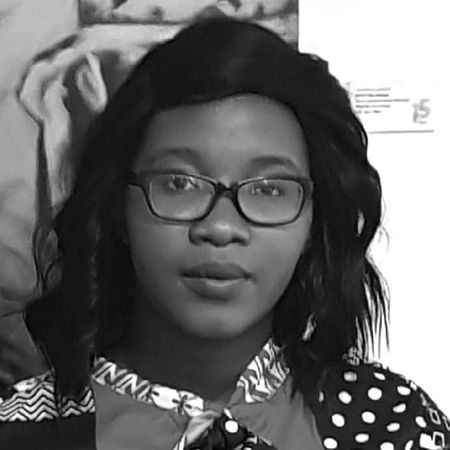
As I watched the Judicial Service Commission’s interview for the position of Chief Justice with Judge President Mandisa Maya, a caution from feminist writer, Chimamanda Adichie suddenly came to mind: “Do not measure her on a scale of what a girl should be.”
I quote from a letter written by Adichie to her dear friend, giving advice on how to raise a girl child in a misogynistic world. Of course, Judge Maya is not a child, but the sentiment remains the same. Her strengths and weaknesses should not have been assessed through the lens of gender or what she has to offer as a female Chief Justice. She deserved to be assessed like her male counterparts — as an individual.
The very first question from Commissioner Ronald Lamola strangely required her to clarify that she would be running for the Chief Justice position based solely on her credentials, not her gender. And so, she did. Judge Maya made it clear that her skills and expertise should not be linked to her gender, stating unequivocally, “I’m not here because I’m a woman; I’m a worthy judge… I’m just a good woman judge.”
Despite this bold declaration, commissioners were relentless in posing questions related to her gender. While male candidates have been given the opportunity to engage with the law and display their intellectual prowess, the focus on Judge Maya’s gender made it difficult for her to do the same.
One question, in particular, made all the feminists in the crowd raise their eyebrows. For the second day in a row, the question of whether the country is prepared for a female Chief Justice was raised, this time by commissioner Pule Tlaletsi. That such a question should even be asked symbolises how the call for gender equality in the judiciary is mere lip service.
It should be noted that prior to 1923, women were excluded from applying for admission to practise as attorneys and advocates. Back then, the legal fraternity was an elitist “boys club” with no room for women, unless it was to make coffee or run errands. It was only after the enactment of the Women Legal Practitioners Act 7 of 1923 that they became “entitled to be admitted to practise and to be enrolled as advocates, attorneys, notaries”. But even then, the idea of a woman, let alone a black woman, sitting in an interview to head the highest court in the land was inconceivable.
So, the Constitution of the Republic of South Africa placed a duty on the JSC to consider “the need for the judiciary to reflect broadly the racial and gender composition of South Africa when judicial officers are appointed”. To the commission’s credit, major strides have been taken since to diversify the judiciary. While the glass ceiling has been broken by many outstanding female jurists, sexism continues to rear its ugly head as has been seen during Judge Maya’s interview.
The fact that most of the questions posed to Judge Maya would never be raised with her male counterparts speaks to a patriarchal line of questioning. The commission would never attempt to relate the competence of a male candidate to his gender. Whether or not South Africa is ready for a female Chief Justice is an irrelevant consideration.
As Justice Mbuyiseli Madlanga, who is also in the running for the position, succinctly put it: “if we had to wait for South Africa to be ready for a female anything, the only two occupations available to women would probably be ‘sex worker’ and ‘mother’.”
There are many instances where female judges are not accorded the same respect as their male counterparts. Female judges are often accused of being “emotional”, and, in light of this charge, their ability to reason strongly is doubted. Last year, the Constitutional Court judgment sentencing Former President Jacob Zuma to prison was described as “judicially emotional”. The “emotional” label was, in all likelihood, used because the majority judgment, in this case, was penned by one of the female Constitutional Court judges, Justice Sisi Khampepe.
Going back a few years, Judge Thokozile Masipa delivered the controversial judgment which found Oscar Pistorius guilty of culpable homicide rather than the murder of his girlfriend. She faced a wave of criticism, much of which alleged that she was incompetent on the basis of her gender and race.
It is truly absurd that a judge’s legal reasoning would be tied to her gender, and yet this is the climate that female judges have to work in. The time has come for the commission to reflect on why it requires women to jump through hoops to prove that they are just as competent as their male counterparts. Once it is accepted that legal reasoning and leadership skills are not gender-specific, we will have fewer debates about the country’s need to be ready for female leadership.
In response to the commission’s question: South Africa is ready for a Chief Justice who is capable of intellectual leadership, has proven leadership skills and a profound understanding of the judiciary’s role in a constitutional democracy.
At the risk of sounding redundant, these qualities have nothing to do with the gender of the successful candidate. DM