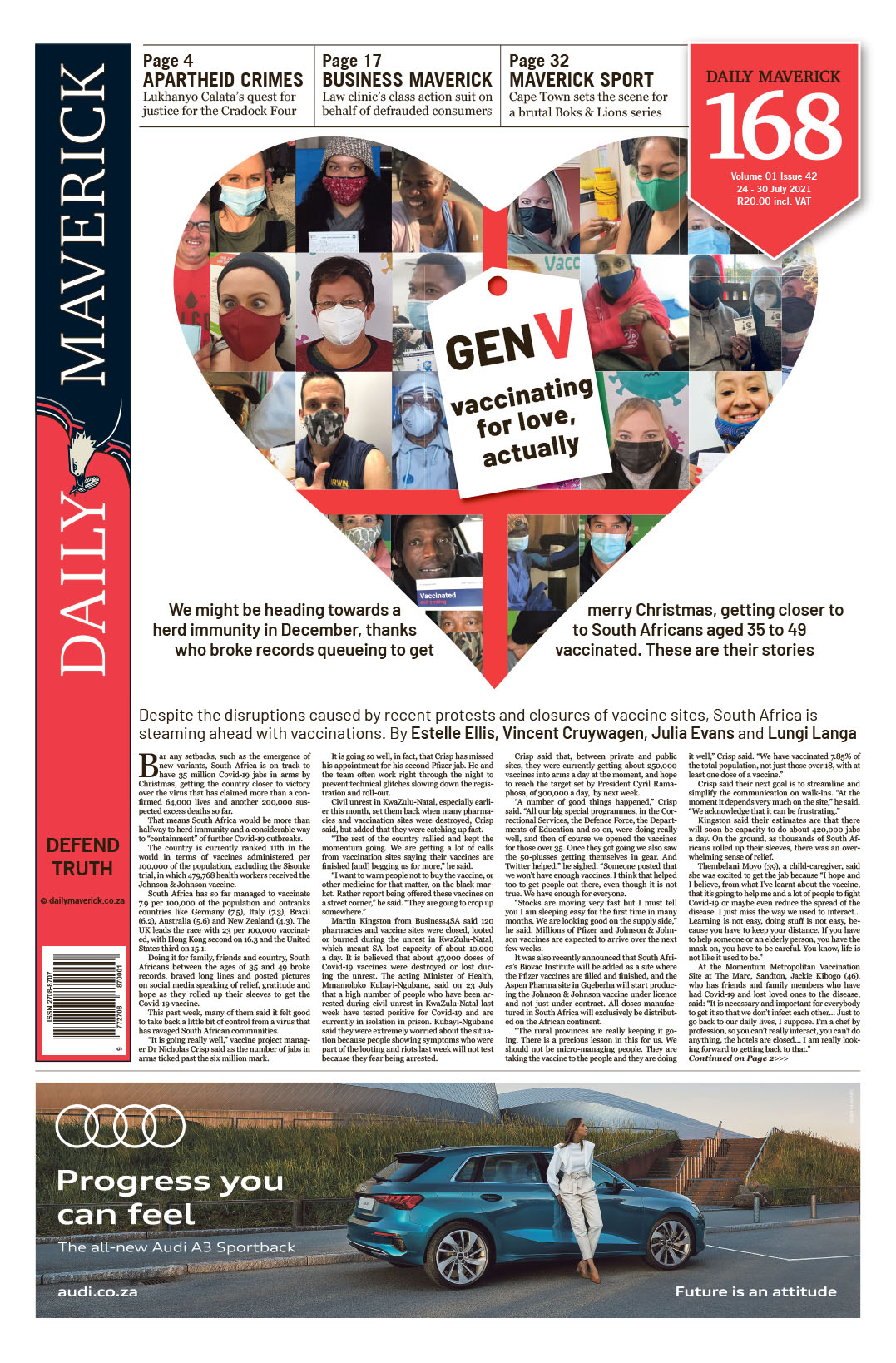
First published in the Daily Maverick 168 weekly newspaper.
The reason the idea of a BIG is gaining traction is because any objective analysis of wealth patterns over the past half century show the world’s enormous gains have been disproportionately dispensed. Until recently, the world unhappily tolerated the rich getting richer, so long as the poor were getting richer too and getting richer faster – which, by the way, they were. But the situation changes when median wages remain static while the rich make out like bandits, which has been more or less the case in many parts of the world for the past 30 years or so.
It’s worth noting here that the rich have got richer mainly by virtue of the blossoming, worldwide, of stock markets. For the past century until about 1990, the market capitalisation of stock markets around the world was about 50% of national GDP. From then it just exploded and is now about 100% of GDP.
But whatever the cause of the disparity, it is grotesque. It argues for a fundamental misallocation of resources that is not only morally defunct but also economically backward. The grotesqueness has been exemplified recently by the completely bizarre sight of billionaires taking 10-minute trips into space on rockets built with other people’s money. You don’t have to deny the awesomeness of the technology or the beauty of the rockets to feel ill at the incongruity of it all.
So one solution seems obvious: distribute cash in metaphorical helicopters to the poor. I have to say, I love the idea. But there is lots of political correctness that surrounds the idea too, which I don’t like. Some of its proponents sometimes verge on arguing that disagreeing with BIG is equivalent to supporting inequality. And this is where the problems start because, as we all know, the road to hell is paved with good intentions.
In many ways, SA is a good example of how BIG is both a great boon and an incomplete solution, because SA has one of the most extensive cash distribution systems in the world. SA’s social grants, even without the Covid-19 top-up, are now reaching 18 million beneficiaries. It’s an extraordinary effort that constitutes a lifeline to the poorest South Africans. It was actually introduced during the apartheid years, on a racially discriminatory basis, precisely for the same reasons the proponents of BIG think it should be introduced now. And the reason was that in the 1980s SA’s economy was failing.
But I remember well when the ANC came into power, some enlightened people in the ANC’s economics department, including Tito Mboweni, saw this programme and judged that at least it was operational. So they extended it, and kept extending it. SA now spends about R150-billion a year on this programme. It doesn’t work this way, but if you assume there are about 12 million families in SA, each family is getting about R1,200 a month out of the programme.
The closest comparison I know of is Brazil’s Bolsa Família programme, which reaches about 11 million families, and they get about half of what SA is giving in dollar terms.
The idea in SA behind BIG, if I have it right, is to double budgetary allocation and spend another R200-billion, increasing the per-family payout to about R2,000 a month. The immediate question is where this money comes from, but actually I think this is less of a problem than it seems. The state’s salary bill is R650-billion. A 20% real reduction in that bill would pay for it in an instant. BIG’s proponents think it could be achieved by increasing tax, but I think that idea is just nuts. SA’s tax base is too small, and existing tax rates are massively uncompetitive globally.
In times of economic crisis, conceptually the easiest fix is to provide cash benefits to the needy. But what I think is lacking is an honest analysis of why the economic crisis is happening in the first place. I would be so much more in favour of BIG if the proponents were as enthusiastic about how money is made as they are about how to give it away.
Dishing out cash is so much easier than creating a viable economic growth agenda. That’s where the hard stuff lies, because if SA wants a pro-growth agenda, we will have to look at government policies such as black economic empowerment and SA’s interventionist industrial policy, to name a couple.
You can put it another way: does it make sense to focus on BIG increases in government expenditure when SA has a backlog of 5,000 applications to start a mine? DM168
This story first appeared in our weekly Daily Maverick 168 newspaper which is available for free to Pick n Pay Smart Shoppers at these Pick n Pay stores until 24 July 2021. From 31 July 2021, DM168 will be available for R25 at Pick n Pay, Exclusive Books and airport bookstores.
Story corrected to reflect that a 20%, not a 2% ,decline in the state wage bill would be required to fund BIG. Apologies for the error.