



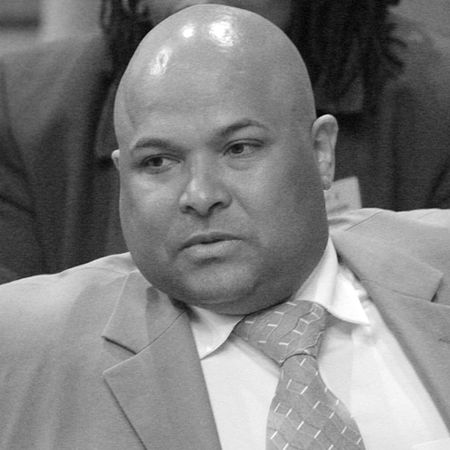
An analysis piece by Ferial Haffajee on 2 February 2021 headlined, “State Security Agency Debate: Who says we need an intelligence service?” is not only disturbing, but questions the moral fabric of journalistic practice in South Africa.
The Judicial Commission of Inquiry into Allegations of State Capture, Corruption and Fraud in the Public Sector and Organs of State (the commission) is ongoing as a number of people have appeared before the commission, and there is still a reasonable number yet to appear.
It is thus shocking when a seasoned journalist like Haffajee makes a finding without even listening to all role players in the matter and proceeds to propagate what should be ideal for South Africa.
Most disquieting and nonsensical is a conclusion, without providing any facts, that the State Security Agency (SSA) has not predicted or prevented any risk throughout the democratic era. Does this mean that the SSA was only effective during the apartheid era?
Haffajee can seek a pager on how the SSA (formerly the National Intelligence Agency) dealt with the taxi violence and Pagad, to name but two. Questioning the need for, or existence of, state security is the lowest point of argument that any patriotic South African can contend.
An analysis strictly looking at three directors-general (DGs) of the SSA is on its own problematic. The credibility test and relevance of such an analysis must thus be questioned. Why so?
The SSA continues to function in a democratic South Africa and in the past decade it has (outside of acting appointments) had no fewer than eight (8) “Super DGs” and directors, such as Mzuvukile Jeff Maqetuka, together with directors Lizo Gibson Njenje and Riaz (Mo) Shaik, Sonto Kudjoe, together with Simon Ntombela (succeeded by Dr Bheki Langa) and Batandwa Siswana, and now me, Arthur Fraser.
More intriguing is an assertion that the commission revealed corruption that has robbed the fiscus of at least R10-billion in a single financial year. Those who follow the commission will know that the figure mentioned on record was R9-billion and this has been disputed, as the net asset value for the SSA is nowhere near R9-billion.
The lawyers representing myself and others also read this into the record. So, how did Haffajee arrive at R10-billion?
In addition to this fact, a media statement was issued by myself questioning such, and opening perjury charges against Sydney Mufamadi, acting DG Loyiso Jafta, “Mr Y” and “Ms K”, including subornation of perjury charges against commission evidence leaders.
For Haffajee to omit this detail in her analysis (as this information was already in the public domain) can only suggest a resolve to frame a specific narrative, and acting contrary to the Press Code, as there was no interest in appreciating views from all angles, but perhaps the intention to project some individuals as “rogue”.
The analysis piece is definitely narrow and can only magnify a particular view (without any form of evidence) in labelling particular individuals in a negative light.
Astonishingly, statements by some witnesses have been accepted by the writer as evidence and, as such, cannot be recognised in a normal society, where evidence is defined to be proof that must be legally presented and allowed by the judge.
Evidence must survive objections by opposing attorneys that it is irrelevant, immaterial or violates rules against “hearsay” (statements by a party not in court), and/or other technicalities. It is thus not pleasant to observe such tactics being used by some who we consider to be seasoned journalists, as we all know how Stratcom demonised certain individuals by coining certain narratives with no intention of reporting truthfully.
Daily Maverick ought to exercise due diligence in its platform if it is to position itself as a credible platform for news dissemination and engagement.
The Press Council in South Africa advocates ethical journalism, so do ordinary citizens. It is acceptable that journalists cannot always guarantee "the truth” — however, getting the facts is what defines the cardinal principle of journalism.
When activities or items are carefully selected to intentionally argue for the dissolution of the SSA, and go further to carefully identify some individuals as principal role players, in this instance, Maruti Nosi, Arthur Fraser and Thulani Dlomo, this cannot be accepted as a normal journalistic practice. But it is a tactic aimed at destroying their characters and magnifying them as excavators of democratic institutions for their selfish gain.
The image used in the analysis article leaves much to be desired. The coat of arms under a magnifier, with the face of Mr Arthur Fraser as the central front image (when, in fact, he was the SSA DG for only 16 months), former president Jacob Zuma and Atul Gupta at the back , can loosely be interpreted as a transaction being facilitated through a R20 note.
This image further creates a perception of a corrupt relationship between the three individuals, which is unsubstantiated. Can this truly be classified as an analysis piece, or is it rather a statement of influence?
South Africa deserves accurate reporting, as enshrined in our Constitution. Relevant facts must be put on the table and when journalists are unable to corroborate information, they must say so.
Media freedom is embedded in responsible journalism and this should drive fairness and impartiality. Such freedom must never be abused by those who act as a chameleon for “other” interests. DM
Arthur Fraser is the National Commissioner of Correctional Services. He was a director-general in the State Security Agency.