




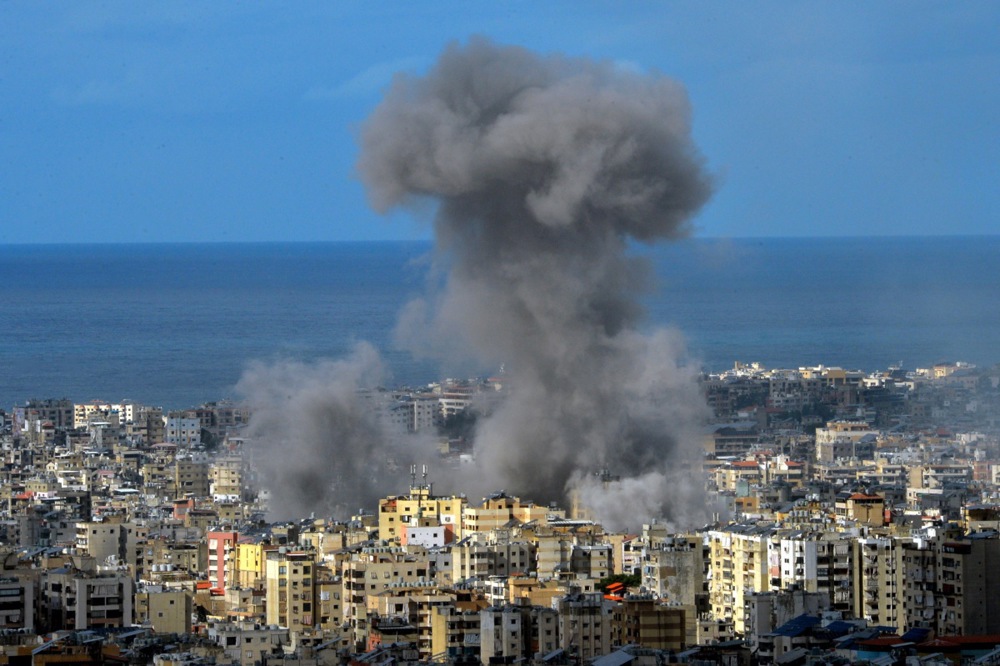
 Smoke rises following an Israeli airstrike on the Dahieh district in southern Beirut, Lebanon, 25 November 2024. Israel's military announced on 25 November that it carried out 'intelligence-based' strikes on several Hezbollah targets in Beirut's Dahieh area. According to the Lebanese Ministry of Health, more than 3,750 people have been killed and more than 15,600 others injured in Lebanon since the escalation in hostilities between Israel and Hezbollah. EPA-EFE/WAEL HAMZEH
 The crisis left most of the population below the poverty line, with the local pound battered and depositors locked out of their savings accounts at commercial banks.
The World Bank has ranked the collapse as one of the worst globally since the mid-19th century. It has already stepped in to help support a social safety net system and on Tuesday announced the additional $200-million to support the initiative.
It will provide cash transfers to poor Lebanese households and increase access to economic opportunities and social services, particularly for women, youth, and the vulnerable.
The financing is part of a bigger package that also includes $150-million earmarked for a digital acceleration project to improve access to government services and economic opportunities, and develop a secure digital environment for businesses.
(Reporting by Tala Ramadan and Maya Gebeily; Editing by Alison Williams)