



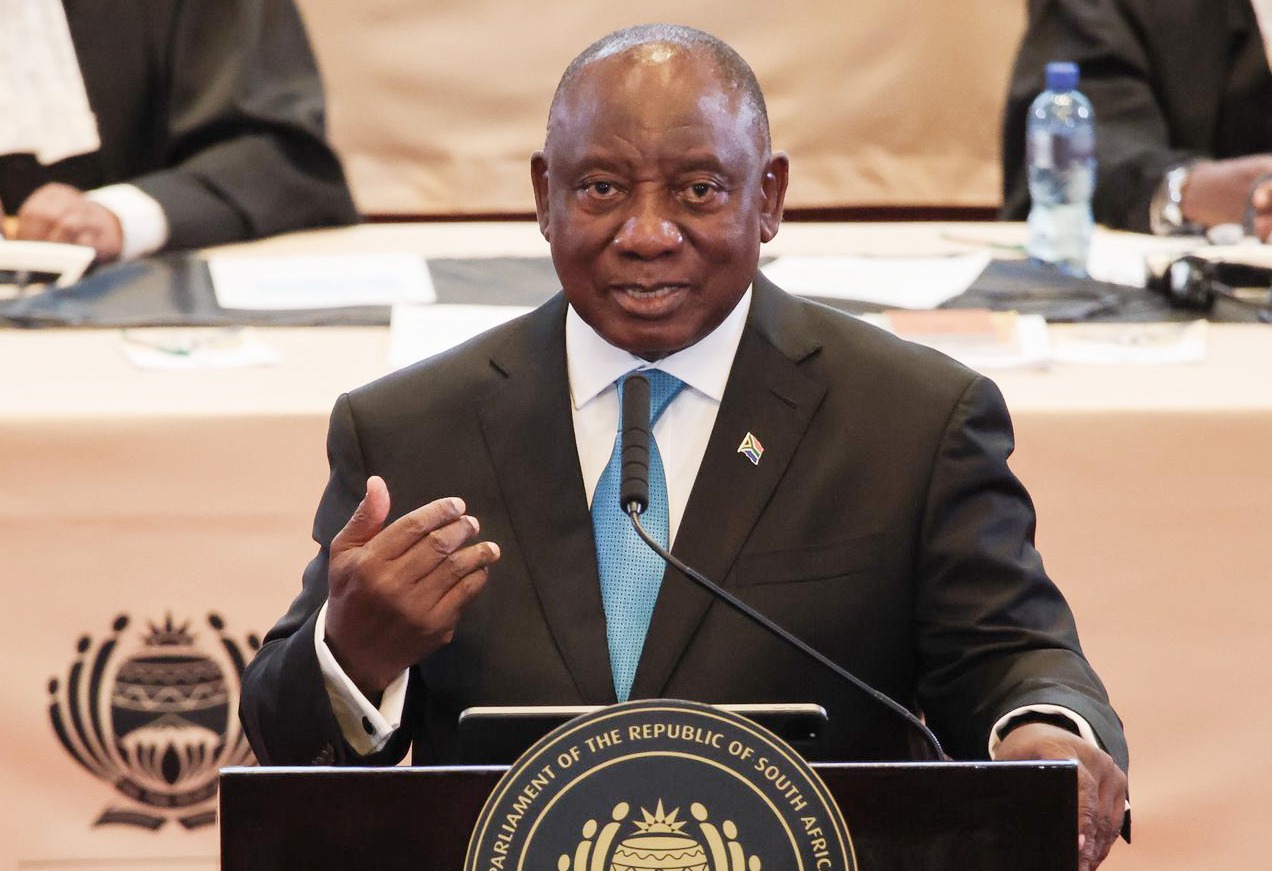
 President Cyril Ramaphosa to delivers the 2026 State of the Nation Address. (Photo: Jairus Mmutle / GCIS)
/file/dailymaverick/wp-content/uploads/2025/10/label-Op-Ed.jpg)
The State of the Nation Address (Sona) generated markedly less online engagement than in previous years. Where earlier Sona moments routinely attracted 400,000 or more posts on X, this year there were just more than 30,000 in the past week. The decline in volume might have something to do with shifting social media platform use, but it also suggests that the address has lost some of its dramatic pull.
Without the parliamentary disruptions associated with the EFF in earlier years, and without the intense backlash that characterised the Zuma State Capture period, there appears to be less spectacle and therefore less incentive for mass audiences to discuss it. In many respects, this quieter reception signals a political environment that has stabilised. As the saying goes, “no news is good news”.
/file/attachments/orphans/Screenshot2026-02-13at150816_512279.jpg "Interaction network of discussions around Sona 2026 on X. The larger the user, the more prominent they were in the discussion. Colours represent distinct communities of users discussing Sona 2026.")
Among those who did engage, however, discussion was pointed. Much of the commentary juxtaposed what were perceived as presidential platitudes versus lived reality on the ground. Users referenced student accommodation shortages, unemployment, unreliable water supply and persistent service delivery failures.
Notably, the overall tone reflected relatively low levels of coordinated buzzing (users who coordinate their behaviour to promote specific messages, either because they are activists or because they are paid influencers) compared with previous years, suggesting more organic and sincerely held views, even if not necessarily representative of the broader population.
Key voices included the African Transformation Movement’s (ATM) Vuyo Zungula, the EFF, online influencer-activists such as @Joy_Zelda whose content resonates within the anti-immigrant community, and grassroots-oriented journalist Velani Ludidi, who amplified the struggles of students and other marginalised groups.
/file/attachments/orphans/Screenshot2026-02-13at150213_887553.jpg)
/file/attachments/orphans/Screenshot2026-02-13at150221_151587.jpg "Top X posts about Sona 2026. (Images: Screenshot)")
Priority issues varied sharply by community. In activist clusters aligned with figures like @Joy_Zelda and platforms such as MDN News, immigration dominated, followed by water and education. The EFF community focused on education, water and policing. DA and opposition voices prioritised water, crime, corruption and accountability. ANC-aligned discussions centred on economic growth, perceived inaction and education. ATM and MK supporters highlighted education, water and policing.
Overall, this was a Sona defined less by spectacle and more by technocratic continuity. The President spoke uninterrupted, and the muted response may reflect a country settling into routine governance. In this instance, less noise may well be good news. DM
Kyle Findlay is a social network analyst and co-founder of Murmur Intelligence.