





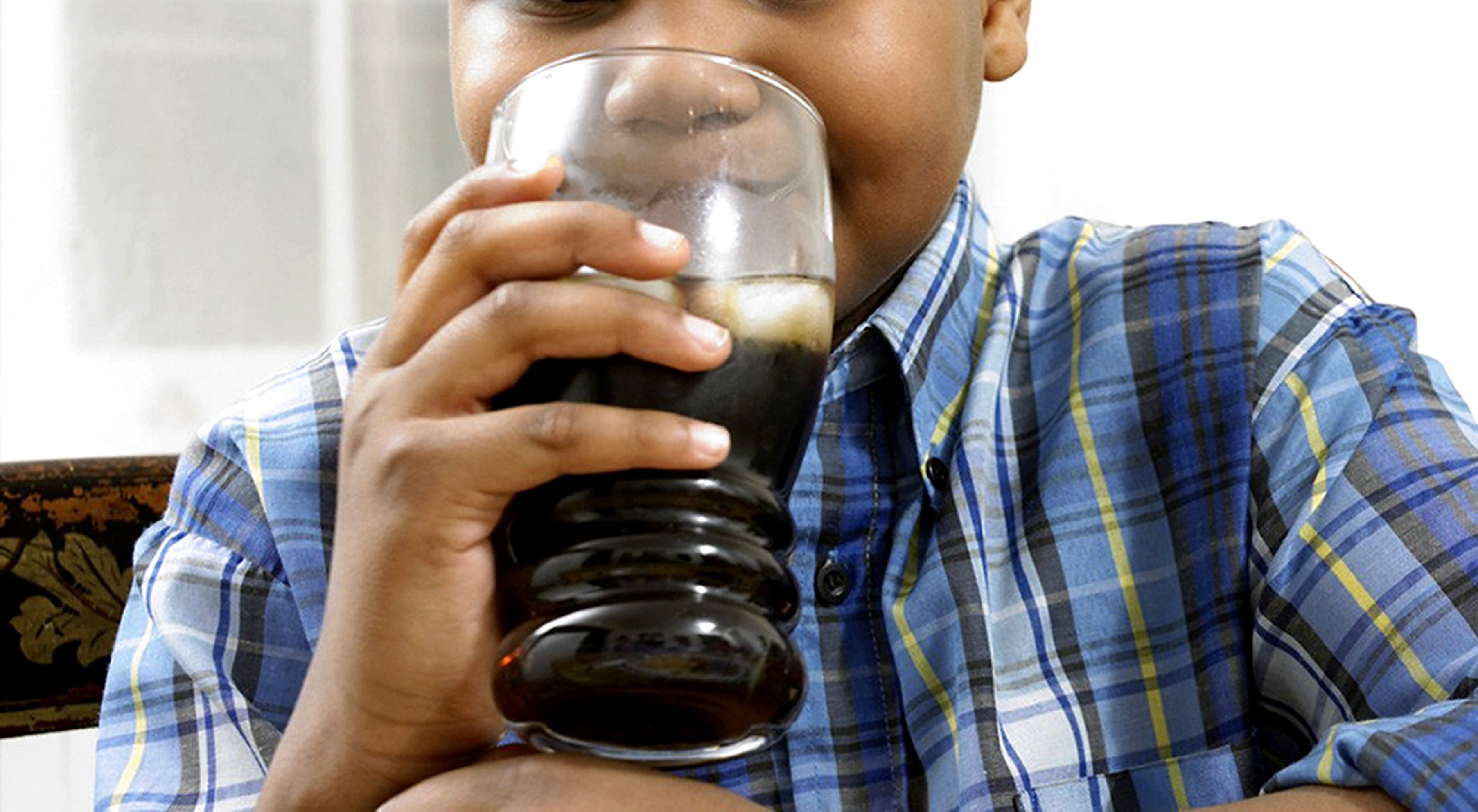
 Healthy Living Alliance CEO Nzama Mbalati said the health taxes – tobacco, alcohol and the HPL – should increase to 20%, in line with World Health Organization recommendations. (Photo: ebony.com / Wikipedia)
Implemented in 2018, the Health Promotion Levy (HPL), popularly known as the sugar tax, taxes only sugar-sweetened beverages with sugar exceeding 4g per 100ml of drink.
The tax has not increased since 2022, and civil society groups want it raised from 11% to 20%.
The HPL was introduced to lessen the consumption of sugar-sweetened beverages, which contribute to the rising tide of diabetes and obesity in South Africa. Evidence showed that the tax initially worked in lessening consumption in poorer households.
What is likely to happen at this year’s Budget speech on 25 February, with the HPL?
What civil society wants to happen with the HPL
“Based on previous Budget speeches, Finance Minister Godongwana appears far more worried about the profits of companies like Coca-Cola than about the health of our people. Ever since Godongwana became finance minister the health tax on sugary drinks has not increased. We need to question the extent to which the sugar industry has captured government decision-making on this issue and whose interests are being served,” said Koketso Moeti, founding executive director of Amandla.Mobi.
/file/dailymaverick/wp-content/uploads/2024/04/Koketso-Moeti-linkedIn-copy.jpg "Koketso Moeti, the founding executive director of Amandla.Mobi. (Photo: LinkedIn)")
“The Union Against Hunger fully supports the Health Promotion Levy, and we believe that the levy should increase, at least with inflation, and that there should be more transparency and consultation about how the proceeds of the levy are used to advance health,” said union secretariat member Mark Heywood.
“We understand the complexities of unemployment in South Africa, but we do not buy the argument that the Health Promotion Levy is the cause of job losses,” Heywood explained.”
The government has a constitutional responsibility to protect people from threats to their health and take positive measures, Heywood explained. The HPL was not an outlier, since other countries were enacting similar taxes.
“In a context of higher-than-expected revenue collection, windfall taxes and South Africa’s removal from the grey list, our government is in one of its strongest positions in recent times to build a healthcare system that works for all. That, plus a sugar industry that is itself at a crossroads,” said Matshidiso Lencoasa, budget analyst at SECTION27.
The South African Federation of Trade Unions (Saftu) expressed concern over the possible shutdown of key sugar mills, linked to the provisional liquidation of Tongaat Hulett, which represents not merely an isolated corporate failure, but a symptom of the wider deindustrialisation crisis confronting South Africa, Satfu said.
“The HPL can be a game-changer in both incentivising healthy consumption habits as well as shifting sugar producers to diversify towards non-human consumption of cane like packaging, molasses and other industrial inputs. In that way, we can build a resilient economy and a healthier population,” Lencoasa said.
“Overall, this Budget must clearly set out a plan to rebuild the state’s capacity to deliver services. That means protecting and growing real spending on health, education and social development, while strengthening procurement, planning and accountability so that money translates into real outcomes for all.”
Healthy Living Alliance CEO Nzama Mbalati said the health taxes – tobacco, alcohol and the HPL – should increase to 20%, in line with World Health Organization (WHO) recommendations.
“That’s what we’re expecting the minister to actually say in terms of protecting the health of people who live in South Africa, but also to curb the consumption of these unhealthy products,” Mbalati said.
“[The] South African government also needs revenue for social wage, so we hope the minister is going to give a green light of at least the recommended WHO guidelines.”
/file/attachments/orphans/GettyImages-173171038_666041.jpg "The South African Federation of Trade Unions said the possible shutdown of key sugar mills, linked to the provisional liquidation of Tongaat Hulett, represents not merely an isolated corporate failure, but a symptom of the wider deindustrialisation crisis confronting South Africa. (Photo: Dan Kitwood / Getty Images)")
What civil society thinks will actually happen:
“Finance Minister Godongwana appears to be refusing to engage with the evidence that a sugary drinks tax of at least 20% is a practical way to assist in lowering consumption and the associated health hazards,” said Moeti.
“I think if there was to be any abolishing of the Health Promotion Levy, it would be a serious regressive step – and would be caving into vested interests – for public health,” Heywood added.
“With higher revenue collections anticipated, we are interested in how the government positions an intervention that functions both as a public health tool and a fiscal instrument. Our hope is that this Budget uses the improved fiscal moment to prioritise rebuilding public services and advancing a healthier population. That would look like not losing momentum on this fiscal intervention,” Lencoasa said. DM
Comments
Scroll down to load comments...