




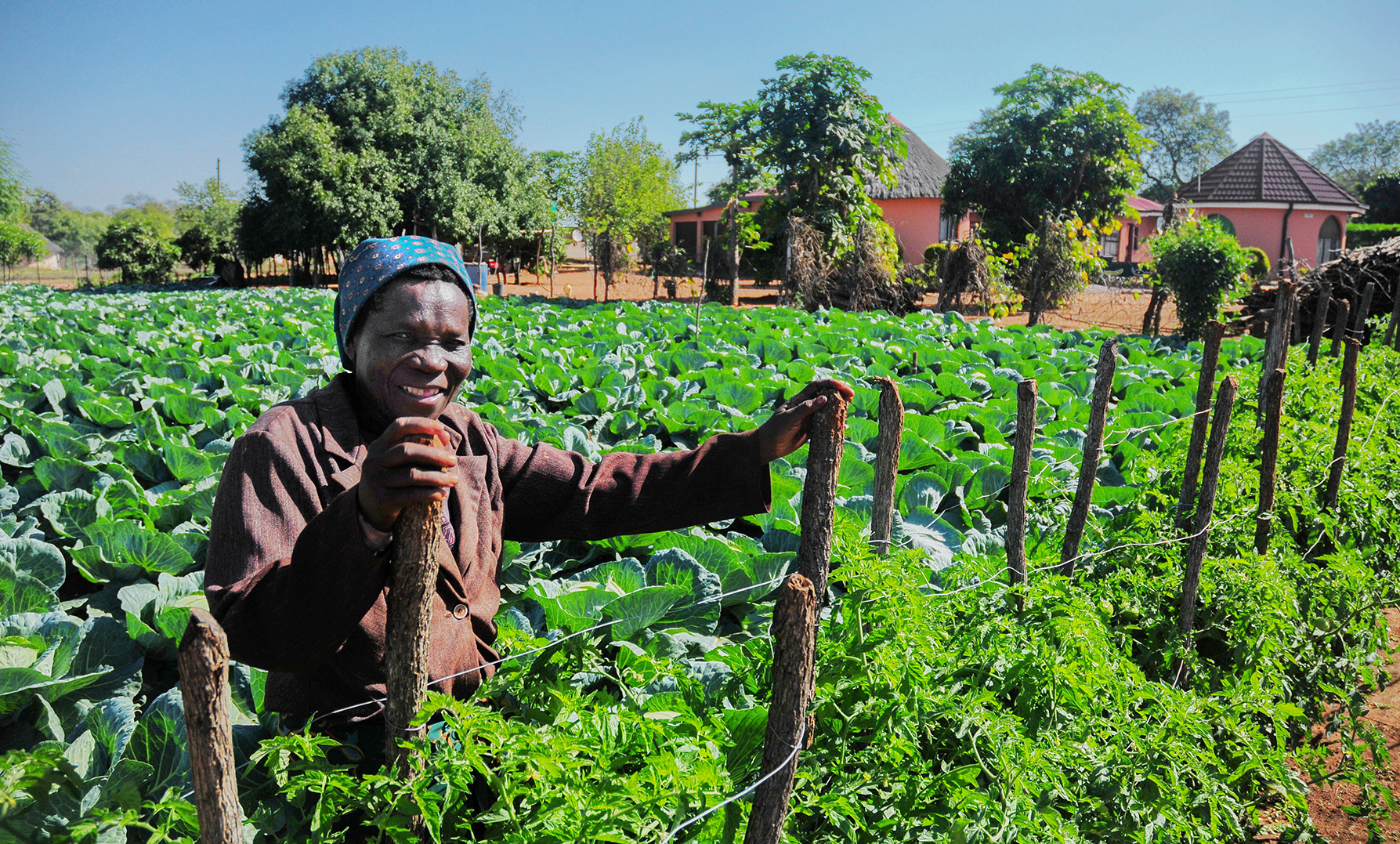
 Mamaela Mathebula says that before she was introduced to a backyard gardening project in Limpopo, she was planting vegetables on a small scale just for her family’s consumption. But now she is the village’s main vegetable supplier. (Photo: Lucas Ledwaba / Mukurukuru Media)
 /file/dailymaverick/wp-content/uploads/2025/10/label-Op-Ed.jpg)
In every corner of the globe, women are feeding families, stewarding landscapes and driving community resilience. Yet too many of them remain unseen in the very systems that depend on their labour, ingenuity and leadership. In 2026, the United Nations has declared the International Year of the Woman Farmer – a moment to begin closing the gap between indispensable contribution and real influence.
As leaders converge in Davos for the World Economic Forum’s Annual Meeting in January – a platform for dialogue on inclusive growth, innovation and planetary sustainability – food systems will sit at the heart of many global debates, even when they are not named explicitly.
Women work across nearly every part of agrifood systems – from sowing seeds at dawn to selling produce in markets at dusk, and from preserving traditional knowledge to leading cooperatives and enterprises. Food and Agriculture Organization estimates put women at roughly 40% of the global agricultural workforce, close to parity with men. Even so, access to land, finance, technology and decision-making power remains deeply unequal.
This imbalance shapes outcomes far beyond gender equality. It affects whether food systems can deliver food security, withstand climate shocks and generate inclusive economic growth. Evidence is clear: closing gender gaps in agrifood systems would significantly reduce hunger and unlock broad-based development gains.
Through the work of the UN Food Systems Coordination Hub, these dynamics are visible in national policy choices. Our latest global progress review shows more countries aligning food systems priorities with climate plans and development strategies, often through nationally defined pathways that recognise inclusion as a core objective. Intent is increasingly visible; execution remains uneven.
Ethiopia shows what it looks like when countries begin to address that challenge. In late 2025, the government – working with the hub and partners – convened a Science-Policy-Society Interface focused on youth-led food systems transformation. What makes this effort consequential is how it brings evidence, institutions and lived experience into the same space. Young women leaders are part of the conversation where priorities are set and trade-offs debated, rather than being consulted after decisions are made.
This distinction matters. Food systems are shaped by budgets, regulations and incentives. Influence over those levers determines who benefits from transformation and who is left to absorb its costs. Recognition without power changes little.
/file/dailymaverick/wp-content/uploads/2022/06/Oped-Nchake-MicroTW1.jpg "Florence Rampou, a member of a group of female cattle farmers on their farm in Pachsdraai village, near Groot Marico in South Africa. They started the Semellang Bomme Agricultural Cooperative, which means ‘women who work hard’. (Photo: Gallo Images / Foto24 / Loanna Hoffmann)")
Across Africa, Asia and Latin America, partners describe a similar reality. Women farmers are often first movers on climate-smart practices, dietary diversification and collective risk-sharing. They innovate out of necessity and resilience. Yet scaling those solutions remains difficult when finance, land tenure and market access continue to favour others.
This is why the International Year of the Woman Farmer must be treated as a political opportunity with real policy consequences. It creates a window to accelerate reforms that shift how resources flow, how decisions are made and how success is measured within food systems.
Putting women at the centre of food systems transformation requires deliberate choices. It means financing models designed for women-led enterprises, including small-scale and cooperative structures. It means land governance that reflects real patterns of use and stewardship. It means rural finance that values informal roles across value chains. It also means data systems that capture women’s contributions as a core indicator of performance.
Momentum is building. In 2025, more than 130 countries developed or updated national food systems pathways, many identifying engagement with women, young people and producers as priorities for implementation. Where those commitments are backed by policy and investment, results follow.
Across regions, examples point in the same direction. Community-managed seed banks are strengthening biodiversity and food security in west Africa. Women-led cooperatives are opening market access in South East Asia.
These efforts succeed because women are treated as economic actors and decision-makers, not as peripheral beneficiaries.
The political lesson is simple. Food systems transformation depends less on technology than on power. Durable change requires shifting influence towards those who grow, process and distribute food every day. Women and girls sit at the centre of that reality.
Just weeks after Davos convenes global leaders to tackle shared economic, social and environmental challenges, the Commission on the Status of Women will test whether commitments to women farmers translate into policies that expand access to land, finance, education and leadership.
This moment also invites reflection closer to home. Women farmers and agripreneurs are already shaping more resilient food systems in their communities. The task now is alignment: policies and partnerships that strengthen their agency and remove structural barriers.
Food systems transformation will be decided in fields, markets and ministries. The direction it takes will depend on who holds power within those spaces. Making women farmers central to that future is a political choice – and one the world can no longer afford to delay. DM
Dr Stefanos Fotiou serves as director of the Food and Agriculture Organization’s Office of Sustainable Development Goals and is founding director of the UN Food Systems Coordination Hub.