





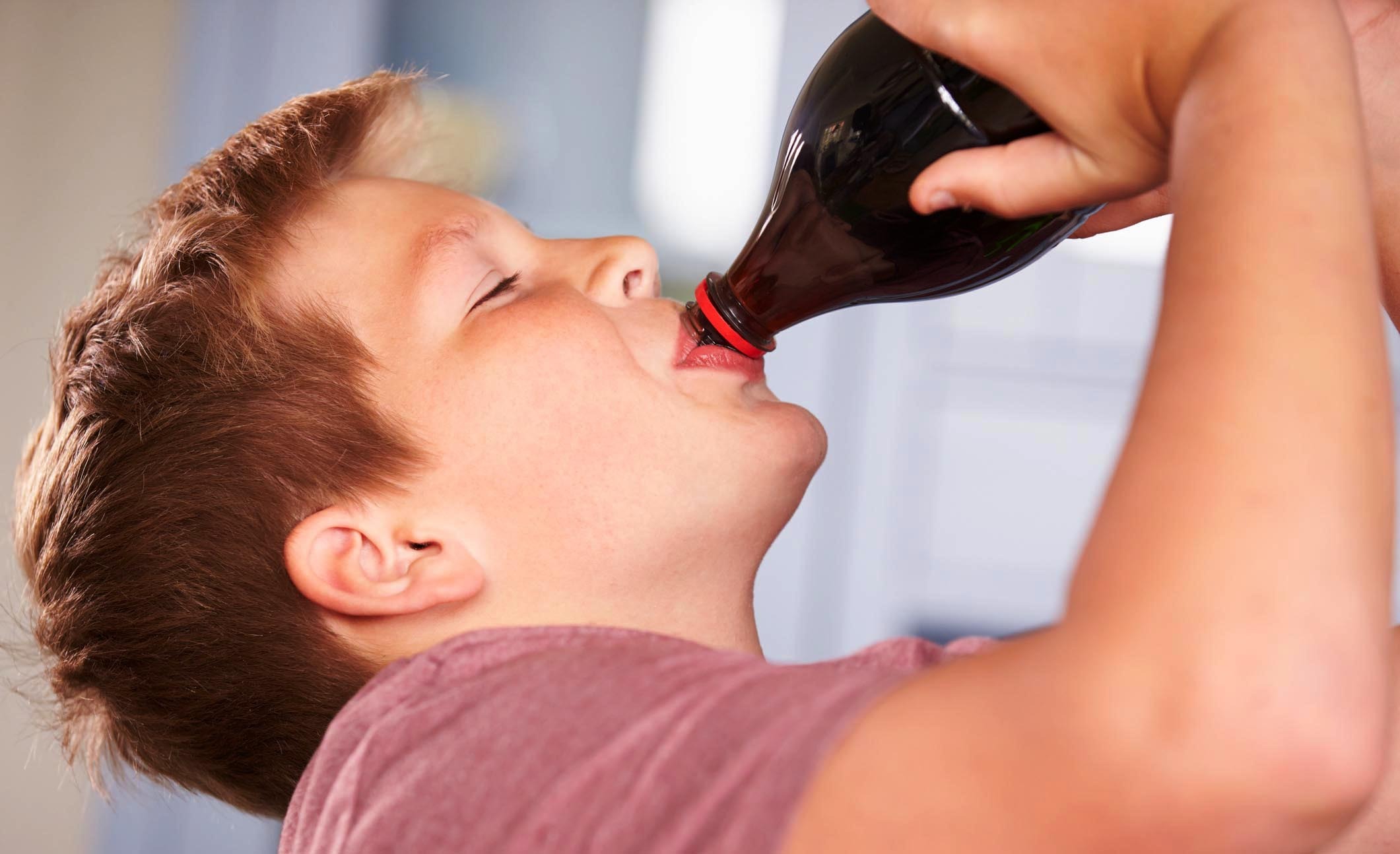
 The World Health Organization’s Africa region showed the highest sugar-sweetened beverage tax coverage if any region globally, with 89.4% of countries applying some form of tax on SSBs. (Photo: iStock)
 In one of two reports published on 13 January 2026, the World Health Organization (WHO) warns that “weak tax systems are allowing harmful products to remain cheap while health systems face mounting financial pressure from preventable noncommunicable diseases and injuries”. The report says that sugary and alcoholic drinks are effectively becoming cheaper “due to consistently low tax rates in most countries, fuelling obesity, diabetes, heart disease, cancers and injuries”.
The second report is a global assessment of excise taxes on sugar-sweetened beverages, using methods that allow comparisons of tax levels among countries, as well as qualitative comparisons of their design.
The WHO recommends that governments tax sugar-sweetened beverages (SSBs) to achieve a “a triple-win strategy”: to improve citizens’ health, to reduce the burden (and therefore costs) on the public health system and to raise further billions for government coffers.
“Sugar taxes,” which typically apply to sugar-sweetened drinks (not foods), are now in place in 116 countries, following the WHO’s first recommendations on sugar taxes in 2016. The body has since provided updated policy guidance to countries, including a manual on sugar taxation policies in 2022.
The WHO reports’ shared aim is to inform countries’ policymaking, in support of promoting healthy diets, but it says that many of the SSB taxes implemented over the past 20 years “differ widely in terms of design and level, and many are not optimised to achieve public health goals”. Countries use a variety of designs, “which in turn have different implications for their effectiveness to reduce consumption”.
Only 14% of countries applying “specific excise taxes” have automatic increases of tax on SSBs. The WHO recommends that countries include a “legal provision” to mandate this, because “not doing so risks the real value of specific excise taxes will erode over time”.
The WHO Africa region showed the highest SSB tax coverage of any region globally, with 89.4% of countries applying some form of tax on SSBs (42 of 47 countries covered in the report).
South Africa’s sugar tax
Though the WHO report on SSBs does not focus on individual countries, it is timely in its support of a longstanding call by health experts and advocates in South Africa to increase the sugar tax.
South Africa’s sugar tax – the Health Promotion Levy (HPL) – was introduced in 2018 in the form of a 2.1c tax on every gram of sugar above a 4g-per-100ml of threshold. The tax is paid by the manufacturer to the government, and passed on to the consumer in the form of higher prices.
/file/attachments/orphans/iStock-2162922467_331940.jpg "In line with World Health Organization’s recommendation, South Africa should be using ‘some portion’ of excise tax revenue for health promotion, the report says. Only 10 countries of the 78 out of the 116 for which data on earmarking was available earmark the revenue for a specific purpose. (Photo: iStock)")
In South Africa, noncommunicable diseases such as diabetes and hypertension cause more than half of all deaths, with diabetes the second-biggest cause of death after tuberculosis.
Wits University’s SAMRC Centre for Health Economics and Decision Science (PRICELESS SA) shows that overweight and obesity in South Africa place a huge burden on the health system, costing R33-billion every year. This equates to more than 15% of government’s total expenditure on health, and 0.67% of GDP.
Problems with South Africa’s sugar tax design
Health experts and advocates have criticised the HPL for being too weak, both in terms of level (11% rather than the WHO-recommended 20%) and in terms of the types of drinks taxed: only sugar-sweetened carbonated beverages, flavoured waters and energy drinks. South Africa, and most of the other 115 countries with some form of sugar tax on sweetened drinks, does not tax 100% fruit juices, sugar-sweetened ready-to-drink tea and coffee, or sugar-sweetened milk-based drinks, including plant-based milk substitutes, even though these products all contain free sugars.
In addition, in line with the WHO’s recommendation, South Africa should be doing “soft” earmarking: using “some portion” of excise tax revenue for health promotion, the report says. Only 10 countries (13%) of the 78 out of 116 for which data on earmarking was available earmark the revenue for a specific purpose.
In addition, South Africa’s HPL is not designed to automatically increase with inflation over time, and has remained at exactly the same level since 2018 (11%), with National Treasury resisting calls to increase it. The WHO report says that sugar-specific excise taxes (like South Africa’s, where the tax is based on the sugar content per 100ml) “need to be periodically adjusted for inflation or their real value risks erosion over time”.
Also, all sugar-sweetened drinks should be taxed, “to prevent the substitution of consumption from taxed beverages to untaxed beverages containing free sugars”.
Urgent action needed, experts say
Since the HPL’s introduction the South African sugar industry and related businesses have claimed that the tax is not effective, and has caused massive job losses (see Daily Maverick’s recent article on this). But Professor Sue Goldstein, managing director of Wits’ PRICELESS, has said that her team’s research, which is grant-funded, “showed that the levy had not been associated with job creation or job losses in sugar-related industries”, including agriculture, beverage manufacturing and businesses that sell food and drinks.
Without further measures to promote healthier eating, including reducing free-sugar consumption, obesity in South Africa is projected to affect 30 million adults and 10 million children by 2035, Goldstein has said. “We need to remember that the rate of increase of obesity in children in South Africa is the second fastest in the world.”
Despite industry claims that the HPL does not work, global scientific research, including PRICELESS SA’s, shows a positive impact. In South Africa, the tax has resulted in reductions in sales of sugary drinks, particularly among lower socioeconomic groups and lower-income households, which are also the hardest hit by noncommunicable diseases.
It will still take several years to obtain evidence of improvements in health as a result of lower consumption of sugary drinks. But based on PRICELESS’s research, increasing the HPL to the WHO-recommended level of 20% could reduce rates of obesity by 2.4% to 3.8%, prevent 619,000 new cases of diabetes, prevent 85,000 strokes and save 72,000 lives over two decades.
“We treat people every day for conditions that should never have progressed this far, says Dr Darren Green, who is supporting the campaign by Heala, the Healthy Living Alliance, to have the government raise the HPL in the finance minister’s Budget Speech on 24 February. Green calls the HPL “a protective shield for millions of South Africans”, that means “fewer amputations, fewer patients on dialysis and fewer children growing up without parents”.
/file/dailymaverick/wp-content/uploads/2022/11/Oped-Mash-DiabetesTW2.jpeg "‘Based on PRICELESS’s research, increasing the HPL to the WHO-recommended level of 20% could reduce rates of obesity by 2.4% to 3.8%, prevent 619,000 new cases of diabetes, prevent 85,000 strokes and save 72,000 lives over two decades.’ (Photo: diabetes.co.uk / Wikipedia)")
How is the money from the sugar tax spent?
So far, the HPL has raised as much as R13-billion since its introduction (by mid-2022 it had raised more than R10-billion). Despite its name, the money raised by the tax seems not to be spent on health promotion specifically related to obesity and noncommunicable disease prevention, as was its stated aim. Instead, it goes into the national budget and is spent alongside other tax revenues, with no traceability of HPL funds.
Daily Maverick has asked the Department of Health for updates on the HPL and any plans to increase it or adjust its design, but had not received a response by the time of publication.
Many SSB manufacturers globally have reformulated their products in order to reduce their tax burden, by replacing some of the sugar in their drinks with non-sugar sweeteners. But WHO guidelines, as well as the latest report on SSBs, advise that non-sugar sweeteners should not be used for weight control and to consider other ways to reduce free sugar intake, because drinks made with artificial, non-sugar sweeteners (such as aspartame, saccharin or sucralose) “may potentially increase the risk of adverse health outcomes”. DM
Adèle Sulcas writes about food systems and global health and is a senior adviser to Daily Maverick’s Food Justice project. She has previously worked for the World Health Organization on staff in Geneva and as a consultant.