



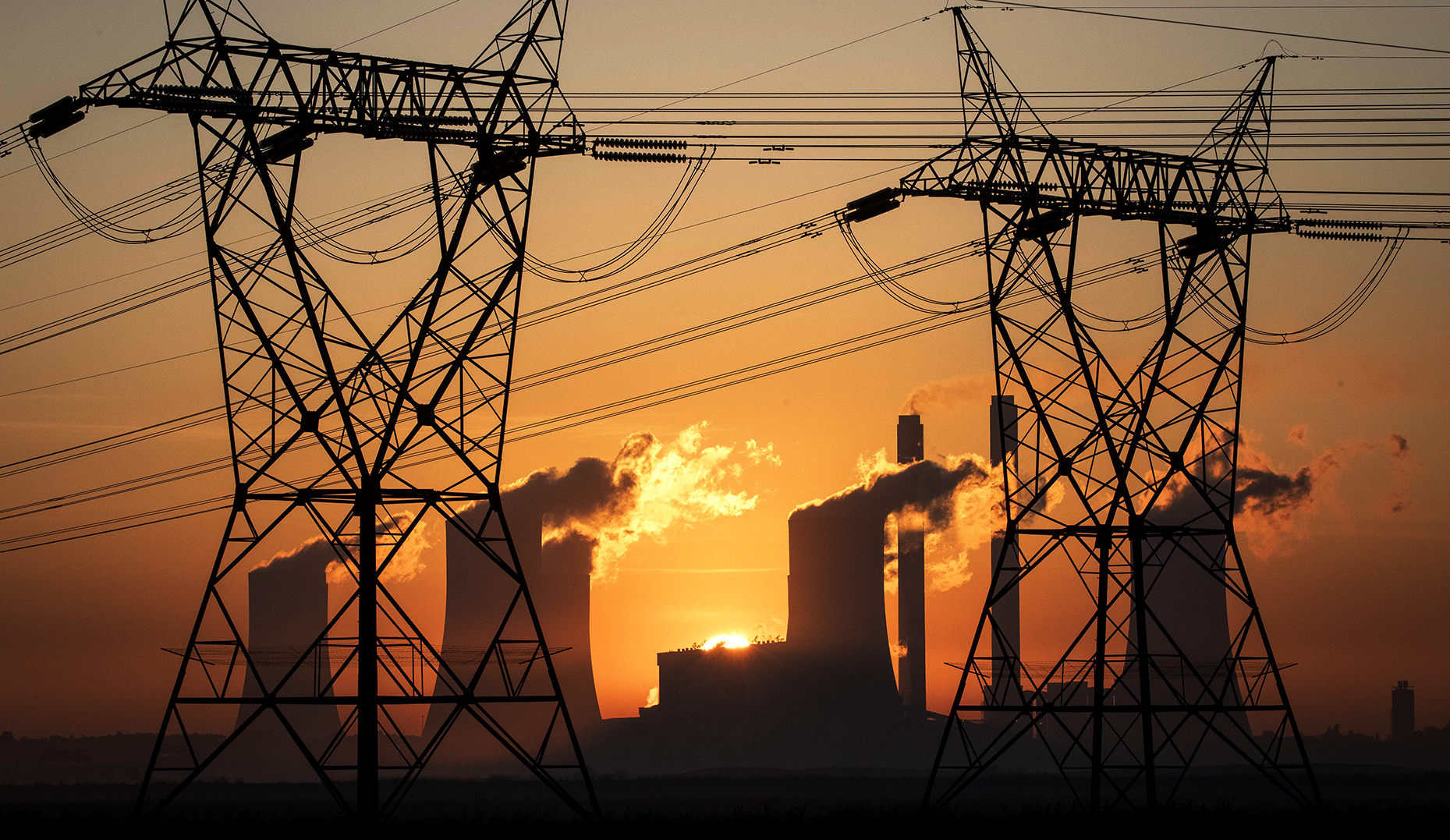
 Powerlines lead from Eskom's Lethabo coal-fired power station in the Free State on 13 April 2023. (Photo: EPA / Kim Ludbrook)
President Cyril Ramaphosa lifted the cap on independent energy production three years ago, the start of the process of energy reform, which helped end crippling load shedding.
Reforms have lost momentum, and Ramaphosa took the helm in his State of the Nation address, promising a clear roadmap and clearing up confusion on the independent ownership of the transmission system operator (TSO).
This TSO will be the nerve-centre of a revamped energy ecosystem in SA, but Eskom wanted to maintain share ownership, which the new energy industry is set against.
The South Africa Electricity Traders Association has released a 10-point action plan for the second phase of energy reforms.
/file/attachments/2988/10actions_989386.jpg "Source: SA Electricity Traders Association, Policy to Power report.")
What could this this mean for you?
💡First, it reduces the risk of further load shedding which is projected for 2029/2030 by securing a second phase of energy reforms.
💡Second, if new forms of energy are produced (primarily renewables) at a pace and scale to drive competitive pricing, it means your tariffs could come down because you can buy private power.
💡It also means the fiscus could be relieved of huge debt relief allocated to Eskom, which could free funds for subsidised electricity for low-income households, housing, schools and hospitals.
“Eskom Holdings’ unbundling is central to electricity reform and requires a clearly defined and credible end state with defined timelines for achieving this,” says the report.
New leaders at Eskom are tamping down massive losses and managing debt, but not enough to ward off a utility death spiral hastened by the stubborn debts that municipalities owe – now at R105-billion and climbing.
Sky-high electricity tariffs
Load shedding may have ended, but it has come at the cost of huge tariff increases. The chart shows how actual tariffs have overshot inflation by multiples.
Many people are returning to paraffin and wood-fire burning as electricity is too expensive. Competitive markets can drive down prices, but only if there is a muscular regulator in place. Nersa, the energy regulator, is good, but not great. It made a mistake in setting the 2026/27 tariff, which will now go up by 8.76% rather than the lower 5.36% initially set.
/file/attachments/2988/electricityprices_665546.jpg)
The electricity traders wheel or trade power across the entire system, mostly via the transmission network, until a national wheeling framework is finalised.
They include companies such as Africa GreenCo, Discovery Green, Apollo, Etana, Investec and others. It is a sunrise industry in SA. The SA Electricity Traders Association’s 10-point action plan, released on 17 February with research partner Krutham, says a new energy universe is hampered by five big hurdles. They are the following:
/file/attachments/2988/Gemini_Generated_Image_ax7y98ax7y98ax7y_990267.png)
“The challenge lies not in policy intent, but in execution – clarifying the sequencing of reforms and the institutional responsibilities required to deliver them, while managing conflicts of interests and ensuring consistent treatment among market participants,” says the report, adding that “Fair and equal treatment of all market participants is essential. Any party wheeling power from one point to another should face the same rights and responsibilities, whether an IPP or a trader.”
To do this, both the Department of Electricity and Nersa need new capacity and skills, the research has found.
The traders have a voice and influence because they have become vital energy players: between 2023 and 2025, almost 4.7 gigawatts (GW) of privately contracted power projects were closed, with 2.6GW contracted to traders. “South Africa’s electricity reforms are not optional adjustments. They are a structural response to deep economic, energy and climate pressures that have built up over decades,” the report concludes. These are the 10 actions the traders say are now necessary. If implemented, electricity tariffs could reduce over time, and not in the short-term, they said on a briefing call.
Here is a summary of the 10 points for the next phase of energy reform.
1. Publish a Cabinet-endorsed electricity reform roadmap
Create a single, authoritative, time-bound plan that aligns all reform strands (South African Wholesale Electricity Market [Sawem], Eskom unbundling, pricing, distribution reform), assigns accountability and maintains political momentum.
2. Finalise the Electricity Pricing Policy (EPP)
Set a clear, cost-reflective pricing framework that supports competition, ensures affordability protections (including free basic electricity), and transitions from monopoly-based tariffs to market-aligned pricing.
3. Strengthen the Electricity Department and Nersa
Build institutional and regulatory capacity to manage a more complex, competitive electricity market, enforce rules consistently and provide policy clarity to investors.
4. Define a credible end state for Eskom Holdings
Clarify Eskom’s future structure, balance sheet and role — particularly separating generation from transmission and system operations — to avoid conflicts of interest and ensure long-term sustainability.
5. Deliver the Transmission Development Plan
Accelerate grid expansion to unlock new generation capacity. Transmission is the binding constraint — without new lines and grid upgrades, private investment will stall.
6. Reform the electricity distribution industry
Stabilise financially distressed municipalities, modernise systems, enable wheeling and resolve debt — ensuring municipalities can participate effectively in the reformed market.
7. Finalise trading rules
Put in place clear bilateral trading rules that define how electricity is bought, sold, wheeled and settled, while ensuring neutrality between traders, IPPs and other participants.
8. Improve wheeling systems and grid access
Standardise and automate wheeling frameworks across Eskom and municipalities, remove discriminatory barriers and modernise digital settlement systems to handle growing volumes.
9. Launch Sawem with a market code in place
Operationalise the wholesale market with transparent rules for dispatch, balancing and settlement so that price discovery, risk allocation and competition function properly. Sawem is the Wholesale Energy Market.
10. Enable cross-border electricity transactions
Deepen regional integration to improve liquidity, resilience and supply security by aligning domestic reforms with southern African power pool trading. DM
Daily Maverick used Chat GPT to summarise the actions. An editor checked before and after.
Comments
Scroll down to load comments...