




 The Western Cape MEC for police oversight and community safety, Anroux Marais, and Western Cape police commissioner Lieutenant General Thembisile Patekile at the release of the third-quarter crime statistics for the province on Tuesday, 3 March. (Photo supplied: Piet Smith / SAPS)
Of the 276 gang-related murders recorded across South Africa in the third quarter of 2025/26, 257 occurred in the Western Cape, where the controversial deployment of the South African National Defence Force (SANDF) promised by President Cyril Ramaphosa has yet to begin.
On Tuesday, 3 March, the Western Cape’s MEC for police oversight and community safety, Anroux Marais, and its police commissioner, Lieutenant General Thembisile Patekile, unpacked the province’s third-quarter crime statistics, covering October to December 2025.
Their briefing was an opportunity to assess what is working, where interventions have fallen short, and where improvements are urgently required. It followed acting Police Minister Firoz Cachalia’s recent release of the national third-quarter crime statistics.

There were 41 fewer murders in the province during the period under review, a decrease of 3.4% from the same period the previous year.
“While any decrease is encouraging, 1,157 murders in a single quarter is still far too high,” said Marais. “At 15.2 murders per 100,000 people, we have the second-highest murder rate in the country.”
During the same period nationally, 6,351 murders were recorded. In the corresponding quarter in 2024, 6,953 murders were reported nationally, of which 1,198 occurred in the Western Cape.
Violence deeply entrenched
Despite an overall decline in murder, Marais stressed that violent crimes remained deeply entrenched in the Western Cape, particularly in the most serious categories.
Attempted murders rose by 5.3%, with 1,211 cases recorded, compared to 1,150 during the same period in 2024.
Even more troubling is the trajectory of sexual offences. Rape cases climbed to 2,014, up from 1,957 in the corresponding quarter of the previous year.
The province reported 51 extortion cases out of South Africa’s 128 extortion or protection racket cases, which illustrates the grip of organised criminal networks in certain communities.
/file/attachments/orphans/AnrouxMarais_129494.jpeg "The Western Cape MEC for police oversight and community safety, Anroux Marais. (Photo supplied: Piet Smith / SAPS)")
“The Western Cape remains the epicentre of gang-related violence in South Africa,” said Marais. “In this quarter, 257 of the country’s 276 gang-related murders occurred here. Similarly, 291 of 320 gang-related attempted murders nationally were recorded in our province. That means roughly one in four murders and attempted murders in the Western Cape is gang-related,” said Marais.
According to the SAPS crime statistics, the Western Cape recorded 263 gang-related murders during the same period in 2024.
In his opening remarks, Patekile noted the decline in murders, but expressed his worry about the spike in attempted murders and sexual offences. He said these were worrying matters that required urgent attention.
Dr Guy Lamb, a criminologist at Stellenbosch University, said the focus must shift to how gangs acquire weapons, run racketeering networks and — crucially — how criminal proceeds are stored, moved and channelled through financial systems.
“Gangs and extortionists are not going anywhere in South Africa, Cape Town and in suburban areas of the Eastern Cape. Gangs recently expanded their region into rural areas, smaller towns, and all of this has to do with the illegal economy around drug production. It is nothing new and has been around for recent years,” he said.
/file/attachments/2989/Screenshot2026-03-03at185653_566359.png "(Sourcs: SAPS)")
SANDF still not deployed
During the parliamentary debate on the State of the Nation Address on 17 February, Cachalia said the SANDF would be deployed within 10 days to tackle gangsterism in the Western Cape, illegal mining in Gauteng and violence in Gqeberha’s Northern Areas.
On Tuesday, however, Patekile said that no official date had been confirmed.
“The SANDF is coming, although the exact date is not yet known. Western Cape SAPS operational plans are in place, but they are waiting on the SANDF.”
Top police officers this week told Parliament that it was anticipating a deployment of the army between 1 March 2026 and 31 March 2027, but the president is yet to begin the process.
Until that deployment materialises, however, residents in red-zone communities remain exposed to daily violence, where gunfire is routine and innocent bystanders, especially children, are hit by stray bullets.
The communities bearing the brunt of this disturbing wave of gang violence are Mfuleni, Delft and Manenberg, with repeated mass shootings also reported in Khayelitsha.
/file/attachments/orphans/Top30murderstations_259693.jpg "(Source: SAPS)")
Signs of progress
The underlying message at Tuesday’s media briefing was that amid sobering crime realities, there are nonetheless signs of progress.
Particularly encouraging was the sharper decline in murder within areas covered by the province’s Law Enforcement Advancement Plan (Leap).
In Leap deployment zones such as Mfuleni, Delft, Manenberg and Mitchells Plain, targeted interventions appear to be yielding tangible results. Delft recorded a 19.4% decrease in murder, Gugulethu saw a 13.3% decline, while Mitchells Plain posted an impressive 22% reduction.
Another positive indicator is the continued success of the SAPS in confiscating more illegal firearms than any other province. Given the central role that firearms play in the province’s murder and attempted murder statistics, sustained firearm recoveries remain a critical pressure point in disrupting gang activity.
The Director of Public Prosecutions in the Western Cape, advocate Nicolette Bell, echoed this concern, emphasising that illegal firearms were a key prosecutorial focus. Her remarks reinforce the view that disrupting the flow and possession of unlicensed guns is central to curbing violent crime.
SAPS must strengthen intelligence capacity
This point was amplified by Cachalia during a recent visit to Mitchells Plain and Mfuleni, where he stressed that the intelligence-driven capabilities required to effectively combat gang violence and organised crime in Cape Town were still not fully in place.
Both Marais and Patekile underlined the importance of Crime Intelligence being properly capacitated and supported, not only to gather information, but to convert it into coordinated, operational action.
Their appeal to Cachalia was clear: stabilise and strengthen intelligence structures in the Western Cape as a matter of urgency. This must be coupled with bolstered investigative capacity, ensuring that cases are not only opened but thoroughly built and successfully prosecuted.
Patekile further indicated that alcohol and drugs remained significant drivers of violence in the province.
Mounting strain within SAPS
A recent engagement between the Portfolio Committee on Defence and Military Veterans and leading academic experts in national security and military sociology from Stellenbosch University and the Mapungubwe Institute for Strategic Reflection has sharpened concerns that the growing reliance on soldiers for domestic operations signals deeper strains within SAPS.
Academics highlighted that while the SANDF deployment may present a short-term response to high levels of violent crime, it is also a sign that the police are struggling to fully carry out their mandate. They also cautioned that long-term military deployments inside South Africa carry serious risks.
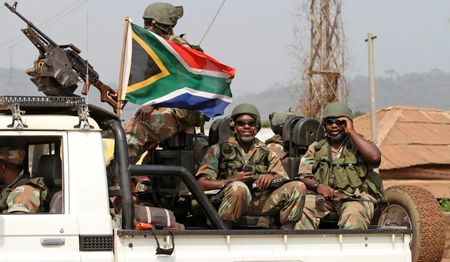
Committee chairperson Dakota Legoete said South Africa’s high murder rate demanded decisive action, but warned against relying on soldiers as a permanent solution.
“We are losing between 26,000 and 30,000 people to murder every year. That is a crisis that cannot be ignored. But the army is not a long-term answer to crime. Soldiers must be deployed for a limited period, under strict oversight and with clear rules. We must avoid a situation where the military becomes part of day-to-day political solutions or is used as an intimidating force against our own people.”
On the other hand, Dr Simon Howell, a senior research fellow at the University of Cape Town’s Centre of Criminology, suggests that short-term strategies such as deploying the military can create temporary space for other interventions to take root, but only if those programmes are relevant, fast and properly funded.
“When the army is deployed, gangs are pushed out and crime drops, but only for as long as the soldiers remain. That is not a long-term solution. People closest to the gangs may be calling for the wrong answers, but the logic behind those calls makes complete sense — it offers short-term relief,” he said. DM
Comments
Scroll down to load comments...