




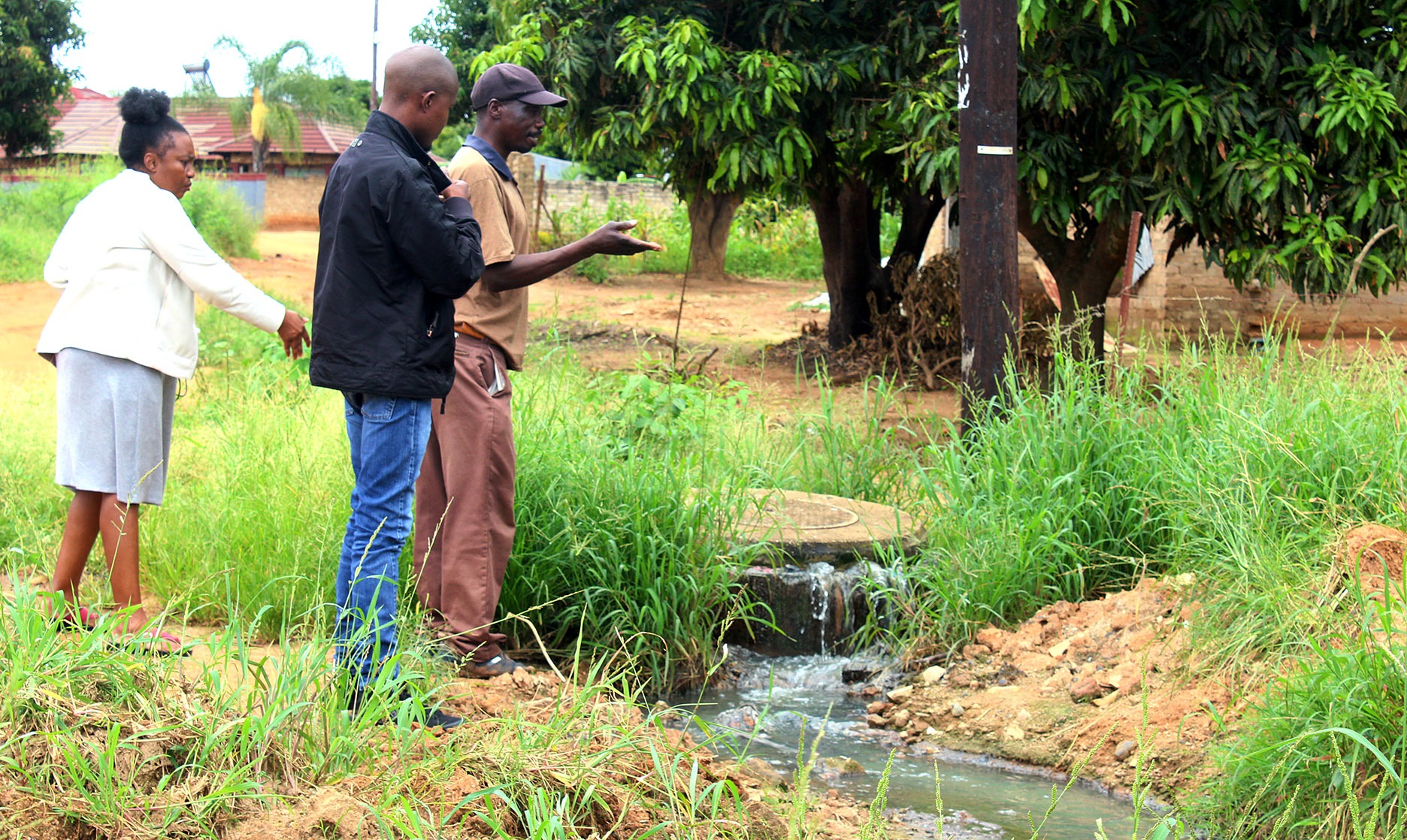
 Residents of Mariveni in Limpopo near a sewage leak in the area. (Photos: Judas Sekwela)
 For most families across South Africa, the festive period marks a season of rest, celebration and homecoming. But in Mariveni Village, Nkowankowa outside Tzaneen, Limpopo, residents spent Christmas stepping over human waste.
The flow of sewage hasn’t stopped for more than five months. Raw sewage has continued to spill unabated from blocked and broken pipes, bubbling into yards, flooding dusty roads and collecting in pools outside front doors. Toilets back up into bathtubs.
Taps run, but residents are scared to drink the water. Homes smell like untreated latrines, and flies blacken food left uncovered for even a minute.
What began as a minor leak in October 2025 has now become a full-scale environmental and public health emergency, one that residents say the government allowed to fester.
/file/attachments/orphans/Marivenisewage41_119656.jpg "Sewage runs through the streets of Mariveni, Limpopo, and some residents have to wade through puddles. (Photos: Judas Sekwela)")
‘We feel trapped’
“We live with sewage now,” said Mariveni resident James Maswanganyi (51), who described life in the village with the weariness of someone who has long stopped waiting for help.
“We had no choice but to dig a trench ourselves to channel the sewage away from our yards,” he said.
Their solution has now created a second crisis. The trench carries the untreated waste straight into the Letsitele River, a lifeline for communities, livestock and subsistence farmers along its banks.
“In the process of digging the trench, we had to cut some underground pipes that residents had installed themselves to get water to their homes. Now some people have no running water at all,” Maswanganyi explained.
/file/attachments/orphans/Marivenisewage1_238995.jpg "Residents in Mariveni, Limpopo, say they feel trapped due to leaks and the daily stench of human waste from the sewage disaster. (Photos: Judas Sekwela)")
Before the spill, the Letsitele River was a modest but reliable source of relief, water for home use, washing, and sometimes drinking when taps inevitably ran dry. Now residents avoid it entirely.
“We fear it’s contaminated. We haven’t enjoyed our festive season. Some people left their homes to escape the smell, and they’re afraid to come back.”
Windows sealed in ‘survival strategy’
For many households, daily life has become a survival strategy. Doors and windows remain sealed even on Limpopo’s sweltering summer days.
“We feel trapped,” said Queen Maluleke (37), who has lived in Mariveni for decades. “We close everything so the smell doesn’t come inside. Children can’t play outside. You only see people on the streets by accident, as most stay indoors to escape the stench and the sight of raw waste.”
She broke down, describing pensioners who must wade through puddles of human waste to collect social grants or buy bread. “This is inhumane. It’s like our government has forgotten we exist.”
Residents accuse Mopani District Municipality of allowing critical sewage infrastructure to collapse long before the latest spill.
Read more: R400bn price tag to fix failing municipal water services in SA, says government
Pumps gone, everything backed up
They say submersible pumps, vital equipment that keeps sewage flowing, were removed for repairs in 2025 and never returned.
“When the pumps failed, everything backed up,” said resident Thembi Masakhona, 40.
“We went to the municipality so many times, but nobody helped. Sometimes officials ignore us. Sometimes they say they are ‘processing it’. Meanwhile, the waste keeps flowing.”
She fears an outbreak of cholera or typhoid is inevitable. “Our children are getting sick. We don’t know if it’s the sewage or the water. Every day we worry.”
Kenny Phasha from Tsogang Water and Sanitation, an organisation focused on climate change mitigation through water, sanitation and environmentally sensitive projects, said the situation in Mariveni poses a serious health threat and risks contaminating groundwater.
“We have doubts about the municipality’s capacity,” he said. “Government is often quick to shift blame, but when we engage them, we are told it’s due to ageing infrastructure. This crisis was avoidable. The stench is unbearable, and residents living closest to the spill are suffering most and risk falling ill.”
‘Stench is unbearable’
Residents insist that the municipality was alerted long before the situation spiralled. Elizabeth Home Foundation admits the situation is overwhelming.
“We are appalled that residents of Mariveni have been forced to endure this for months,” said founder Elizabeth Shingange.
Elizabeth Home Foundation, established in 2020, is a humanitarian organisation dedicated to addressing crime, tackling poor service delivery, and responding to challenges that affect communities and individuals.
“It’s as if they don’t have a councillor or mayor. Mopani District Municipality has not maintained sewer infrastructure properly since at least January 2023.”
Shingange wants the Limpopo Cooperative Governance, Human Settlement and Traditional Affairs MEC Basikopo Makamu to intervene immediately.
“We want dignity, clean yards and safe spaces where children can play. That’s not a luxury, it’s a constitutional right.”
Action SA’s Member of Parliament serving on the Portfolio Committee of Water and Sanitation, Malebo Kobe, said the current situation unfolding in Mariveni is a clear example of widespread governance failures that plague many municipalities across Limpopo.
“All across the board, ANC-led municipalities violate residents’ basic right to water, dignity, and life itself because of their incompetence and lack of leadership. The gross neglect of key water infrastructure and lack of maintenance of water systems by local authorities cannot continue unabated while communities pay religiously for these services,” she said.
/file/attachments/orphans/Marivenisewage42_326438.jpg "A trench dug by locals to manage a Mariveni sewage spill is impacting a local river. (Photos: Judas Sekwela)")
Kobe said it is high time that the Department of Water and Sanitation intervenes in water service authorities that seem to casually abdicate their responsibility, with little regard for their communities who have suffered severe health issues.
“This gross neglect has proven to devastate communities and the same must not be allowed to repeat itself in Mariveni,” she said.
Democratic Alliance councillor at the Mopani District Municipality, Mahlatswa Ramalepe, criticised the municipality for what he described as a “lazy and uncaring” approach to repairing and maintaining the sewage system.
“They are failing to carry out proper maintenance, and residents are suffering as a result,” Ramalepe said. “We conducted an oversight visit on 12 December, 2025 and saw firsthand the damage and the conditions people are being forced to live in. Each time we follow up, we are told maintenance will be done, yet nothing changes. We are preparing formal questions for the next council sitting in two weeks,” he said.
Bosa Limpopo community manager Timothy Maluleke said the crisis exposes deep governance failures.
“The municipality doesn’t care about its people,” he argued. “What kind of leadership leaves residents to live in filth for months? Not even the executive mayor, Pule Shayi, has visited the area.”
Maluleke believes the solution is political, not technical. “Residents should remove leaders who don’t care about them. Use the ballot, not the bullet.”
He also wants the South African Human Rights Commission to open a probe into the district municipality.
“District municipalities no longer serve communities. They must stop looting and hand authority to local municipalities that can be held accountable. We are going to lodge a complaint with the Human Rights Commission.”
‘The system is running’
Responding to queries, Mopani District Municipality spokesperson Odas Ngobeni said Greater Tzaneen Municipality is responsible for the maintenance of sewer reticulation, while the district manages pump stations.
According to Ngobeni, vandalism, the theft of pumps, motors and cables, and equipment breakdowns crippled the system.
“We have installed the pumps and the system is running,” he said confidently.
The Greater Tzaneen Municipality spokesperson, Neville Ndlala, attributed the sewage spill to a malfunctioning pump station.
“We have repaired and refurbished the pump and conducted grading and cleaning of the impacted streets,” he said.
“However, the continuous heavy rains make it difficult to determine whether the intervention has worked or whether the manhole is still discharging sewage.”
Like many other areas in Limpopo, Mariveni was impacted by extreme floods in January 2026.
But when Daily Maverick visited Mariveni recently, sewage was still streaming down the streets. Flies buzzed over puddles of waste under relentless Limpopo heat, and the stench hovered like a fog. If the system is operating, residents say they cannot see or smell any difference.
Whether the fault lies with local or district government matters little to those wading through human waste.
The residents want three things: a functioning sewage system, urgent cleanup of contaminated areas, and accountability for a crisis they believe could have been averted.
For now, the fountains of waste continue. And Mariveni Village remains trapped in a nightmare where the smell of sewage marks every morning and the fear of disease shadows every night. DM