



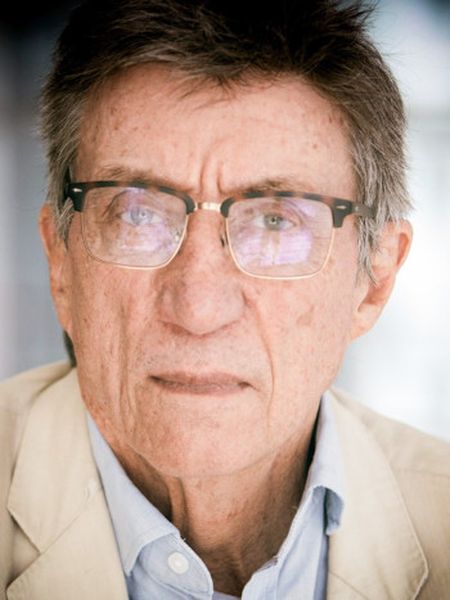
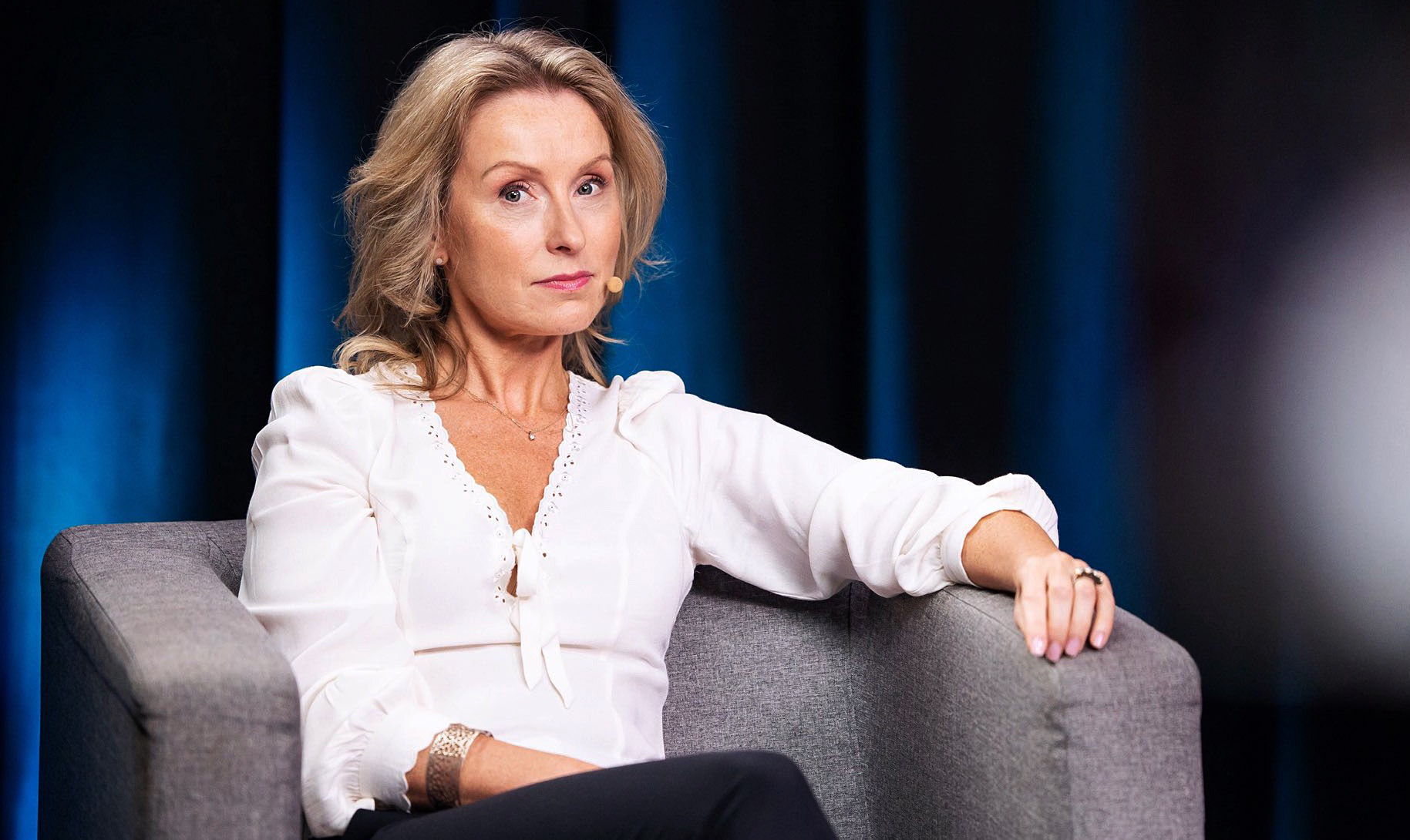
 Margarita Šešelgytė, director of the Institute of International Relations and Political Science at Vilnius University. (Photo: Margarita Šešelgytė / Facebook)
Russia’s war against Ukraine, which went into its fifth year on Tuesday (24 February), is a symptom of a major change in the global balance of power, the ending of Pax Americana, the post-Cold War order sustained by US power. So says Margarita Šešelgytė, director of the Institute of International Relations and Political Science at Vilnius University.
Šešelgytė, one of Lithuania’s leading experts on security and foreign policy, fully agrees with Canadian Prime Minister Mark Carney who, now quite famously, told Davos last month that that rules-based world order which had been enabled by “American hegemony” had now experienced a “rupture not a transition”. That was largely because instead of protecting democratic US allies, President Donald Trump was attacking them with punitive tariffs and threats of annexation.
For Šešelgytė the world has entered a “period of in-between. We still don’t know what’s going to happen.
“And if you go throughout history and look at the periods like that... they were always very conflictual and full of uncertainty. And the rules of the game were not clear.
“And the most common rule was the power of the big players. The right of the might,” she told Daily Maverick in an interview in Cape Town.
“So that’s what I’m seeing now. And it is also obvious in Europe. Russia is a shrinking power, but still very dangerous, trying to grab a piece of its pie and to re-establish its zone of interest.”
/file/attachments/orphans/GettyImages-2258961158_882821.jpg "Canadian Prime Minister Mark Carney speaks before ‘In Conversation With’ creators of the Heated Rivalry series at The Westin Hotel Ottawa in Ontario on 29 January 2026. (Photo: Andrej Ivanov / Getty Images)")
Russia was more dangerous precisely because it was more desperate about losing power, internally and externally.
“It’s losing power in various regions.” In the Middle East Putin had lost his friend Bashar al-Assad in Syria. In 2023 he had failed to prevent Russia’s ally Armenia from losing Nagorno-Karabakh, its enclave in Azerbaijan, to Azerbaijani troops backed by Turkey.
“Look at Central Asia. China is taking over.
“So I believe that Russia is shrinking very fast. And the demography is also very bad [a falling population]. And the economy is very bad. No modernisation, no social reforms.
“But what it has, it has nuclear power. And a big appetite to sit at the table with the most mighty countries.”
Šešelgytė believes Putin launched the war against Ukraine in part to distract Russians from these internal problems.
But he also exploited “the window of opportunity when the US is weakening probably and withdrawing, and Europe is not strong enough yet”.
“So, the war in Ukraine, I think it’s a consequence of [global] changes.
“It’s very clear that the US is no longer interested in playing a major role in providing a security umbrella for Europe.
“So Europe has to step up.”
/file/attachments/orphans/GettyImages-2258280847_537398.jpg "Russian President Vladimir Putin speaks during his talks with United Arab Emirates President Mohamed Bin Zayed Al Nahyan at the Grand Kremlin Palace in Moscow on 29 January 2026. Margarita Šešelgytė believes Putin launched the war against Ukraine in part to distract Russians from the country’s internal problems. (Photo: Contributor / Getty Images)")
Europe was in fact slowly waking up to the new reality, she said. To the need to federalise its foreign policy. And enlarge its membership. “Because enlargement gives new blood to Europe.” She felt it should admit Ukraine as a new member.
And Europe would also have to increase and integrate its now-fragmented defence capabilities and reconcile the different threat perceptions of its member states.
Lithuania feels the threat of Russia more acutely than most, being one of the most exposed, frontline states, along with its Baltic neighbours, Latvia and Estonia. And they have been the targets of relentless hybrid warfare from Russia, including cyberattacks by algorithm-controlled bots, political interference to boost right-wing, pro-Russian parties and amplify divisions in society, and sabotage of undersea cables and other infrastructure.
She foresees Russia spreading this hybrid war, rather than conventional warfare, across Europe – “a hybrid warfare with a cognitive element trying to meddle with the brain of European societies”.
Lithuania was for many years part of the Soviet Union – which it regards rather as the Russian empire – and so feels especially sensitive to the ambition which she believes is driving Putin’s war in Ukraine – to recreate that empire.
Given that ambition of Putin, Šešelgytė is not optimistic about America’s stuttering Ukraine peace talks. Though she thinks some sort of truce is possible and necessary as both sides are bleeding badly.
But she is concerned that a bad peace will not end the conflict. Even if Ukraine cedes some of its occupied territory to Russia and gets some security guarantees from the US and Europe in return, that will not change Russia’s colonialist mindset, she suspects.
Or change the will of Ukraine to be free and independent, which was growing stronger by the day. Ukrainians she talks to say even if the collective West entirely abandons its support, the country will continue its resistance to Russia, resorting to guerrilla warfare if necessary.
And she says that Putin is running circles around Trump’s negotiators who lack negotiating experience and seem to be more interested in business opportunities.
She suspects it would take an internal revolt in Russia to achieve peace, since Putin needs the war too badly, not least to stay in power.
And without strong US support, including security guarantees of a peace deal, Ukraine has a problem because “Russia is not afraid of Europe”. And Ukrainians tell her they are not keen to have EU troops on the ground because “they don’t know how to fight”.
Europe was learning how to fight but it would take time. The increase in the requirement of Nato defence spending, from 2% to 5% of member states’ GDPs, was helping.
And so defence industries, especially Germany’s, were growing “very, very fast” but had a lot of catching up to do.
Šešelgytė sees an opportunity for Europe in leapfrogging old conventional defence industries and rather developing new ones, like drones, AI and space capabilities.
And the 1950s notion of a European Army was surfacing again, possibly a 100,000-strong force while EU member states retained their national military forces.
Though some populist right-wing parties have won support for opposing rearmament, that is changing, she says, because polls show most Europeans now support a European Army.
So Europe is uniting, and she says the greatest driver of that unification has, ironically, not been Putin but Trump.
“One of the greatest demonstrations of European unity was Davos and the issue of Greenland,” she says, recalling how Europe stood together and despatched troops to Denmark’s Greenland, to deter Trump’s intentions to annex it.
/file/attachments/orphans/GettyImages-2262484559_364770.jpg "U.S. President Donald Trump watches presentations during the inaugural meeting of the Board of Peace at the Donald J. Trump Institute of Peace on February 19, 2026 in Washington, DC. Assembled to raise money for the rebuilding and stabilization of Gaza, Trump's Board of Peace was formally established on the sidelines of World Economic Forum in January of 2026. (Photo: Chip Somodevilla / Getty Images)")
But if Trump bears so much responsibility for the end of Pax Americana, surely a Democrat president could restore that order?
Šešelgytė doubts that, believing that even a Democratic president will largely be obliged to follow the trend of withdrawing attention from Europe. She notes for instance how California’s Democrat governor, Gavin Newsom, sharply criticised Europe at Davos (for not standing up strongly enough to Trump, though).
/file/attachments/orphans/GettyImages-2249826541_911495.jpg "California Gov. Gavin Newsom speaks during the 2025 New York Times Dealbook Summit at Jazz at Lincoln Center on December 03, 2025 in New York City. NYT columnist Sorkin hosted the annual Dealbook summit which brings together business and government leaders to discuss the most important stories across business, politics and culture. (Photo: Michael M. Santiago / Getty Images)")
And she quotes David Sanger in his book New Cold Wars saying that former president Joe Biden’s strategy towards Ukraine “was like boiling a frog”.
She adds too that the global balance of power is shifting because new countries – like India – are coming to the table of negotiations and decision-making, accelerating the move towards “a multipolar world with different rules of the game”.
Šešelgytė says she understands South Africa’s lack of criticism of Russia for its war on Ukraine because of the ANC’s historically good relations with Russia.
“But I don’t think that it can be a democratic country, a good partner for Europe, and still have good relations with China, Iran and Russia. I believe that at some point, countries will have to make certain choices.”
But can South Africa not remain “non-aligned”, as it claims to be? “There is no such thing now,” she says, adding that even India, which is doing better at being non-aligned because it’s much bigger, has stopped buying Russian oil under US pressure. “And they are stopping buying Russian weapons.”
SA abstains from UN ceasefire resolution
On Tuesday, 24 February 2026, the fourth anniversary of Russia’s invasion of Ukraine, South Africa abstained from a resolution at the UN General Assembly which called for “an immediate, full and unconditional ceasefire between the Russian Federation and Ukraine”.
The resolution also said that “the full-scale invasion of Ukraine by the Russian Federation… continues to have devastating and long-lasting consequences for Ukraine and for regional and global stability.”
And it expressed “grave concern at the continued and intensified attacks by the Russian Federation against civilians, civilian objects and critical energy infrastructure…”
It also called for “the complete exchange of prisoners of war, the release of all unlawfully detained persons, and the return of all internees and of civilians forcibly transferred or deported, including children…”
The resolution was adopted by a vote of 107 for, 12 against and 51 abstentions.
South Africa’s deputy ambassador to the UN, Marthinus van Schalkwyk, stressed to the Assembly “the importance of taking every precaution to avoid targeting civilians, civilian infrastructure and critical energy infrastructure cannot be overstated”.
This appeared to refer to Russia’s intensifying bombardment of Ukraine’s energy infrastructure.
He also expressed support “for the protection of children on all sides…” in an apparent reference to Russia’s abduction of children, though it referred to children “on all sides”.
Van Schalkwyk also demanded “adherence to the sovereignty and territorial integrity of all States”, another implicit criticism of Russia for invading Ukraine.
In short, he said, “The operative elements of the resolution are in line with South Africa’s approach to the conflict.”
Yet South Africa withheld its support for the resolution on the procedural ground that “the text was produced in a restrictive manner, without all member states being afforded an equal opportunity to contribute to its drafting”, as Van Schalkwyk said. DM
Comments
Scroll down to load comments...