




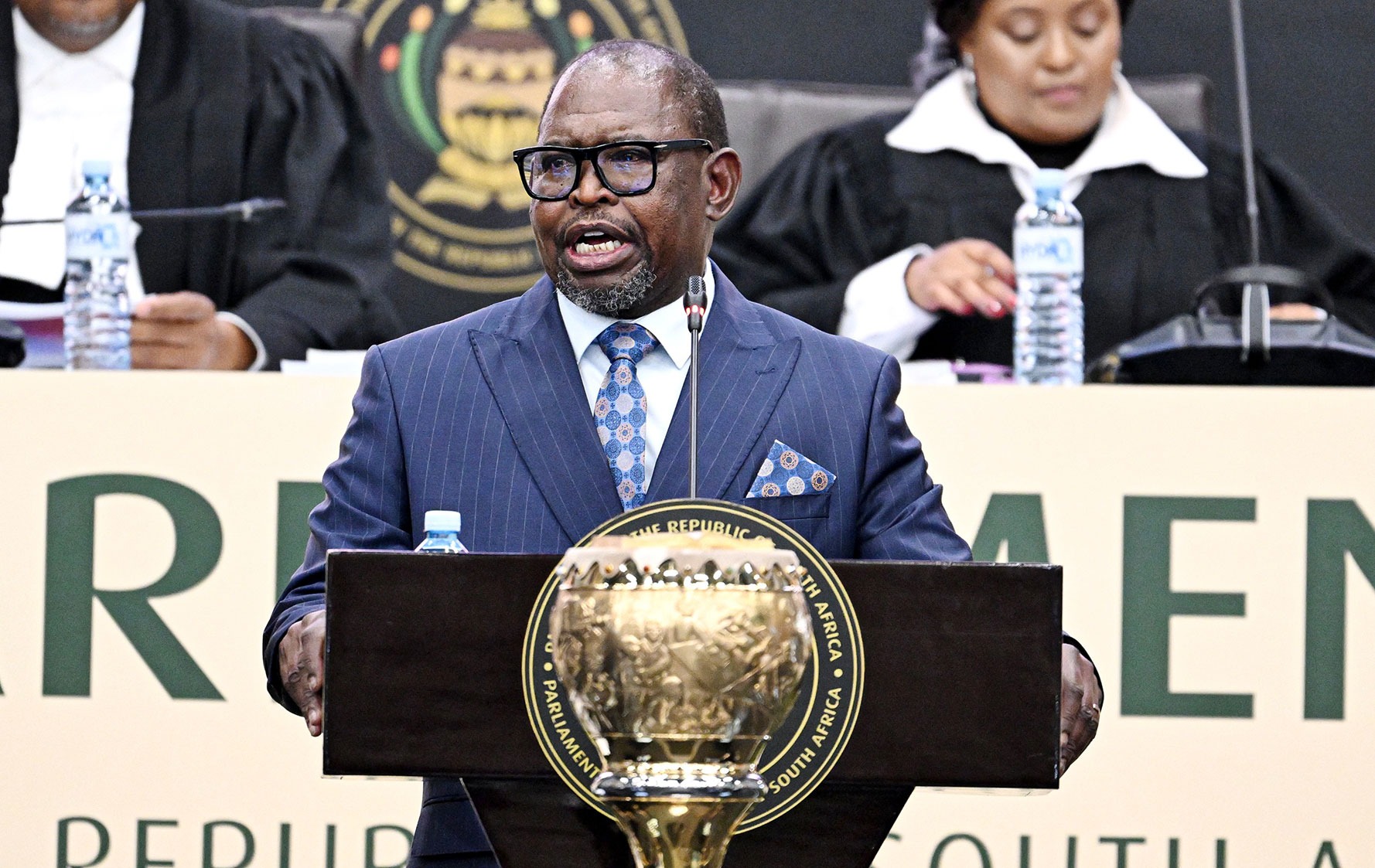
 Finance Minister Enoch Godongwana delivers the 2026 Budget Speech in Parliament. (Photo: Phando Jikelo / RSA Parliament)
South Africa’s eight metro municipalities have been given a new lifeline by the Treasury in the form of an incentive-based grant that unlocks up to R54-billion in government funding, provided metros are run in a more “business-like” manner.
The Metro Trading Services Reforms, launched at the Innovation Hub in Pretoria on 18 March 2026, aims to incentivise municipalities to improve key service delivery in the areas of electricity, water and wastewater, and solid waste management.
“Cities are the engines of economic growth and innovation. If our cities do not work, SA cannot grow,” warned National Treasury Director-General Dr Duncan Pieterse to an audience that included representatives from each municipality, as well as international delegates from international monetary institutions like the World Bank and the Asian Infrastructure Investment Bank, as well as European consulates.
The ambitious programme is targeted at the metros, which serve as the country’s economic hubs and are home to approximately 60% of the country’s population. It comes in response to failing service delivery in metros caused by ageing infrastructure, corruption, and theft and vandalism. In the 2023/2024 financial year, the Auditor-General flagged metros for “poor revenue management, debt collection and budgeting practices, [and] financial losses due to poor-quality spending”.
It forms part of President Cyril Ramaphosa’s Operation Vulindlela, which is currently focusing on improving municipal infrastructure. Included in these reforms was the National Water Crisis Committee, which was launched on Wednesday, 18 March, and aimed at addressing municipal water and sanitation infrastructure.
Available data indicates that metros consistently underspend on infrastructure maintenance and repairs. In 2014, the National Treasury set a benchmark stating that municipalities should spend at least 8% of the carrying value of their assets – property, plants and equipment – on maintenance.
The available 2025/2026 reports show that none of the metros have met this benchmark. The closest is the City of Cape Town at 7%, while the lowest was Buffalo City at 3.5%.
The result has seen metros facing a long-term decline in services, leading to water shortages, unreliable electricity supplies, and worsening waste management services.
Read more: South Africa’s water crisis is a symptom of the local government crisis
The Treasury’s reforms include performance-linked incentives that will give metros access to R27-billion in the medium term. Municipalities will have access to up to R54-billion of funding over six years, and will be expected to match that funding with revenue collection.
The Treasury proposes achieving this by ring-fencing revenues from service provision so they are used on maintenance of those services, increasing accountability among leadership, and requiring businesses to achieve financial turnaround.
Raising revenue in a flat economy
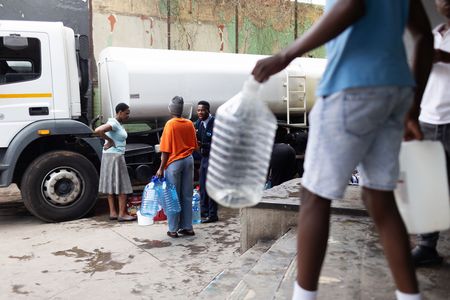
But implementation of reforms may be an uphill battle. One of the primary challenges affecting water revenue is “non-revenue water”, referring to treated water that is lost due to leaks, burst pipes and illegal connections.
In 2023, the No-Drop report published by the Water Research Commission found that nearly 50% of treated water was being lost. Further, the growth of informal settlements had led to an increase in illegal connections, adding further strain to services.
For example, in 2025 Buffalo City spent 90% of its electricity operational budget on replacing and repairing its network, which was affected by illegal connections, taking priority over normal maintenance work.
Sithole Mbanga, CEO of the South African Local Government Association (Salga), told Daily Maverick that under the current funding model, municipalities receive just 9.5% of their budget from the Treasury and must secure the other 90% from revenue collections. Under an economy with low growth and high unemployment, this places metros on “the back foot”.
“In as much as we would encourage more residents to pay for services, we also expect the government to continue playing this role, of taking care of people. Especially people that are indigent, [and] who for a very long time are unlikely to be able to afford those services,” he said.
Mbanga highlighted that the reforms would require public buy-in, particularly for any politically unpopular measures like tariff increases. He further emphasised that the SA Local Government Association supported the reforms, but not at the expense of municipalities’ constitutional authority.
/file/attachments/orphans/unnamed1_483639.jpg "CEO of SA Local Government Association, Sithole Mbanga, delivers an address during the Metro Trading Services Reforms launch at the Innovation Hub in Pretoria on 18 March 2026. (Photo: Naledi Mashishi)")
Political will
Another key issue is political will. Dr Harlan Cloete is a research fellow in local governance and public leadership at the University of Free State’s Centre for Gender and Africa Studies. He told Daily Maverick that money was not the only issue, as service delivery in metros was often affected by corruption and poor project management.
“There’s the challenge of corruption. And so we often appoint people that should replace this infrastructure that, in many cases, either leave the job in the middle [or] don’t complete it,” he said.
“So even if you have access to new sources of funding, if you don’t address the root cause of underspending – which is a lot of cases – poor project management, and corruption, and institutional mechanisms that are in place to prevent such, the cycle will just be repeated.”
He added that an incentive-based grant linked to performance may be an effective accountability mechanism.
“If we just throw money at local government and say it’s a free-for-all, it just opens the tap for corruption if there’s no checks and balances. So if it’s a performance-based and evidence-based governance model, that it is not just throwing money towards a thing, but making sure that those who qualify meet the requirements, and if there’s very stringent monitoring and evaluation of these projects, then it can work,” he said.
According to the Treasury, the programme entails three stages, which include programme entry, metros establishing their accountability framework with a clearly defined action plan and performance improvement targets, and implementation.
All eight metros have met the first target, are expected to complete the second within a year, and must complete the third over five years. DM
Comments
Scroll down to load comments...