



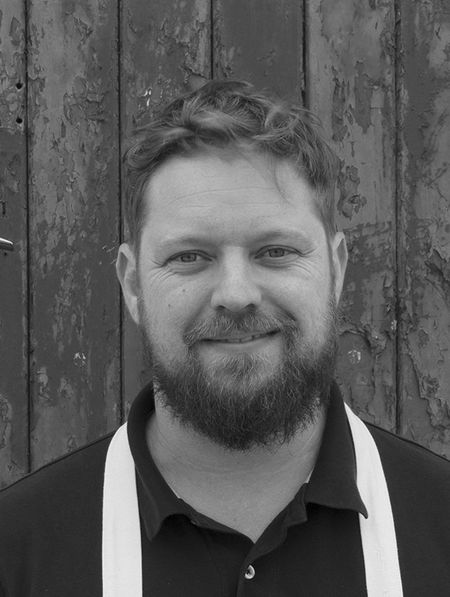
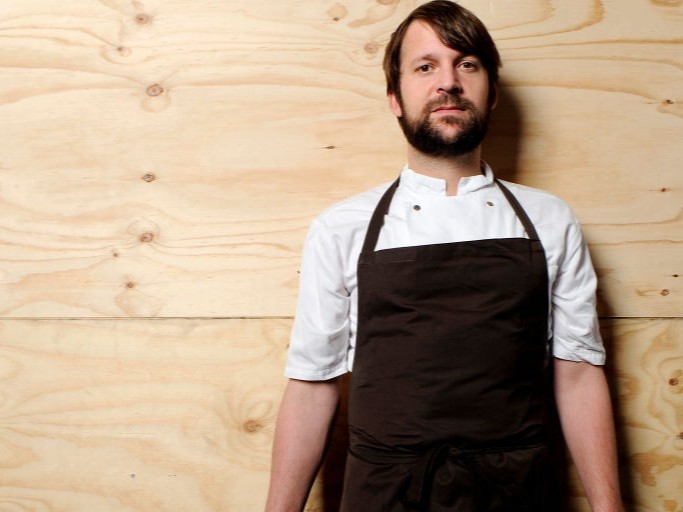
 Noma restaurant chef René Redzepi pose for portraits at the Greenhouse pop-up restaurant. (Photo: Martin Philbey)
 Anthony Bourdain’s Kitchen Confidential was published in 2000. It was meant to shock us. Instead, the industry wore it as a badge of honour. Twenty-five years later, we are still paying the price.
The news of René Redzepi’s resignation from Noma this week – following allegations of physical and psychological abuse spanning years – has brought a familiar discomfort back to the surface for me.
Not a surprise, exactly. Something more like grief.
In 2016, weeks before I opened Wolfgat, I staged at a celebrated two-Michelin-star restaurant in Belgium. I’d eaten there as a guest the year before and had been genuinely moved by the experience. So I paid to work there. What was meant to be three months lasted five shifts.
During my first service, I found myself running between the waiter’s station, the scullery and the cold section, frantically washing and replating bowls because there was less than half the quantity I needed for the amount of covers. When I flagged it with the sous chef, I was told it wasn’t his problem.
A small thing, perhaps. But it was symptomatic of something larger.
To be clear, I witnessed no physical violence. But what I did witness was a pervasive laddish culture I had honestly believed the industry had long outgrown and left behind.
Crude, dismissive, demeaning.
The sous chefs repeatedly swore at and humiliated me and other stagiaires without cause or provocation — the precise opposite of how I would welcome any colleague, let alone international guests, into my kitchen.
A fellow stagiaire – an older man of colour, with a heavy accent – was openly and repeatedly mocked for how he spoke. He handled it with quiet dignity. Homophobic slurs were also commonplace and used to address anybody new or less senior in the kitchen. Misogynist remarks were as typical.
And what struck me perhaps most of all was that this behaviour was tolerated by senior management, including senior female members of staff, as if completely normal. That, in some ways, is the most disheartening part.
I walked away after shift five. I chose to protect the memory of the remarkable meal I had enjoyed there the year before.
I genuinely believed that by 2016, the industry had moved on. Noma this week, another 10 years later, tells us it still hasn’t.
What the Redzepi story lays bare isn’t one man’s behaviour. It’s the mythology the industry built around him – and around so many like him – that allowed such behaviour to continue. The idea that pressure produces greatness. That a chef’s genius licenses cruelty. That the brigade system, with its military hierarchy and culture of silence, is simply how excellence works.
And this type of excellence is globally recognised, celebrated and awarded at the highest level.
Former Noma staff described going to work as “going to war”. That is not a standard. That is a failure of leadership, and of the very creativity such kitchens claim to champion.
Nobody is pretending that professional kitchens are without pressure. The intensity, the pace, the precision required: that is real, and on good days it is part of what makes the work extraordinary.
But pressure does not require cruelty to function. Colleagues can be demanding of one another and still be decent. A kitchen can operate at the highest level and still be a place where people are treated with dignity – not verbally, let alone physically, abused.
At Wolfgat, we have been the same small team since the day we opened. Mostly women born and raised in Paternoster. No formal culinary training between most of them. No hierarchy beyond the natural seniority that comes with experience.
We work decent hours and take regular breaks – both between shifts, and between seasons. We have no unpaid interns.
The kitchen is deliberately calm, with an atmosphere of creative exchange and collaboration. We pick, prepare, serve and clean as a team. We figure things out together.
And we are not alone – I have witnessed the same spirit in other South African restaurant kitchens, and know colleagues across this industry who bring the same intentionality, the same decency, to their teams and their restaurants every single day.
This is not naive idealism. It is a choice, and many chefs are already making it. I have always believed that true sustainability includes the wellbeing of the people who come to work every day. A restaurant cannot be ethical in its sourcing and brutal in its culture. These things are not separate.
The world has come to expect that restaurants of acclaim produce food of breathtaking beauty and complexity. But when such beauty is built on the broken dignity of the people making it, it is not something worth celebrating. It never was. DM
Comments
Scroll down to load comments...