




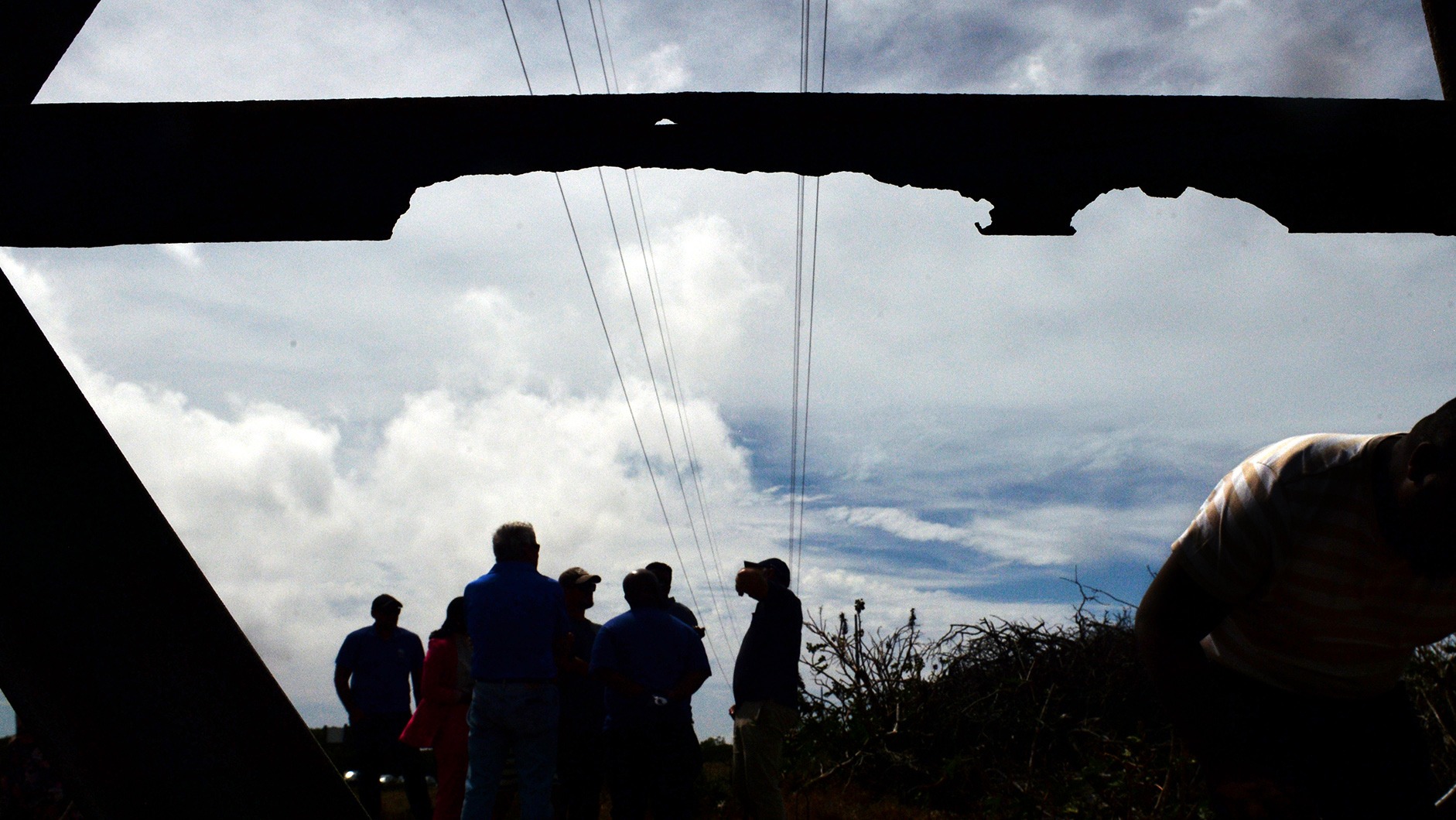
 DA members, led by the party’s mayoral candidate for the metro Retief Odendaal, inspect a rusty pylon near Sardinia Bay, Nelson Mandela Bay, on 5 February 2026. (Photo: Deon Ferreira)
Following the collapse of a high-voltage electricity transmission pylon on Tuesday, residents of Summerstrand and surrounding areas in Nelson Mandela Bay received a “load rotation schedule”, around which they will have to plan their lives for the foreseeable future until repairs are completed.
Businesses, tourism and schools – particularly pupils writing exams – will suffer prolonged power outages over the coming days.
They are the lucky ones.
Walmer and its surrounds will remain dark indefinitely. Their “network configuration” does not allow for rotational power while repairs are under way.
The entire situation could easily have been avoided had city officials heeded warnings over the past decade and implemented the strategies that were laid out for them on a silver platter.
Now, city officials are bemoaning budget constraints and procurement processes, but over the past decade, the money had been available, and projects were left incomplete due to expired contracts.
/file/attachments/orphans/Ziyanda_102394.jpeg "A Nelson Mandela Bay transmission tower collapsed on the Summerstrand-Arlington 132kV overhead line on Tuesday evening, causing widespread outages across the city (Photo: Andisa Bonani)")
When asked who was to blame for the latest of the seven high-voltage electricity transmission pylons to collapse in less than two years, the municipality’s communications department simply avoided the question.
Instead, municipal spokesperson Sithembiso Soyaya gave a long-winded response, outlining the city’s “engineering lifecycle management and statutory planning processes” – which had clearly not been very effective.
The seven pylons in question collapsed on three occasions, and on all three, it came to light that the municipality’s top management knew of the compromised structures long in advance.
In August 2024, the municipality claimed strong winds caused four pylons to collapse near Sardinia Bay. The structures had been compromised by excessive corrosion, leaving a significant portion of Nelson Mandela Bay without power for 10 days.
At least two months before, then mayor Gary van Niekerk was notified about the precarious condition of the pylons. It also came to light that maintenance contracts had been awarded three years before the collapse, but no service-level agreements were drawn up.
/file/dailymaverick/wp-content/uploads/2025/11/ED_499870.jpg "Former Nelson Mandela Bay mayor and now Deputy Mayor Gary van Niekerk. (Photo: Gallo Images / Die Burger / Lulama Zenzile)")
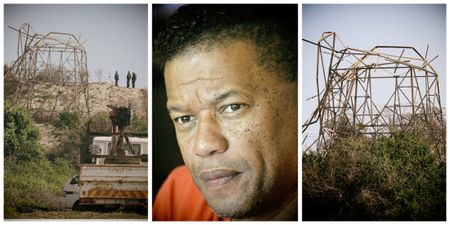
In January, two badly corroded pylons on the Bethelsdorp-Greenbushes line fell apart, once again plunging large expanses of the city into darkness.
Once again, in the days that followed, it was revealed that the head of the electricity department had warned the city council about the deteriorating state of the 132kV overhead line that runs between Greenbushes and Rowallan Park.
Read more: Nelson Mandela Bay metro warned about collapsing pylons more than a year ago
Assessments were subsequently done to determine where deteriorating electricity infrastructure required the most urgent attention, particularly lines along the coast where corrosion was most prevalent.
The Chelsea-Summerstrand-Arlington line was flagged as compromised, but there was no intervention to install replacement structures or perform urgent maintenance to prevent the pylon from collapsing on Tuesday, once again cutting power to several suburbs across the city.
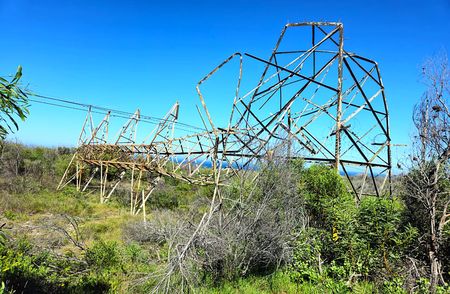
An engineer whose expertise includes corrosion repair and protection said the collapsed pylons and extended power outages could have been avoided, as maintenance and repairs to the affected structures would not have been complicated.
Speaking on condition of anonymity, as his firm is sometimes involved in government contracts, the engineer said that with proper assessments and planning, the lifespan of the existing pylons could have easily been extended.
“Many factors come into play when maintaining steel structures like the pylons in question. Firstly, a proper maintenance plan would entail regular inspections to ensure the integrity of the structures. Due to the pylons’ proximity to the coastline, these inspections would have been done more frequently.”
/file/attachments/orphans/DSC_7293copy_609892.jpg "This photograph taken on 5 February 2026 shows that the latticework on this pylon, part of the 132kV line near Sardinia Bay, Nelson Mandela Bay, is almost rusted right through. (Photo: Deon Ferreira)")
He said if the steel was galvanised, a primer could be applied to further protect the metal. If the galvanised coating has worn and there are signs of corrosion, there are products designed to counteract the corrosion, retain the integrity of the steel and again protect it against the elements.
“If the corrosion was limited to a specific area, the galvanising could be removed and additional steel supports could be welded in to restore the structural integrity of the pylon.
“However, all of this is only doable if the corrosion is detected early enough, which comes back to a detailed inspection and maintenance plan.”
The municipality’s electricity department has been in turmoil for some time, and the blueprint for the ailing department’s demise was set out in detail by a former acting electricity director.
In October 2024, about a year before his resignation, Tholi Biyela presented his turnaround strategy for the city’s electricity and energy directorate. Besides many sections that detailed infighting, corruption and mismanagement, he clearly stated that maintenance on the infrastructure needed to be a top priority.
/file/dailymaverick/wp-content/uploads/2025/09/Tholi-Biyela-1.jpg "After a year at the helm of the Nelson Mandela Bay energy and electricity directorate, Tholi Biyela submitted his resignation in 2025. (Photo: Supplied / Nelson Mandela Bay Municipality)")
“The maintenance of electricity infrastructure is currently facing significant challenges due to the absence of a well-structured, funded maintenance plan that addresses short, medium, and long-term needs,” Biyela said in his strategy report.
“The persistent failure to recognise [the] criticality of sufficient investment into repairs, maintenance and rehabilitation of assets has led to a desperate state of the electrical infrastructure.
“The condition of the infrastructure varies widely, influenced by a multitude of factors such as environmental conditions, fluctuating load demands, ageing assets, vandalism, theft and the deterioration of oil-based insulation materials.
“These issues are compounded by the increasing demand for electricity, which strains an already ageing infrastructure. The age of the infrastructure differs significantly across the city, leading to challenges in managing incompatible and outdated assets,” Biyela’s strategy report said.
Biyela said that a comprehensive audit was necessary to evaluate the condition of existing infrastructure and identify areas where the network was most vulnerable.
He said an investment backlog in infrastructure increased the cost of maintenance and put the electricity and energy directorate’s ability to generate revenue in jeopardy.
Similarly, the metro’s technical manager for metering, Clinton Barkes, compiled a report in which he said the city had been warned about the deteriorating condition of the pylons as far back as 2016, when “advanced corrosion” was found on the Chelsea-Summerstrand-Arlington pylons.
Barkes said that a plan to replace the rusty pylons with new monopoles began in 2016, but the broader refurbishment of power lines was never completed. The contract expired in 2018.
“No further work could proceed despite the availability of budgetary provision, as municipal procurement regulations require a valid contract to be in place before project implementation can continue. This interruption resulted in portions of the lines remaining in a degraded condition and requiring ongoing monitoring and risk management,” Barkes said in his report.
However, ACDP councillor Lance Grootboom, who serves on the city’s electricity and energy committee, say reports as far back as 2008 make special mention of pylons close to the ocean and the additional maintenance they require.
/file/attachments/orphans/LanceGrootboom_133737.jpg "ACDP councillor Lance Grootboom. (Photo: Deon Ferreira)")
He said concerns around these structures were not new, and maintenance plans had been discussed as far back as the Athol Trollip administration (August 2016 to August 2018).
“This city has had a revolving door of mayors and city managers, while the electricity and energy directorate has seen acting executives come and go. If we take into account the last 10 years, they will shift the blame, and at the end of the day, no one will be held accountable.
“However, between the line collapses in January and March, I am certain we have had the same mayor, acting city manager and acting executive director. Why has no progress been made between the two latest incidents? They knew about the issue, and no plans have been put in place to mitigate the problems.”
Grootboom said the loss of electricity ultimately translated to a loss of revenue for businesses operating in the affected areas, particularly in the city tourism hub of Summerstrand.
However, municipal officials seemingly refuse to assign blame.
When asked whether the blame lay with the electricity directorate, supply chain management or budget and treasury, or whether accountability lay with the mayor and city manager, Soyaya responded within minutes with an expansive explanation of how revenue was allocated to maintenance plans.
By Thursday afternoon, Soyaya said officials were on site, new monopoles had been delivered and excavation was complete. Erection of the poles was scheduled for yesterday, after which new transmission cables would be installed.
No updated timelines have been provided for power to be fully restored. DM
Comments
Scroll down to load comments...