



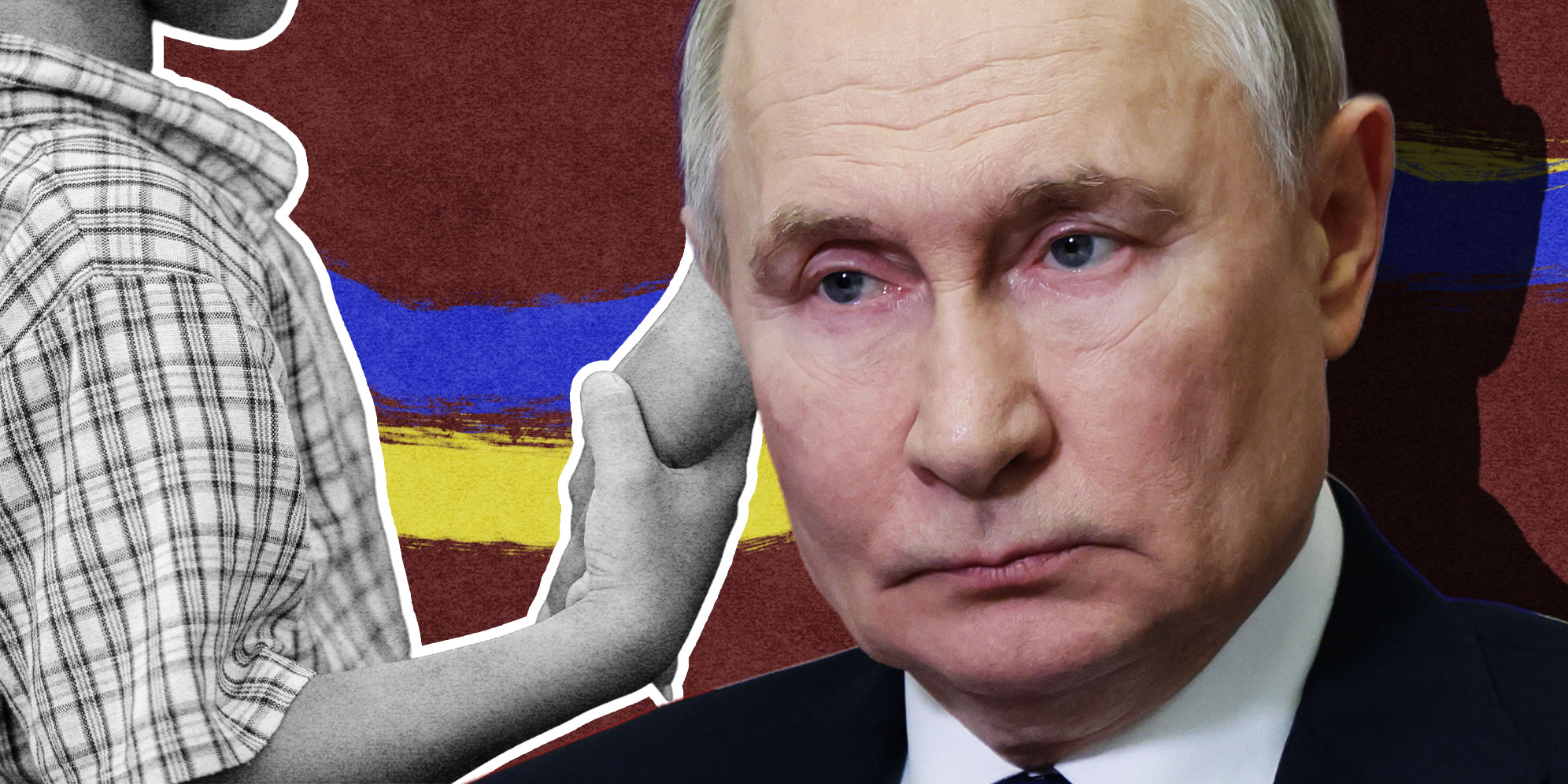
 Illustrative Image: Child holding an adult’s hand (Image: Istock) | Russian President Vladimir Putin. (EPA-EFE / Mikhail Metzel / Sputnik / Kremlin Pool) / (Background: Daniella Lee Ming Yesca)
 South Africa seems likely to support a resolution in the UN General Assembly on Wednesday, 3 December, which demands “the immediate, safe, and unconditional return of all Ukrainian children who have been forcibly transferred or deported by Russia since 2014”.
Ukrainians in South Africa called on the country to vote for the resolution and officials indicated Pretoria probably would do so – unless the wording of the resolution changed significantly before the debate.
The Ukrainian Association of South Africa (Uaza) noted that President Cyril Ramaphosa and the SA government had called for the release of the abducted Ukrainian children several times since 2023 and had agreed to help Ukraine secure their release.
Read more: Bringing back abducted Ukrainian children a tough assignment for SA
“South Africa cannot abstain on children’s rights, even as a non-aligned country. Every child has the right to be with their family and community. There can be no long-lasting just peace in Ukraine without children coming back,” Uaza President Kateryna Aloshyna said in a statement.
“In June 2023, during the African Peace Mission to Ukraine and Russia, President Cyril Ramaphosa urged Vladimir Putin to return all forcibly deported Ukrainian children.
“In November 2024, South Africa expressed its readiness to mediate in the return of Ukrainian children. And on 24 April 2025, during the official visit of President Volodymyr Zelensky, the names of 400 forcibly deported Ukrainian children were provided to President Ramaphosa to assist in their return,” she said.
Uaza said the resolution – entitled “Return of Ukrainian Children” – was urgent.
“Childhood has an expiry date, that is why we cannot postpone this matter. This resolution is a vital message to all those who abduct children in Nigeria, Sudan, and other countries on the African continent and beyond: children are not pawns of war and the international community does not accept such actions,” said Professor Elvis Fokala from the Centre for Human Rights, University of Pretoria.
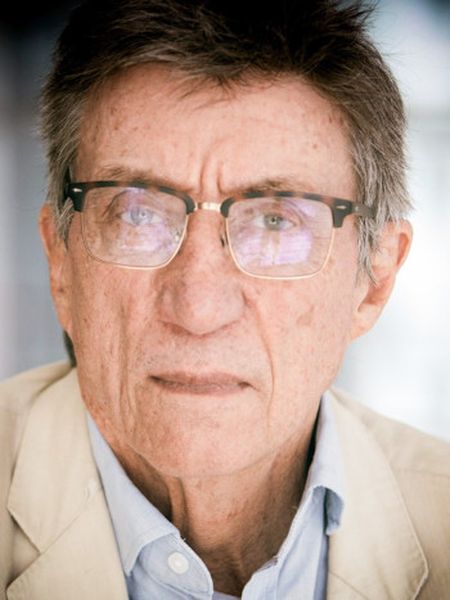
/file/attachments/orphans/elvis_fokala_1_483627.jpg "Prof Elvis Fokala, Centre for Human Rights, University of Pretoria. (Photo: Sourced / Centre for Human Rights at the University of Pretoria)")
SA ‘committed to rules-based order’
Daily Maverick asked Chrispin Phiri, spokesperson for the Department of International Relations and Cooperation, if SA would support the resolution.
He replied: “South Africa is firmly committed to a rules-based order premised on international law. In collaboration with Canada, Qatar and the Holy See, we are engaged in an initiative focused on the fulfilment of international law to ensure both the protection of children and, critically, their safe return. We will continue to support such diplomatic efforts.”
Official SA sources said there was nothing in the draft resolution to cause SA not to support it. But they cautioned that that could change if the wording of the resolution changed before the vote.
/file/dailymaverick/wp-content/uploads/2025/02/Ferial-Chrispin2.jpg "Spokesperson for the Department of International Relations and Cooperation Chrispin Phiri. (Photo: Shelley Christians)")
The draft resolution, sponsored by Ukraine, Canada and the European Union, appears to have been deliberately framed in quite narrow and moderate language to try to gain support even from ostensibly non-aligned states such as South Africa.
For instance, the resolution does not condemn Russia’s aggression against Ukraine, as other General Assembly resolutions have. SA abstained from several resolutions because of such language.
Read more: Ukraine’s new ambassador urges South Africa to step up as peace mediator amid ongoing conflict
The current draft resolution nonetheless demands that Russia “cease, without delay, any further practice of forcible transfer, deportation, separation from families and legal guardians, change of personal status, including through citizenship, adoption or placement in foster families, and indoctrination of Ukrainian children”.
It expresses deep concern about Ukrainian children who have been separated from their families since 2014, when Russia invaded Ukraine’s Crimea and its eastern Donbas region. This includes children who Russia forcibly transferred within the temporarily occupied territory of Ukraine, as well as those children Russia deported to Russia.
These forced transfers violated the Geneva Conventions of 12 August 1949 and the Additional Protocol I thereto of 1977.
The General Assembly resolution also calls for an immediate halt to measures taken by Russia since 2022 to simplify the procedure for obtaining Russian citizenship for Ukrainian children, particularly orphans, those deprived of parental care, and unaccompanied children.
‘Re-education’
Uaza noted that since 2022, Russian legislation had allowed changes to the citizenship, name, surname, and date of birth of Ukrainian children without parental consent. And Russia was, until today, still deporting Ukrainian children to “re-educate” them.
The UN General Assembly resolution deplores the “forcible transfer and deportation of Ukrainian children, and the separation of families and of children from legal guardians, and any subsequent forced change of children’s personal status, their citizenship, adoption or placement in foster families, and efforts to indoctrinate them, in clear violation of international law…”
It stresses the need to investigate and ensure accountability for those responsible for forcible transfers and deportations of children and notes that the deporting and transfer of the children by Russia “is the subject of ongoing international legal proceedings”, a reference to the International Criminal Court’s issuance in 2023 of arrest warrants against Russian President Vladimir Putin and his Commissioner for Children’s Rights Maria Alekseyevna Lvova-Belova.
Read more: UN resolution highlights diplomatic shift as South Africa votes for Ukraine amid US retreat
The resolution asks UN Secretary-General Antonio Guterres to engage with Russia to secure the release of the abducted and deported Ukrainian children. Guterres should do this by obtaining full information on the current whereabouts of the children, their wellbeing, legal status and health conditions, including those in institutional care and those placed within Russian families.
The resolution asks Guterres to ensure unimpeded access for United Nations entities and other relevant international monitoring and humanitarian organisations to enable them to seek the return of the children.
International obligations
The UN General Assembly resolution, which member states will vote on on Wednesday, reaffirms that all parties to armed conflicts must comply with their obligations under international law, including the Charter of the United Nations, international humanitarian law and international human rights law to protect children affected by armed conflict from violations and abuses, to ensure family reunification, and to hold perpetrators accountable.
The resolution also notes that UN member states are obliged under international law “to take all appropriate steps to facilitate the reunification of families separated in armed conflict”, including supplying information about them to the Central Tracing Agency of the International Committee of the Red Cross.
Read more: Ukrainian POW camp where an African who fought for Russia waits for the end of war
Uaza said that in June 2024, 13 South African human rights NGOs called for the return of Ukrainian children: African Women Leaders Network-South Africa, Centre for Human Rights, University of Pretoria, CSVR (Centre for the Study of Violence and Reconciliation), Democracy Works Foundation, IJR (Institute for Justice and Reconciliation), In Transformation Initiative, Foundation for Human Rights, Lawyers for Human Rights, Mmabatho Foundation for Women’s Development, Public Interest Practice, Southern African Human Rights Defenders Network, Southern African Liaison Office (Salo), and also the Ukrainian Association of South Africa.
Uaza said the forced deportation of more than 19,500 Ukrainian children had been documented, but the estimate was much higher.
“The state-sanctioned deliberate erasure of children’s Ukrainian identity and indoctrination has torn families apart, underscoring the extreme risks faced by the most defenceless civilians in any war.” DM