




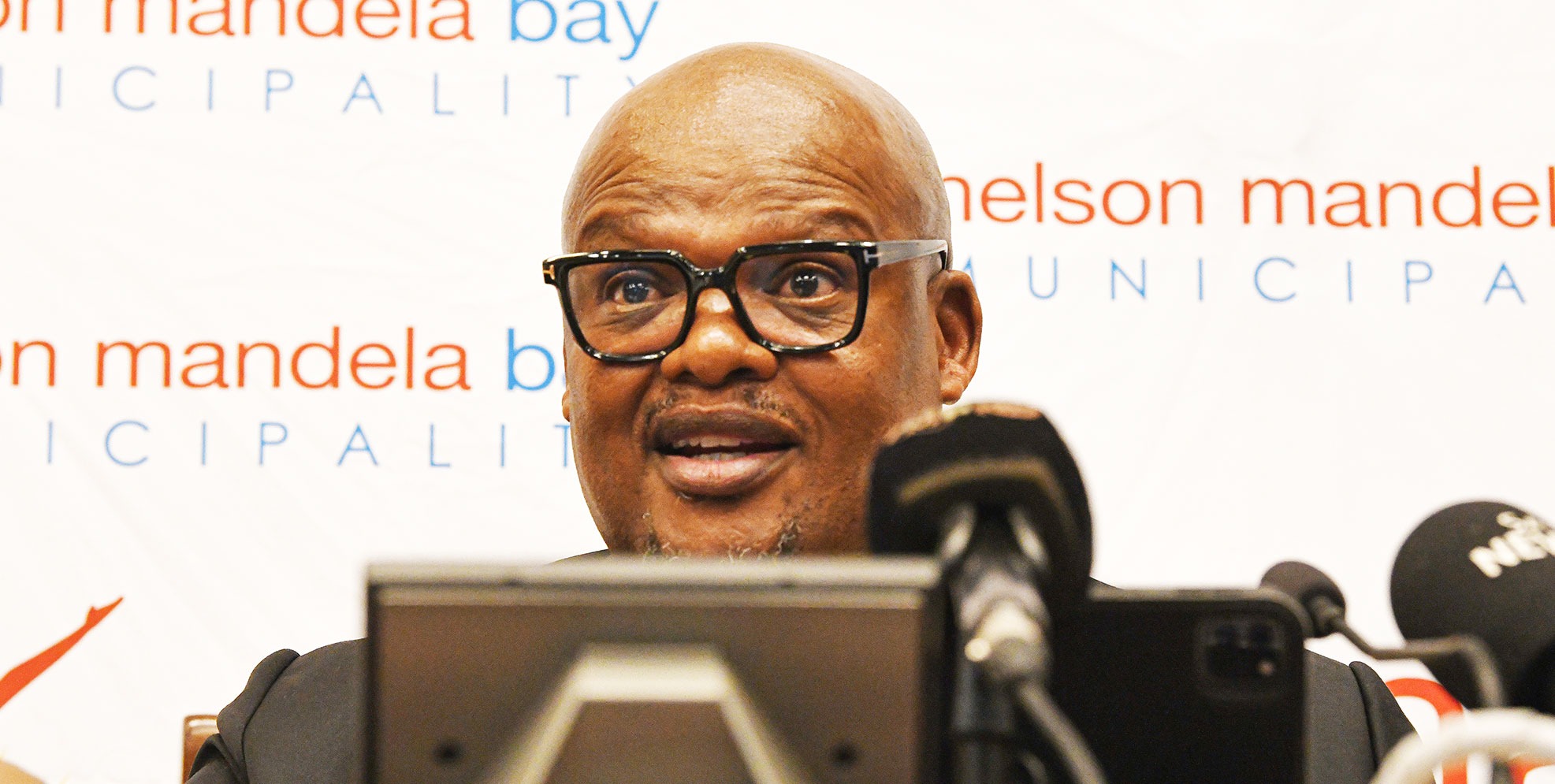
 Cogta MEC Zolile Williams has announced new service delivery standards for municipalities in the Eastern Cape. (Photo: Gallo Images / Die Burger / Lulama Zenzile)
 The Eastern Cape government has drawn a line in the sand on municipal service delivery, setting strict response times for the repair of potholes, water leaks and sewage spills.
But in Nelson Mandela Bay, where ageing infrastructure, ICT problems and reliance on contractors hamper responses, the pressing question remains: can these standards be met — and who will hold the municipality accountable?
At the heart of the initiative is the Municipal Non-negotiables booklet, launched this week by the Eastern Cape MEC for cooperative governance and traditional affairs, Zolile Williams.
The booklet outlines clear time frames for municipalities across the province to respond to reported service delivery issues, emphasising timely action, hands-on involvement by officials, and transparent communication with residents, said Williams.
But with the timeline for fixing potholes and water leaks set at 24 hours and that for sewage leaks at 48 hours, some councillors have called the standards unrealistic.
The metro does not have a contract in place to attend to potholes, which prolongs the response time to more than three months. And as Daily Maverick has previously reported, sometimes it takes up to a year.
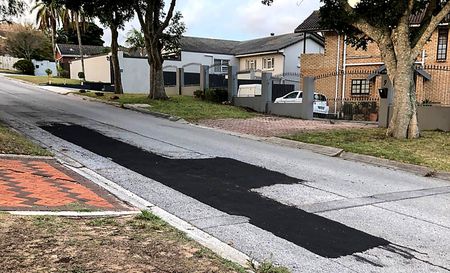
The City’s response to water leaks is currently between seven and 10 days, going against its own benchmark of three days. So the new deadline of 24 hours will be something of a challenge.

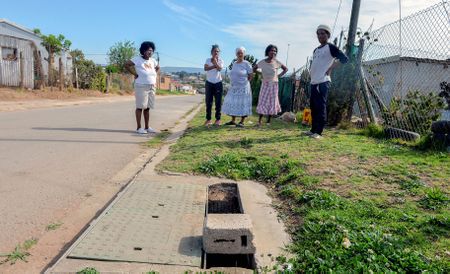
The new standards call for stormwater drains to be cleaned every two months.
Last year, Daily Maverick reported on a drain that had been left open for almost a decade, resulting in the death of a toddler.
Nelson Mandela Bay Mayor Babalwa Lobishe signed a performance agreement with Williams to implement the non-negotiables, but she did not appear confident that the metro could meet the strict targets.
ICT processes
At the launch of the new guidelines, Lobishe said one of the city’s major systemic challenges was the metro’s ICT processes, which hinder timely responses to call centre inquiries.
“Residents are sitting with reference numbers [received after a complaint has been lodged] that don’t reflect the date when it was issued and where it comes [from]. We are of the view that if we can’t deal with this, the trust between us and the communities will be negatively affected.”
Speaking about water leaks, Lobishe said the metro needed to audit how contractors were doing the work.
/file/attachments/orphans/GrogroMayor1_714262.jpg "NMB Mayor Babalwa Lobishe and high-ranking city officials met with the community of the Grogro informal settlement earlier this month to negotiate terms for them to reopen Kragga Kamma Road, which they had blocked as part of a service delivery protest. (Photo: Riaan Marais)")
Because of a shortage of staff and resources, the metro relies on contractors to assist in responding to water leaks and other service delivery issues, such as potholes and electricity faults.
“We fall short in terms of the latest technology on water leaks. There’s available technology in the market that allows for easy detection of underground leaks, which would be beneficial to us and could help us significantly reduce the leaks in three months,” said Lobishe.

According to the city’s director for water distribution, Joseph Tsatsire, the metro needs to urgently replace about 4,700km of ageing water pipes, some more than 40 years old. He said this after water losses surged to a record 60.39% between July and December 2025.
Tsatsire said gradual and consistent water pipe replacement would play an integral part in resolving leaks, as had been proven by the City of Cape Town.
He said that setting aside a budget for the pipe replacement would yield positive results in the near future.
/file/dailymaverick/wp-content/uploads/2021/04/NMB-water_3.jpg "Nelson Mandela Bay director of water distribution Joseph Tsatsire. (Photo: Deon Ferreira)")
Good party councillor Lawrence Troon was not convinced by Williams’ “non-negotiables” launch.
Troon said Williams was not serious about service delivery improvement, as he had yet to acknowledge the challenges facing the metro.
“So he is talking absolute nonsense and creating false expectations. He brought section 154 of the Constitution without acknowledging this failing municipality. The question is, how do you make all these demands when you know you are dealing with a troubled government?”
Unrealistic standards
DA Ward 40 councillor Jason Grobbelaar said that up until two days ago, no contractor had been appointed to deal with sewage leaks in his ward.
“I have never seen such unrealistic standards — I don’t even think the Cape Town responds to issues that fast. So all of this is just lip service in the form of a piece of paper, but time will tell. But we will observe, complain to the MEC when issues are not attended to and see if anyone will be held accountable. It’s like we’re being treated as children, where you just say things to make them happy.”
Williams, however, said the purpose was to set a service standard. “Take stormwater drains in Nelson Mandela Bay: we’ve defined how often they should be cleaned to prevent blockages and localised flooding.”
Should the city fail to implement the non-negotiables, residents can report unaddressed service delivery issues to ward committee members and Cogta community development workers, who will take the matter up with Williams’ office.
/file/attachments/orphans/Motherwell_818843.jpg "A street in Motherwell in Nelson Mandela Bay was flooded by a leaking sewage manhole that had been blocked for months. (Photo: Supplied / Thanduxolo Doda)")
“The institutional arrangements linked to the non-negotiables are such that the municipal council is the final authority to hold the mayor accountable on performance. The mayor must hold the municipal manager accountable, and the city manager must make the directors accountable, going down the value chain,” he said.
Oversight structures
“Cogta features in that we have community development workers on the ground, and ward committees; they are oversight structures that will be communicating directly with us, stating which ward they come from and the issues they have reported but have been addressed as per the set standards.”
After receiving the complaints, communication will be made with the mayor, and if she fails to act, then Cogta will escalate the matter to the council to hold the mayor accountable.
“We are passionate about implementing this because we see it as a precursor towards resolving service delivery challenges.”
Williams said the reasoning behind the non-negotiables was that the provincial government wanted managers to experience what residents experience on the ground.
“When we talk about a theory of management by walkabout, we are saying city managers, senior and middle managers must get out of their offices and experience residents’ daily lives in terms of the services they offer.
“It’s not a favour to the communities that we ought to provide these services. Actually, section 5 (b) of the Constitution tells us that we must deliver certain services as municipalities. All these are aimed to ensure that we reconnect with our people by being servants, communicating and ensuring basic services are attended to on time. If we implement this, the people will begin to experience a better life.” DM