
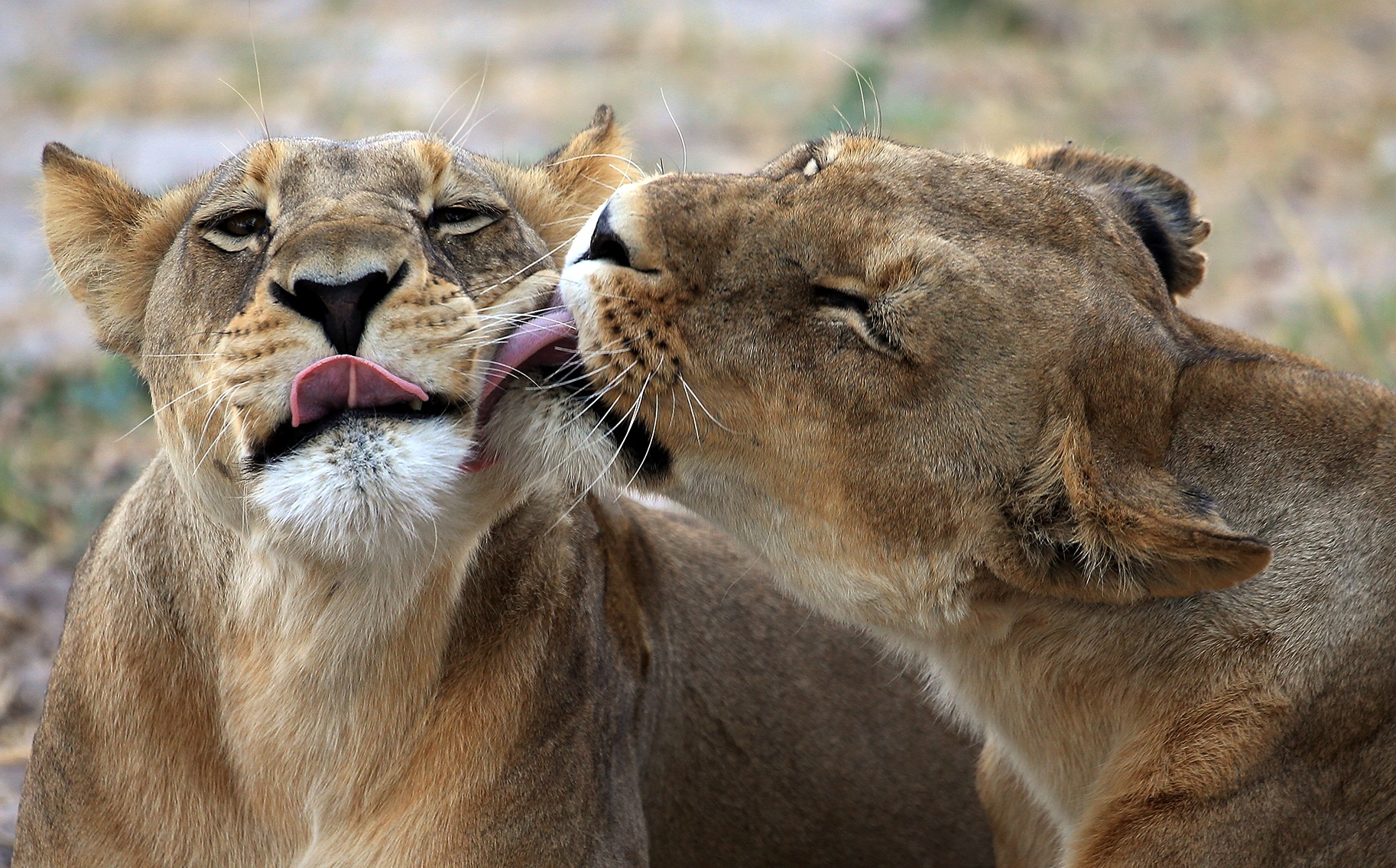
 Mpumalanga takes the first steps to outlaw captive lion breeding. (Photo: Colin Bell)
 In a move that has surprised many observers of South Africa’s wildlife politics, the Mpumalanga Tourism and Parks Agency (MTPA) has announced that it is phasing out captive lion facilities in the province – importantly aligning itself squarely with national plans that have been rolling forward in fits and starts since 2018.
/file/attachments/orphans/don-Mpumalanga-lion2_153937.jpg "South Africa has forbidden the export of lion bones. (Photo: Blood Lions)")
In a media release issued on 24 February 2026, the agency confirmed it “fully supports the national initiatives approved by [the] Cabinet of South Africa in April 2024” aimed at the “responsible, lawful, and humane closure of the captive lion industry.”
The statement makes it clear that no new captive lion facilities will be permitted, captive breeding of lions will not be allowed and the importation of captive lions from other provinces will be phased out.
A sterilisation programme is to be implemented as part of a voluntary exit strategy outlined by a Ministerial Task Team.
For a province that markets itself as a premier wildlife destination – home to parts of the Kruger National Park and major private reserves – the announcement marks a decisive policy shift.
A national trajectory
Mpumalanga’s position follows a unanimous decision in the National Council of Provinces (NCOP) last week to approve the new Threatened or Protected Species (TOPS) regulations, as well as measures prohibiting certain activities involving African lions. All provinces signalled agreement with the report, a rare moment of alignment in South African wildlife politics.
These reforms build on years of policy debate. The 2018 Parliamentary Lion Colloquium, subsequent High-Level Panel on Lions, Rhinos, Elephants and Leopards and resultant Policy Position recommended closing the captive lion sector.
This was subsequently approved by the Cabinet in April 2024
The current phase-out initiative is therefore not sudden, but its provincial momentum comes at a politically charged moment.
/file/dailymaverick/wp-content/uploads/2025/11/ED_556147_1.jpg "Minister of Forestry, Fisheries and the Environment Willie Aucamp. (Photo: Gallo Images / Fani Mahuntsi)")
Willie Aucamp, recently appointed as Minister of Forestry, Fisheries and the Environment, has been viewed by many as more sympathetic to consumptive wildlife sectors, including breeding and hunting interests. His early reissuing of hunting quotas for elephants, black rhinos and leopards reopened familiar debates over science, governance and ethics.
Against that backdrop, Mpumalanga’s firm endorsement of a lion phase-out has raised a key question: why Minister Aucamp finds it necessary to still require socioeconomic evaluations of the policy in the face of an unambiguous Cabinet policy approval, given that Mpumalanga finds it a straightforward matter to follow such an initiative.
Exploitation of lions
Simphiwe Shungube, senior manager and spokesperson for the MTPA, framed the move as a matter of principle and alignment with national strategy.
“We are supporting the national project on the issues of the implementation of the phasing out of the captive lion facilities,” he told Daily Maverick. “The reason being, it’s the issue of the exploitation of the lions… this thing of exploitation of lions is a problem.”
Shungube said Mpumalanga was guided by national policy and was already at an “advanced stage” in implementing the process, though timelines would be “communicated once formal steps are under way”. He declined to speculate on whether provinces such as Limpopo or North West – where most lion farming takes place – would follow suit.
Years of controversy
/file/attachments/orphans/don-Mpumalanga-lion3_143159.jpg "Lions are happier without fences. (Photo: Colin Bell)")
South Africa’s captive lion industry has long drawn international criticism. Facilities breed lions for cub-petting tourism, canned hunting and the export of skeletons and derivatives to Asian markets.
Between 2010 and 2019, more than 7,400 lion skeletons were exported, 98% of them to Southeast Asia. Lion bones are commonly used in products such as so-called tiger bone wine.
For years, the government set annual export quotas – sometimes as high as 1,500 skeletons – despite internal dissent and growing international outrage. In 2019, the Gauteng Division of the High Court in Pretoria ruled that quotas set in 2017 and 2018 were unlawful because welfare considerations had been ignored.
More recently, the Department of Environment reduced the lion bone export quota to zero, reinforcing the principle that animal welfare must form part of environmental decision-making.
The industry is now engaged in litigation against DFFE, demanding that the minister issue a lion bone export quota, arguing that breeders have a constitutional right to trade and that stockpiled skeletons represent millions of rands in value.
Enforcement questions
For Mpumalanga, the shift is also a branding decision. The province’s statement emphasises “ethical, conservation-driven tourism” and seeks to reposition its wildlife economy toward in situ conservation and formally protected areas.
The challenge will lie in implementation: managing existing captive lions, preventing illegal activity as facilities wind down and ensuring that the phase-out does not simply drive operations underground.
The alignment between provincial authorities and Parliament has given the phase-out unusual institutional weight. It transforms what was once an executive initiative into a process carrying formal provincial endorsement. Whether Minister Aucamp embraces that trajectory or seeks to recalibrate it remains to be seen.
For now, Mpumalanga’s message is unambiguous: captive lion breeding has no place in the province’s future tourism model. In a sector long defined by controversy, that clarity is itself a significant development. DM