




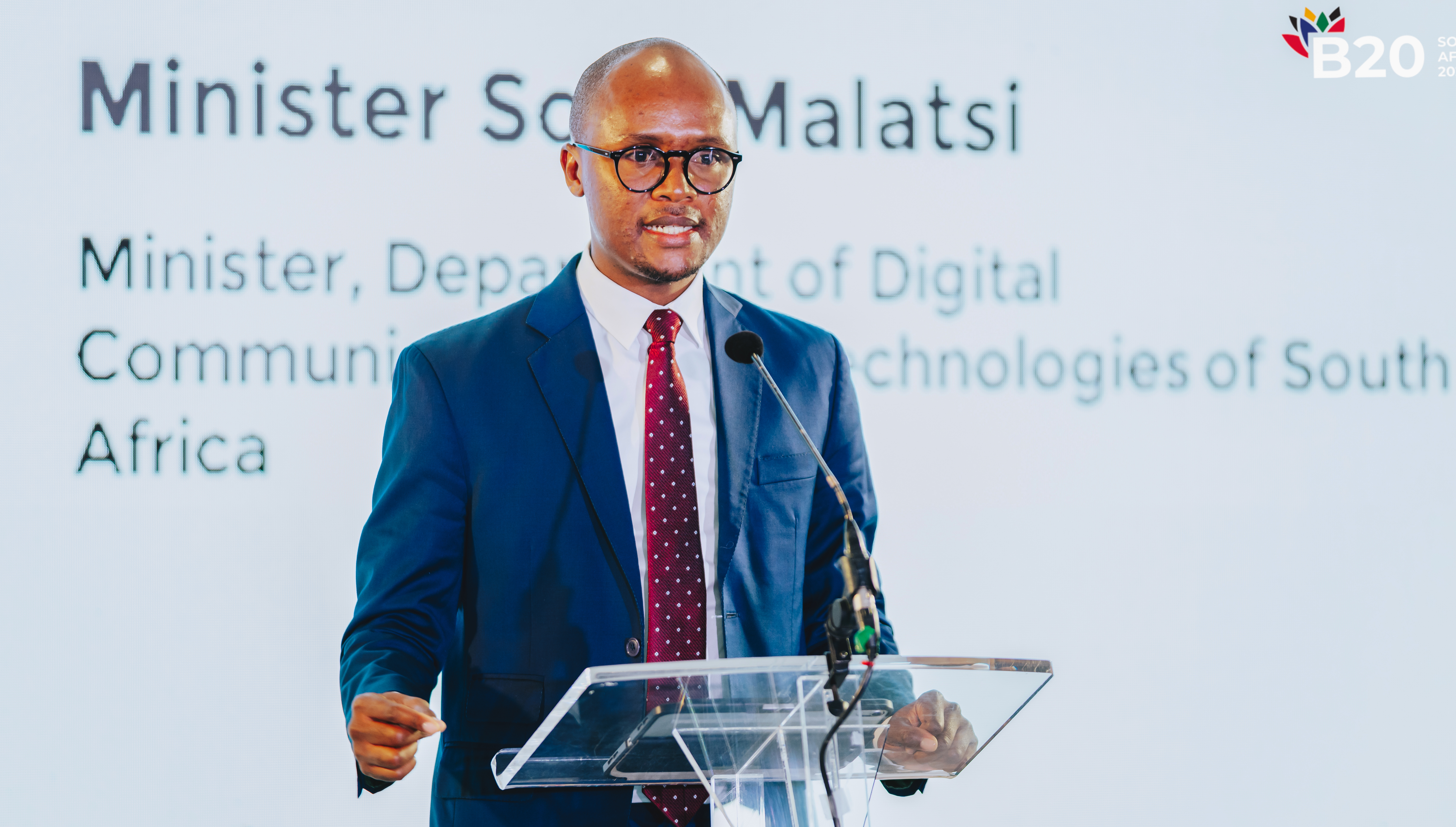
 Minister of Digital Communications and Technologies, Solly Malatsi, speaks at a B20 side event in Cape Town on 17 September 2025 following the Digital Transformation Task Force's recommendations to the G20. (Photo: Supplied / RTC Studios)
While the rest of South Africa was using this Friday evening to get the Dezemba vibes going, Minister of Communications and Digital Technologies took the opportunity to crack a window open to push a Starlink deal through. And Solly Malatsi seems to be recycling the gameplan that got the Vodacom/Maziv deal over the line: a tag team partnership with Minister of Trade and Industry Parks Tau.
Read more: How Vodacom and Maziv convinced everyone they had changed
In Government Gazette No. 53855, published today (but signed on 11 December), Malatsi issued a formal policy direction instructing the Independent Communications Authority of South Africa (Icasa) to “urgently consider alignment” of its regulations with the national ICT Sector Code.
Whatever legal jargon you prefer, this is effectively an instruction for Icasa to stop blocking foreign investors who refuse to sell equity.
But why now?
For years (well, at least most of this year) Icasa has held a hard line: if you want a telecom license in South Africa, 30% of your equity must be in the hands of historically disadvantaged groups (HDG).
This has been the primary thorn for Elon Musk’s SpaceX, which has a global policy of retaining 100% ownership of its subsidiaries. Under current rules, Starlink simply cannot launch here.
Malatsi’s directive comes after consultation earlier this year and is effectively forcing Icasa to recognise the Equity Equivalent Investment Programmes (EEIPs).
Opening gambit
As Daily Maverick has previously reported, the EEIP policy is actually a great bit of lateral thinking. It allows multinationals to bypass the equity sale requirement by instead investing in local skills development, enterprise support, or infrastructure – provided the Department of Trade, Industry and Competition (DTIC) approves the deal.
Malatsi argues that Icasa’s refusal to recognise these equivalents is “not permissible in law”. He contends that the Broad-Based Black Economic Empowerment Act (B-BBEE Act) overrides Icasa’s sector-specific regulations.
By ignoring the DTIC’s sector codes, the minister explains, the regulator is actually blocking the “national and international investments” the country desperately needs.
Teamwork makes the dream work
This is where the political machinery becomes interesting. This directive doesn’t just pressure Icasa; it shifts the gatekeeping power from an independent regulator to the executive cabinet.
Icasa does not have the authority to approve an Equity Equivalent deal; that power lies with the DTIC. The gazette explicitly says that Malatsi will “liaise with the Minister and the Department of Trade, Industry and Competition” to review the approval process for these investments.
Read more: Starlink promises internet for rural SA schools — if BEE rules bend
By forcing Icasa to accept the DTIC’s codes, Malatsi is effectively handing his colleague, Minister Parks Tau, the keys to the gate.
If Tau’s department signs off on Starlink’s investment plan, Icasa will be legally compelled to issue the license, regardless of their previous objections to equity structures.
Mate in two
Malatsi anticipates the criticism. In the gazette, he specifically addresses the “perception that the policy direction is intended to benefit Starlink”.
His defence? The policy applies to all licensees equally.
Technically, he’s right. But practically, there is only one major player currently sitting in the waiting room because they refuse to sell shares.
Malatsi has played a good game to frame this as a battle for “digital sovereignty” and “bridging the digital divide”. But make no mistake: this is a coordinated executive shove to clear regulatory blockages.
The message to Icasa is clear: align with the national agenda, or explain to the public why you are standing in the way of investment. DM
Comments
Scroll down to load comments...