



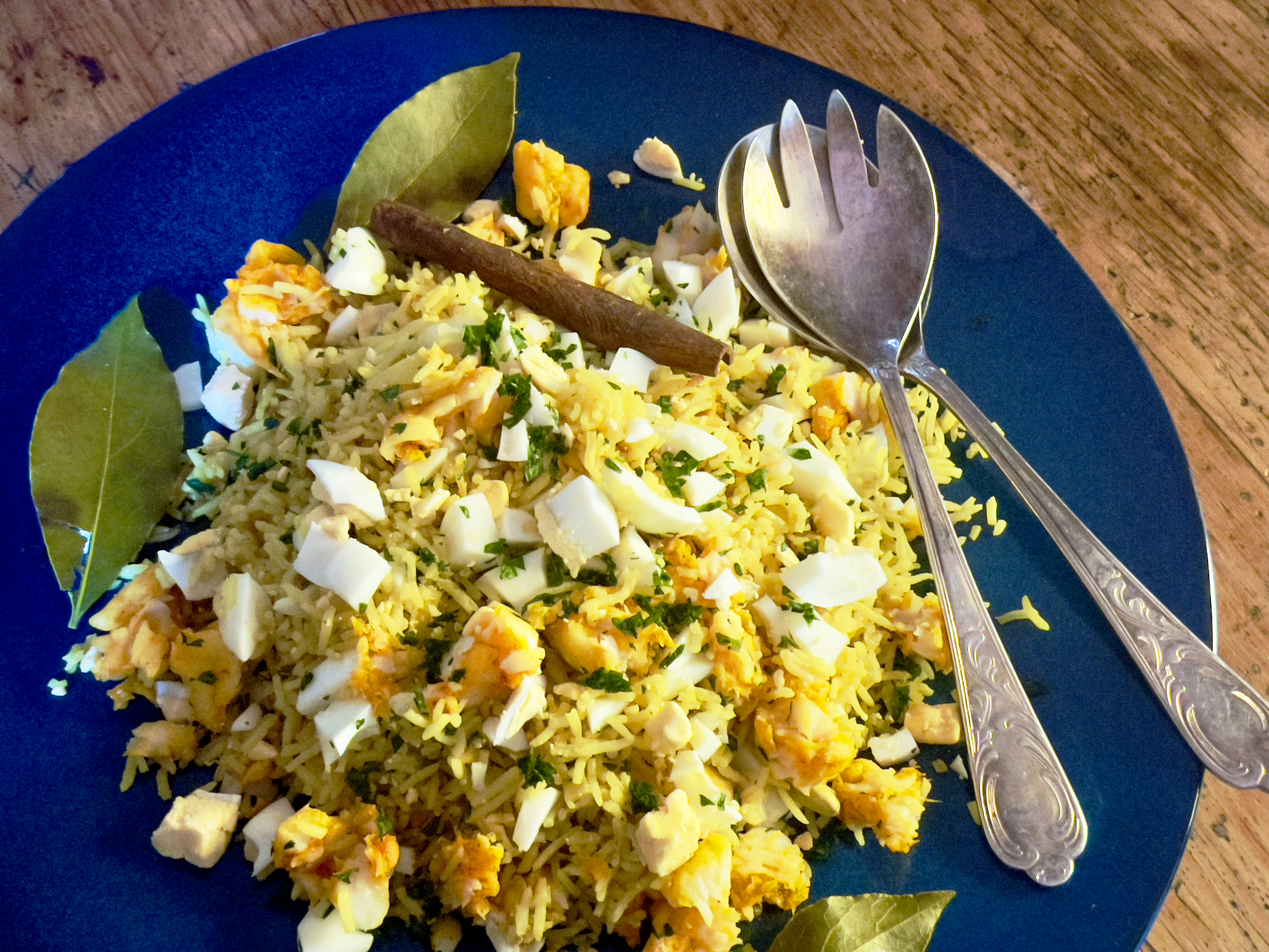
 kedgeree
Kedgeree seems an odd sort of name. You may wonder: is it Irish? Is it Indian? Caribbean perhaps? Indian would be closer to the truth, but in modern times it is seen as more of a British dish (some would argue Scottish) with roots in its occupation of the Raj.
Wikipedia and other online sources make much of kedgeree having its roots in a very old Indian dish called khichuri or khichdi, variations of rice and lentil dish, but as with many Wikipedia meanderings, this seems to be more speculation than certain fact. The key difference: cooked, smoked fish.
More credible is the online encyclopaedia’s assertion that it is “widely believed that the dish was brought to the United Kingdom by returning British colonials who had enjoyed it in India and introduced it to the UK as a breakfast dish in Victorian times, part of the fashionable Anglo-Indian cuisine”.
Noting that kedgeree was listed “as early as 1790 in the recipe book of Stephana Malcolm of Burnfoot, Dumfriesshire”, Wikipedia adds: “The National Trust for Scotland’s book The Scottish Kitchen by Christopher Trotter notes the Malcolm recipe and other old examples, expressing the belief that the dish was devised by Scottish regiments hankering for the tastes of India. By the 19th century, Kedgeree had become a sophisticated breakfast/brunch dish in England, appearing, for example, in a Saki short story, A Bread and Butter Miss.”
As with the old khichdi dishes, rice is central to kedgeree, along with spices and vegetables, but where they differ is the inclusion of fish in kedgeree. More specially, smoked haddock.
The fish in kedgeree is first cooked, cooled and then flaked (cooled, so that it is easier to handle). Fried onions with a nice bit of colour on them are important for the flavour. Often, curry powder is recommended, but this can be interpreted in other ways too. In my recipe here, I don’t use any masala as such, but do use a cinnamon stick, some turmeric, and a few cardamom pods.
The result, and the intention, is to attain a fragrant, gentle spiciness rather than it turning into a curry. That would be a mistake, as this dish is more about the rice and the smoked dish, enhanced by spices rather than being dominated by them.
A couple of bay leaves add that pleasant underbelly of often indiscernible flavour that bay always brings, and the chopped parsley and chopped boiled eggs that the dish is finished with also play their part.
Cream is sometimes used in kedgeree but I prefer the light, clean dish you get without it; but do use butter, which definitely adds something to it.
There’s no need to serve anything with kedgeree; it’s the entirety of the dish in itself.
(Serves 4 for breakfast)
Ingredients
450 oak-smoked haddock fillets
75 g butter
1 medium onion, finely chopped
3 cardamom pods, whole
½ tsp ground turmeric
1 cinnamon stick
3 fresh bay leaves
450 g basmati rice
1 litre chicken stock
4 eggs, hard-boiled, cooled and chopped
A handful fresh parsley, finely chopped
Lemon wedges for serving
Method
Melt the butter in a heavy, deep pan (because you’re going to cook the rice in it) and add the chopped onion. Cook gently, stirring, until the onions have softened and turned golden.
Add the bay leaves, cardamom pods and cinnamon stick and stir in the turmeric, as well as salt and pepper to taste.
Rinse the rice in cold water and drain, repeating three more times. Add the wet rice to the pot and stir.
Pour in a litre of chicken stock into which you have stirred half a teaspoon of salt.
Bring to the boil, cover, reduce to a low heat and leave it to simmer until the rice is cooked and the water has boiled away. Check a couple of times to be sure that it does not catch at the bottom.
In a suitable pan, bring water to a gentle simmer and add the fish fillets. Poach them until tender and cooked through, about 4 minutes. Drain the water off and leave to cool. When cooled, flake the fish into small pieces.
Cook the 4 eggs in simmering water until hard-boiled, allow to cool, and chop them up.
Add the fish to the rice, and use a fork to flick the bits of fish through.
Add the chopped eggs, and toss here and there with a fork to work them into the dish a little.
Serve garnished with chopped parsley, and a lemon wedge or two alongside. DM
Tony Jackman is Galliova Food Writer 2023, jointly with TGIFood columnist Anna Trapido.
Follow Tony Jackman on Instagram @tony_jackman_cooks.
This dish is photographed on a plate by Mervyn Gers Ceramics.