




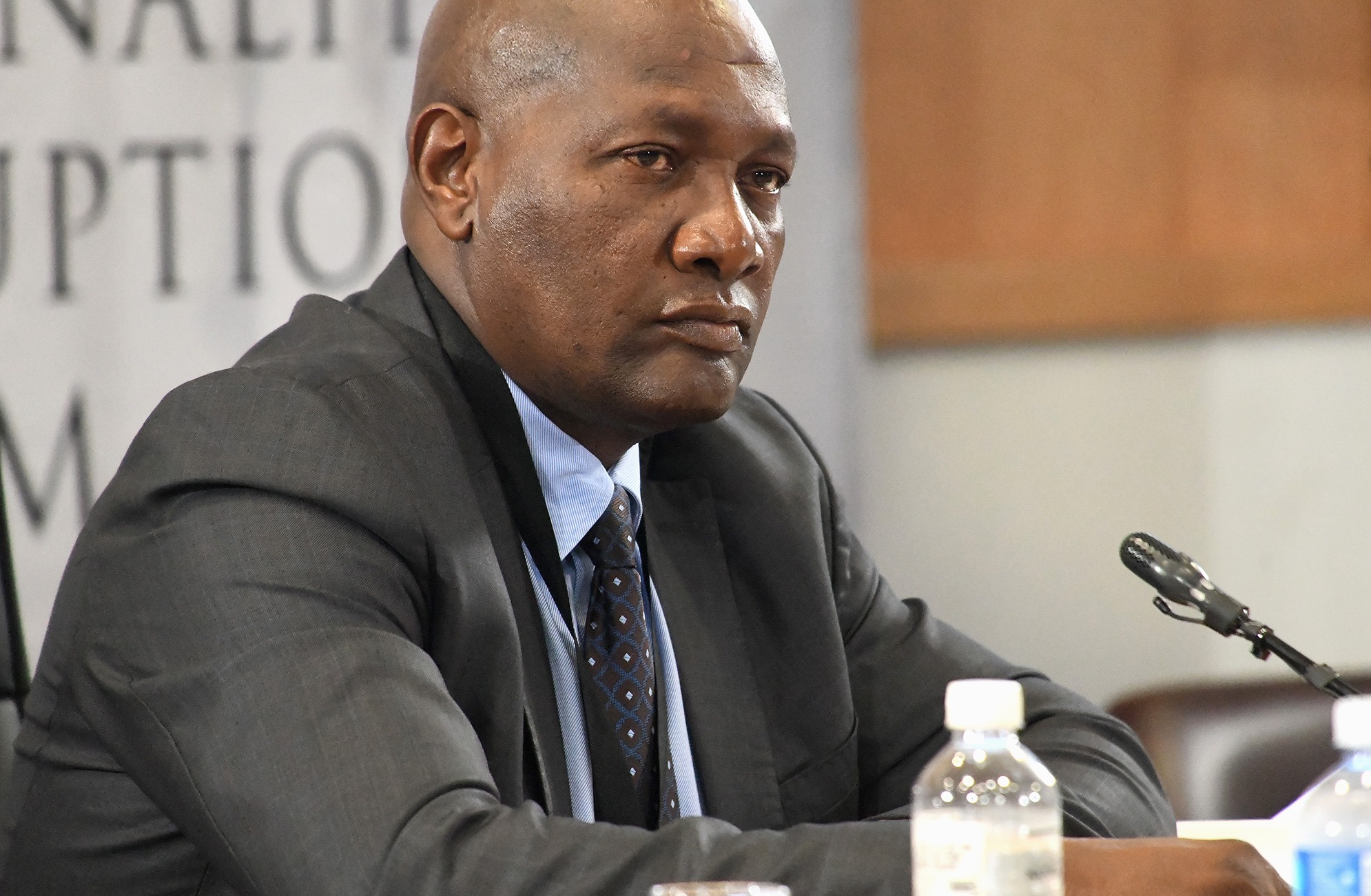
 Major General Richard Shibiri testifies at the Madlanga Commission of Inquiry at Brigette Mabandla Judicial College in Pretoria on 11 March 2026. (Photo: Gallo Images / Frennie Shivambu)
On Major-General Richard Shibiri’s first day of testimony at the Madlanga Commission earlier in March, he spent considerable time explaining how organised crime syndicates infiltrate law enforcement structures.
In the opening pages of his 81-page statement, the police’s head of organised crime described the scale of alleged infiltration and explained how it unfolded.
“The nature of such infiltration is seldom overt. It typically occurs through gradual compromise of individuals and processes rather than formal institutional capture,” reads his statement, which includes a list of instances where cops have been caught out.
According to his account, syndicates attempt to bribe investigators, prosecutors, court officials and forensic staff, while also using police insiders to monitor investigators and witnesses. Sometimes cops end up working as criminals. In some cases, the pressure escalates to intimidation, threats and even violence against investigators and their families.
Shibiri joined the police in 1988 and holds a diploma and bachelor’s degree in policing. He said it wasn’t a new phenomenon and agreed that “in some instances… criminal syndicates have infiltrated or exerted influence within law enforcement structures”.
/file/attachments/orphans/ED_599591_885276.jpg "Major General Richard Shibiri testifies on 11 March 2026. (Photo: Gallo Images / Frennie Shivambu)")
What he described echoes explosive remarks made months earlier by KwaZulu-Natal police commissioner Lieutenant General Nhlanhla Mkhwanazi, who alleged on 6 July 2025 that a criminal syndicate involving police, prison officials, judges and politicians had effectively taken parts of the state hostage — underscoring the scale of alleged institutional compromise.
Similar concerns were raised by National Crime Intelligence head Dumisani Khumalo during testimony to Parliament’s ad hoc committee in January 2026, which was probing allegations that the “Big Five” cartel had infiltrated South Africa’s criminal justice system, including law enforcement, politics and the private security sector.
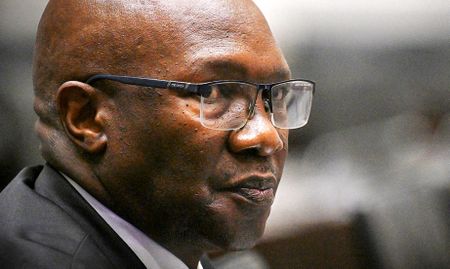
Shibiri’s analysis of how cops are gradually compromised is a repetitive theme of the Madlanga Commission. Police officers and alleged members of organised crime groups, who double as wealthy businessmen, meet at social events and spark up relationships or associations that involve exchanges of money or gifts, apparently with no concern for conflicts of interest.
Before he was suspended in February 2025, Shibiri oversaw transnational, narcotics, anti-gang, extortion, economic infrastructure and illegal mining investigations.
He, like so many other top cops, now faces damning allegations of succumbing to the same organised crime syndicates he says have infiltrated the police.
A ‘loan’ from Cat
Despite raising red flags about organised crime infiltration, the cross-examination of Shibiri on Wednesday and Thursday, 11 and 12 March, cast aspersions on his credibility as head of organised crime and suggested he maintained an unprofessional relationship with organised crime accused Vusimuzi “Cat” Matlala.
The allegations revolve around a R70,000 “loan” Matlala gave to Shibiri in September 2024. At the time, Matlala had a R360-million contract to provide health services to the South African Police Service (SAPS). The loan was allegedly made to help Shibiri fix his son’s car, which had been involved in an accident.
Shibiri and Matlala had connected days earlier at a party held at Deputy National Commissioner Shadrack Sibiya’s house.
The commission heard on Wednesday, however, that Shibiri didn’t need a loan to fix the car. At the time, he had about R50,000 in his account and access to a R44,000 overdraft. His son’s account held R11,364, meaning they had roughly R105,000 available between them.
Matlala had already been linked to the looting of Tembisa Hospital and a string of other serious crimes. He is currently on trial for attempted murder.
/file/attachments/orphans/ED_597796_631802.jpg "Vusimuzi ‘Cat’ Matlala appears at the high court in Johannesburg on 26 February 2026. (Photo: Gallo Images / Luba Lesolle)")
Justice Mbuyiseli Madlanga put the issue directly to Shibiri: “Let me suggest to you that you chose the convenience of borrowing money from a person who, at the time, you knew was alleged to be seriously implicated in criminality. Instead of using the more than R50,000 that you had available to you, you opted for that convenience.”
While Shibiri argued that he could handle his money the way he saw fit, he conceded that taking the loan was problematic.
“The worst thing that I am taking home now is that I agreed to take a loan from a person who was seriously implicated,” he told the commission.
Shibiri claimed he repaid Matlala R20,000 in cash in November 2024 and R50,000 in December 2024, weeks after a police raid on Matlala’s home in search of his kidnapped business partner, Jerry Boshoga, who remains missing. Madlanga suggested Shibiri repaid the loan after he saw police closing in on Matlala.
On Thursday, the commission heard how Matlala had told investigators that he gave Shibiri the money for alcohol for a celebration, which Shibiri denied.
Questions over Armand Swart murder probe
Another bone of contention was Shibiri’s credibility, which was challenged by earlier testimony from Witness C, attached to the Political Killings Task Team (PKTT), who alleged that Shibiri was on Matlala’s payroll. The matter concerned the 2024 murder of engineer Armand Swart in Vereeniging.
Evidence leader advocate Lee Segeels-Ncube questioned the integrity of the investigation into Swart’s murder, noting that before it was confirmed, Shibiri had told investigators a confidential source claimed the Swart killing was the result of someone ordering a hit on the engineer, yet he withheld the source’s identity. The same source had also warned that someone in forensic services might interfere with the ballistic evidence.
Read more: Envelopes and missing evidence — Madlanga Commission hears allegations of murder cover-up
/file/dailymaverick/wp-content/uploads/2025/07/04-armand.jpg "Murdered engineer Armand Swart. (Photo: Supplied)")
“It is actually very scary that everything you told investigators in May 2024 later came to fruition. We now know there was an error in the ballistic report, that the killing appears to have been a contract murder, and that the firearm is linked to other murders,” she said.
“I understand you took steps to ensure their safety,” she said to him. “But wasn’t it also your obligation to protect the integrity of the investigation itself?”
Shibiri pushed back against the suggestion that he had failed to act on the intelligence, insisting he had fulfilled his responsibilities.
“I have done what I was supposed to do, and I was not the investigating officer. Now if everybody wants to say ‘Shibiri knew this’ – yes, I told them.
“As far as I am concerned, commissioners, I have done my part. It ends there,” he said.
The scale of the problem
Both Shibiri’s revelations about how organised crime syndicates infiltrate the police, as well as the allegations against him, are deeply problematic, according to criminologist Professor Kholofelo Rakubu.
Rakubu said they pointed to systemic vulnerabilities within South Africa’s criminal justice institutions.
Amplifying this concern, she said: “When senior officers describe syndicates exerting influence over the police, metropolitan departments, and even prosecutorial bodies, we are no longer talking about isolated corruption, we are talking about institutional capture by organised crime.”
Rakubu said the alleged infiltration appeared to be widespread and multilayered, with syndicates exploiting weak oversight and financial pressures within the SAPS.
Within the National Prosecuting Authority (NPA), she said, influence could appear through delayed prosecutions, mishandled evidence or unexplained withdrawals of charges.
On the scale of the problem, Rakubu warned: “It is national in scale. Syndicates have extended their reach into customs, border control and municipal licensing offices. What we are witnessing is the creation of a parallel system of power, where criminal networks can shield their operations through compromised officials.
“If decisive measures are not taken, criminal syndicates risk becoming entrenched as parallel governance structures within South Africa’s justice system. That is the real danger Shibiri’s testimony points us toward.”
Fragmented fight against organised crime
Responding to questions from Daily Maverick, David Bruce, an independent researcher and consultant at the Institute for Security Studies, said a key issue highlighted by the allegations was the relationship between organised crime and police corruption.
A major obstacle, he noted, was that the mechanisms for investigating organised crime and those for probing police corruption remained fragmented, poorly coordinated and often undermined by inter-agency mistrust and rivalries.
Organised crime investigations are handled by the Directorate for Priority Crime Investigation — commonly known as the Hawks — as well as national and provincial units within the SAPS.
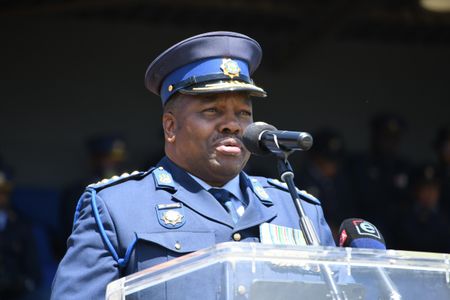
Investigations into police corruption are spread across multiple bodies — including the Hawks, the Investigating Directorate in the NPA, SAPS anti-corruption units and the Independent Police Investigative Directorate (Ipid) — alongside internal disciplinary processes. Across these agencies, Bruce said investigators faced serious resource and skills shortages, with little coherence even around what constituted organised crime or police corruption.
Crucially, he said, South Africa still lacked an integrated framework for analysing whether law-enforcement responses to these interconnected problems were improving.
“Until that exists,” Bruce warned, “we remain some distance from the kind of integrated law-enforcement approach needed to tackle organised crime and police corruption in a purposeful way.”
Can the state halt criminal infiltration?
A possible answer — and a glimmer of hope — lies in commitments made by Cyril Ramaphosa during the State of the Nation Address. In his speech, the President reiterated that “stepping up the fight against organised crime” would be a primary focus for the government this year.
Bruce said the plan relied on technology, intelligence and integrated law enforcement to target priority syndicates with multidisciplinary teams.
Asked about solutions, Rakubu was clear: “We need systemic reform. That means independent anti-corruption units with investigative autonomy, regular lifestyle audits for senior officials and stronger whistleblower protections.
“Technology can also play a role in digital monitoring of procurement and case management systems that would make it harder for syndicates to manipulate outcomes. And crucially, communities must be engaged to rebuild trust in law enforcement. Without public confidence, syndicates will continue to fill the vacuum. DM
Comments
Scroll down to load comments...