




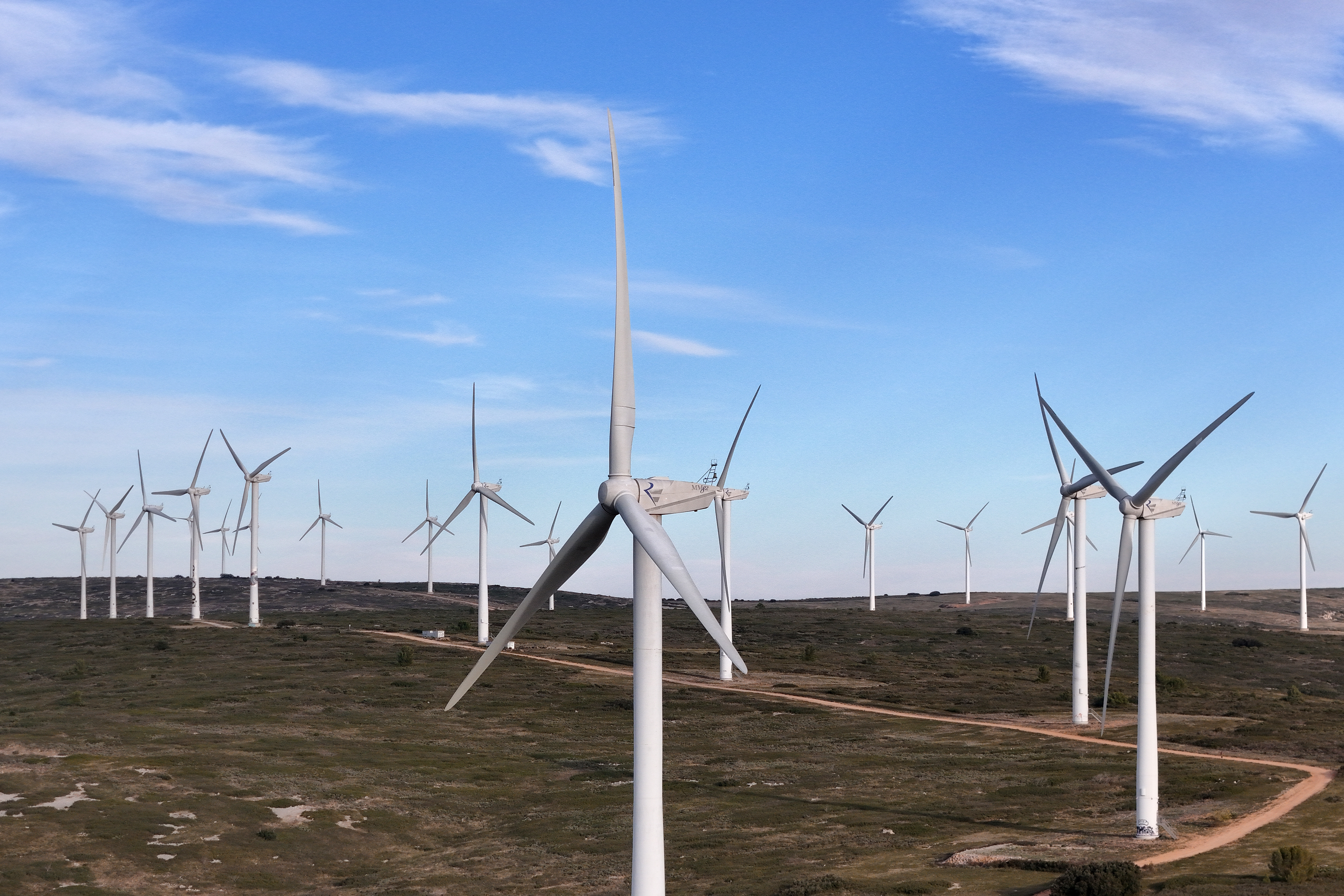
 Wind turbines at a farm in Villeveyrac, near Montpellier, southern France, 19 November 2025. France has set a target for its wind power capacity of at least 45 Gigawatt (GW) by 2050, which would represent more than 20 percent of the country's electricity consumption, according to the French Ministry of Economics, Finance and Industrial and Digital Sovereignty. (Photo: EPA/GUILLAUME HORCAJUELO)
Answering questions about the country's newly published energy planning law (PPE), Lescure said he would meet with industry leaders to discuss support measures for electric vehicles and other electrification subsidies for inclusion in the 2027 budget.
"Our demand growth plan is ambitious but realistic ... and state support will come at a reasonable cost to public finances," he told reporters.
The PPE sets targets for France's power mix and governs wind and solar tenders for 10 years. It was passed by decree on Friday morning, three years late, as disagreement raged among lawmakers over subsidizing renewables and financing new nuclear reactors at a time when France struggles with high debt.
The PPE sets the target for decarbonised electricity production at between 650 and 693 terawatt-hours by 2035, from a current level of 540 TWh.
It also aims to have 70% of France's energy consumption come from decarbonised electricity in 2035. Currently 60% of consumption comes from oil and gas and their derivatives.
"We will have 7 million electric vehicles by 2035 in France, five times more than we currently do," Lescure said.
Lescure previously stated the decision to lower France's renewables targets was due to power demand growing more slowly than expected — something he hoped to change, including by maintaining support for corporate EV fleets and potentially issuing tenders to boost consumption.
Friday's PPE cut wind and solar targets by about 20%, while nuclear power production targets were boosted 5% to 2035.
(Reporting by Forrest Crellin and America Hernandez, editing by Inti Landauro and Philippa Fletcher)
Comments
Scroll down to load comments...