



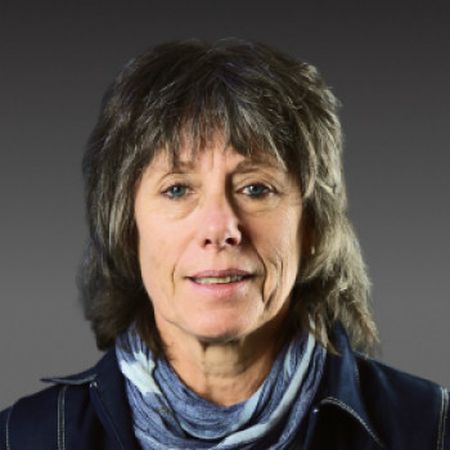
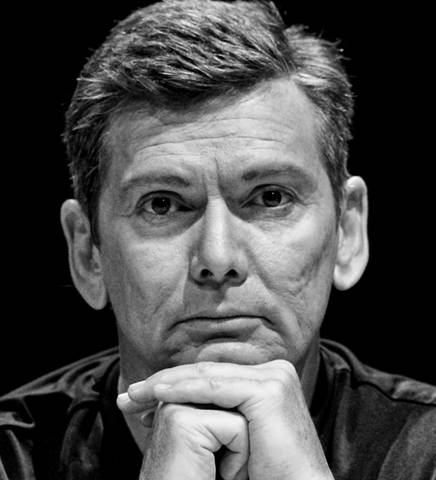
 Ian Von Memerty’s recent death by suicide has stirred debate around definitions of ‘suicide’ versus ‘self-deliverance’, challenging perceptions in the right-to-die discourse. (Photo: Supplied)
 It has taken DignitySA more than four years to prepare the founding papers for an important Constitutional Court motion to take place on 9 April 2026, challenging the current blanket prohibition on assisted dying for the terminally ill in South Africa.
Previous challenges to the law by the lobby group have been ruled on an ad-hoc basis, and this is the final, big shot at it, where a team of 16 foreign experts and two donor-funded senior advocates will argue for a change to the law.
Accomplished musician, entertainer and showman Ian von Memerty was not terminally ill when he ended his life last week.
Ultimately this father of three who became a household name hosting shows such as Strictly Come Dancing and who later retired to become a pet sitter in Germany, was just tired of it all and feared old age, poverty and sickness.
Co-opting terms
These same fears likely resonated with people, which is why Von Memerty’s public posts on Facebook justifying his decision drew widespread support. Thousands followed his “series” in which he argued that “suicide and self-deliverance are not the same thing”.
“Self-deliverance” is a term that became popular in the 1990s as discussions about voluntary euthanasia raged globally, as the “right to die” movement peaked. This was after the 1991 publication of Final Exit: The Practicalities of Self-Deliverance and Assisted Suicide for the Dying by Derek Humphry.
Von Memerty co-opted the term to describe his decision to end his life. “Suicide,” he wrote, included “all self-inflicted violent deaths, including gunshot wounds, hanging, jumping, poisoning and unplanned overdose.”
A further definition he added to his understanding of “suicide” was that “these self-inflicted deaths” occurred without a will, a letter, recording or “explanation of intent”.
/file/attachments/orphans/marilynn_manuel_-_2026-02-12t122157957_819511.jpg "Ian von Memerty.
<br>(Photo: Ian von Memerty / Facebook)")
(Photo: Ian von Memerty / Facebook)
By “self-deliverance” Von Memerty said he meant “a peaceful and non-violent death (I cannot describe methods; doing so would result in possible censorship and removal). It is deliberate and prepared.”
His series was not about assisted dying, said Von Memerty. “Assisted dying requires conditions and access that many people simply do not have.” He was referring to the lack of social and medical services and support for people in mental distress.
What does the law say about suicide?
In fact, South African health legislation requires that anyone with knowledge of a threatened suicide must intervene and seek mental health for that individual.
Technically, those who supported Von Memerty on Facebook have violated the law. The Mental Health Care Act of 2002 states that “if a person is threatening suicide, they may be subject to involuntary care, treatment and rehabilitation”.
The person threatening suicide can also be “involuntarily” admitted to “a designated health facility for a 72-hour assessment to determine their mental state and immediate risk”. The law also makes provision for South African Police Service intervention.
The Protection from Harassment Act (2011) classifies the threat of suicide in certain contexts (within a relationship or to manipulate or coerce a partner) as “a form of emotional abuse or harassment”.
The law also states that while suicide is not a crime, “assisting or inciting someone to commit suicide is unlawful in South Africa and can be treated as murder or culpable homicide”.
So, technically Von Memerty’s vocal supporters could be viewed as the modern-day equivalent of the crowd gathered under the skyscraper from which a man is threatening to jump and while officials try to save him – the crowd below chants “jump, jump, jump”.
/file/attachments/2989/Screenshot2026-03-03120112_835424.png "Craig Schonegevel whose journey is chronicled in The Last Right. (Photo: Patsy Schonegevel)")
The right to die
DignitySA, which lobbies for the right to die for the terminally ill, has provided 11 case studies, including that of Craig Schonegevel, who suffered from a punishing variant of neurofibromatosis and took his own life at the age of 28 on 1 September 2009, in support of the motion.
Schonegevel’s lifelong struggle with the ruthless illness was documented in Last Right – Craig Schonegevel’s struggle to die with dignity, which this journalist helped his parents to write after his death.
And just like that, Von Memerty, in selecting the terminology, the words, used in the right to die debate, may have set the battle back by proving the “slippery slope” argument that has been proffered by those against end-of-life decision-making.
Chris Jones, chief researcher with the Department of Systematic Theology and Ecclesiology and head of the Unit for Moral Leadership at Stellenbosch University, has written that people make decisions throughout their lives about their health.
“But when they are terminally ill, often in unbearable pain and suffering – and sometimes even losing their dignity – they are not allowed to decide when they want to die,” he writes.
He asks whether, when someone is terminally ill and suffers badly, can a strong moral case not be made “that such a person – within prescribed medical-ethical parameters, evaluating the patient’s suffering, prognosis, mental competence, informed decision-making and clear communication – be assisted with the dying process?”
He noted that three arguments had been put forward in support of “active euthanasia”: that personal autonomy should be respected, unbearable suffering should be prevented and that no one should be forced to endure suffering, often at high medical cost.
This implied that a “competent person” had a moral right to make his or her own choice.
“When life is no longer good, and death is no longer bad, and when death is therefore preferred to continuing life, the role of medicine could change from healing and preserving life to helping someone die in a way that is compassionate, kind, gentle and respectful.”
Reporting on suicide
It is has been a well-established tradition in the media not to report on suicides. This is generally to prevent what is known as “suicide contagion” or the Werther Effect. The origin of the term is from German author Johann Wolfgang von Goethe’s The Sorrows of Young Werther.
Media reports, especially explicitly reported details, can “trigger further suicides among vulnerable individuals”. Journalists also follow guidelines that avoid sensational headlines or detailed methods.
This is why Von Memerty feared censorship on Facebook and why podcasters use words like “unalived” for assassination or murder and “self-deliverance” to avoid detection by the algorithm.
A private matter
Von Memerty was a public figure, a celebrity, and the protocols are that in this instance if the suicide “affects many people, for example stopping traffic, it is often considered a private matter rather than general news”.
Surviving family members, Von Memerty’s wife of 34 years, Vivienne Lawrence, and their two surviving children, son Oscar and daughter Kasvia, have been left to mourn their loved one.
On Monday the family posted: “We are sad to announce that our beloved Ian von Memerty passed away at the age of 61 in Johannesburg in the early hours of 23 February 2026.
“As a family we have done everything we can to love & respect him on his journey.
“We ask for privacy & respect as we deal with our own pain, having lost someone we’ve loved very much.”
Von Memerty went out with a bang, like the showman he was. He has left us behind to continue to lobby for the legal right to die for the terminally ill to be promulgated.
His death is an example of why we need new laws as medical science alters the way we live and die. We also need many more spaces and places where people who are desperate, jobless and hopeless can find some support and help when it all becomes too much. DM
The true horror of existence is not the fear of death, but the fear of life. It is the fear of waking up each day to face the same struggles, the same disappointments, the same pain. It is the fear that nothing will ever change, that you are trapped in a cycle of suffering that you cannot escape. And in that fear, there is a desperation, a longing for something, anything, to break the monotony, to bring meaning to the endless repetition of days. – Albert Camus, The Fall