




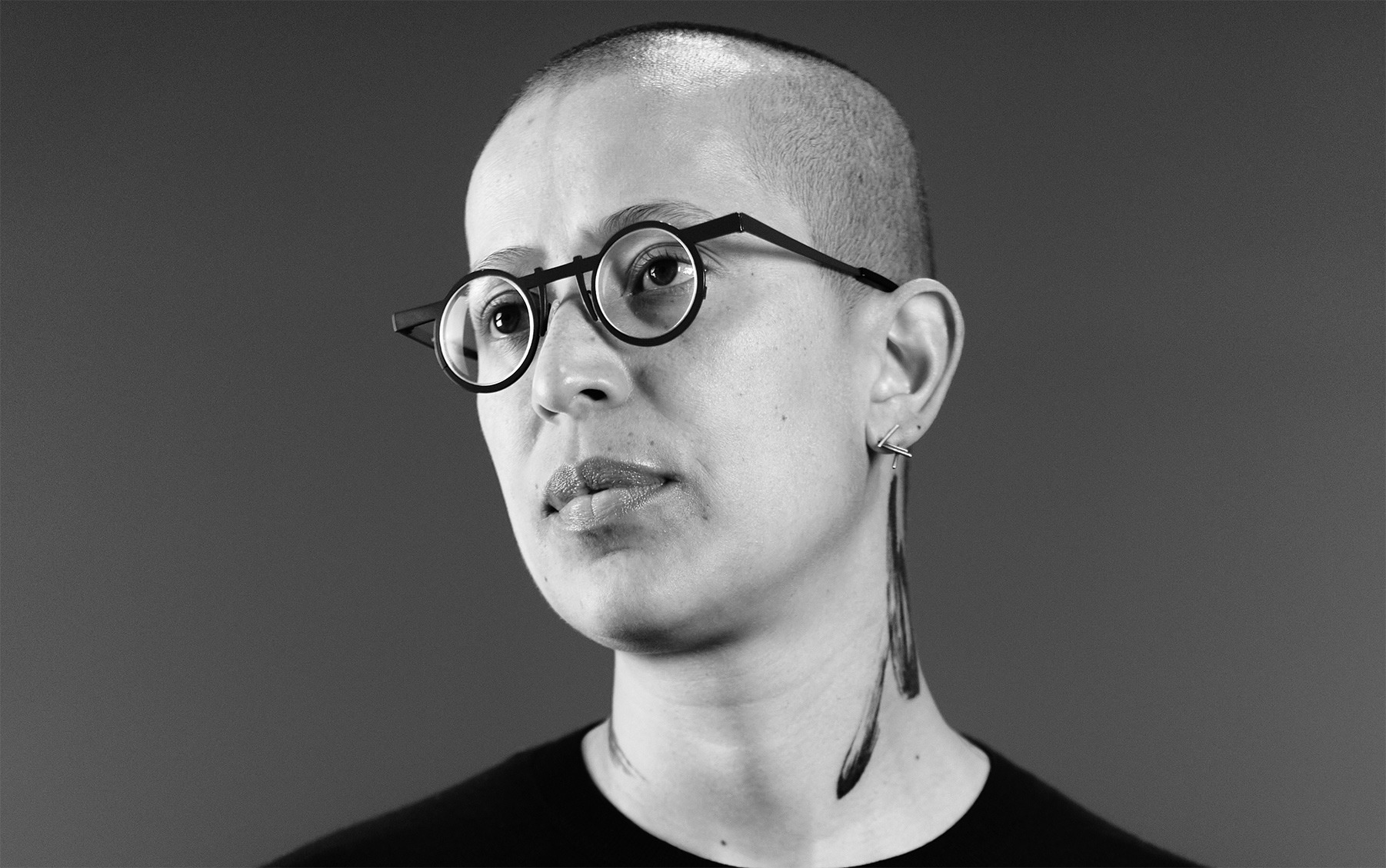
 Artist Gabrielle Goliath's work Elegy was originally selected by an independent committee to represent South Africa at the Venice Biennale. Minister of Arts, Sport and Culture Gayton McKenzie subsequently sought to prevent the artwork from being exhibited at the Biennale. (Photo: J Macdonald)
 South Africa is unlikely to be represented at the 61st Venice Biennale this year after the Gauteng High Court in Pretoria dismissed Gabrielle Goliath’s urgent application to reinstate her artwork Elegy for the international exhibition.
Not only did the court dismiss the application, which would have seen Goliath represent SA at the prestigious international art event this year, but it also ordered that costs be awarded to the respondents, including Minister of Sports, Arts and Culture Gayton McKenzie.
Judge Mamoloko Kubushi gave no reasons in the written order handed down on Wednesday, 18 February 2025, something that non-profit Campaign for Free Expression (CFE) said “defies comprehension”.
The application was heard on 11 February, with 18 February understood to be the Biennale deadline.
CFE was admitted as amicus curiae, or friend of the court, in the matter.
Its executive director, Nicole Fritz, said: “It’s obviously something that we are alarmed by. It’s more than disappointing. We are just very concerned at the order without reason, in a context where the minister is alleged not only to have conducted himself unlawfully but also to have undermined the independence of the arts sector.”
In earlier court papers, Fritz had argued that McKenzie’s actions had a “manipulating effect on artistic freedom” and that he had violated his constitutional obligation as a government representative to be “truthful and transparent”.
Meanwhile, McKenzie’s spokesperson, Stacey-Lee Khojane, said: “We welcome the ruling, thank you.”
/file/dailymaverick/wp-content/uploads/2025/09/ED_512934.jpg "Minister of Sport, Arts and Culture Gayton McKenzie. (Photo: Theo Jeptha / Die Burger / Gallo Images )")
Goliath’s representatives had not responded to Daily Maverick’s request for comment at the time of writing.
Allegations of unlawful interference
Daily Maverick earlier reported that the dispute started when McKenzie sought to interfere with, and then cancel, Goliath’s participation after an independent selection committee chose her to represent South Africa at its national pavilion in Venice.
Initially, McKenzie had taken issue with Elegy because part of the “work of mourning” engaged with the Israel Defense Forces’ killing of women and children in Gaza. McKenzie also publicly claimed, spuriously, that it was funded by the Qatari government – an allegation that was debunked by Daily Maverick.
The spokesperson for the South African Zionist Federation (SAZF), Rolene Marks, welcomed the judgment, which she said underscores the need for cultural sovereignty and transparency, adding that the country’s global representation ought to reflect national pride and creative integrity, not hidden sponsorships or proxy politics.
“This ruling affirms the minister’s authority to safeguard South Africa’s national cultural platforms from external interference. It reinforces the principle that taxpayer-funded representations of our country must remain sovereign, transparent and grounded in genuine artistic expression, not repurposed as vehicles for foreign geopolitical agendas,” Marks said.
Read more: ‘A power he doesn’t have’ — Gayton McKenzie’s Venice Biennale cancellation slammed in court
Goliath’s lawyers sought to have the court declare that McKenzie’s attempts to interfere with and obstruct the independent selection committee’s decision to select her work were unconstitutional, unlawful and invalid.
/file/attachments/orphans/GabrielleGoliath_photobyAntheaPokroy_1_452051.jpg "Gabrielle Goliath. (Photo: Anthea Pokroy)")
They also wanted to interdict McKenzie from taking any further steps to interfere with or obstruct Elegy from being showcased at the Biennale.
This came after the department had appointed the non-profit organisation Art Periodic to set up a selection process for participation in the Biennale.
Goliath, represented by media law expert Dario Milo and advocate Adila Hassim SC, said McKenzie’s actions were ill-conceived attempts at after-the-fact justification and amounted to contrived, unlawful interference.
In her founding affidavit, Goliath had argued that the decision by the selection committee appointed by Art Periodic constituted an administrative action “which is binding and valid until it is set aside” by the courts. McKenzie did not approach the courts; instead, resorting to “unlawful self-help”, according to Goliath’s affidavit.
The last part of Goliath’s application said McKenzie’s actions showed a worrying clampdown on artistic freedom, which is protected in South Africa’s Bill of Rights. She argued that his conduct “is incompatible with the right of freedom of expression and the rule of law”.
In addition, she warned that because of the minister’s behaviour, South African artists might in future feel they “must self-censor to ensure that their work complies with the views and beliefs of those who happen to hold high executive office”, which she said undermined freedom of expression. DM