 Dry cracked earth is pictured on the dry dam bed, 22 October 2019, at the Fika-Patso dam near Qwaqwa, in the Freestate. The area is experiencing the worst drought in modern history. (Photo: Alaister Russell / The Sunday Times)
 United Nations water experts are calling for the formal recognition of a new era of global water “bankruptcy”, arguing that terms such as water “stress” or “crisis” no longer reflect the seriousness of the irreversible losses from the world’s declining bank of fresh water.
In a report released at the UN headquarters in New York on 20 January, academics and senior water officials said the concept of water “bankruptcy” was being presented not just as a metaphor to communicate the severity of the problem, but also to mark the beginning of concerted political action to start undoing decades of systematic overspending of surface and groundwater that have pushed water systems into failure mode.
/file/attachments/orphans/Bankrupt7IndianwomenfarmersPhotoRandeepMaddokeWikimediaCommons_373865.jpg "Indian women farmers, whose livelihoods depend on access to fresh water, protest at the Tikri border, India, in 2020. (Photo: Randeep Maddoke, Wikimedia Commons)<br>")
The report, Global Water Bankruptcy: Living Beyond Our Hydrological Means in the Post-Crisis Era, argues that the familiar terms “water stress” and “water crisis” fail to reflect today’s reality in many places: a condition marked by irreversible losses of natural water capital and an inability to bounce back to historic baselines.
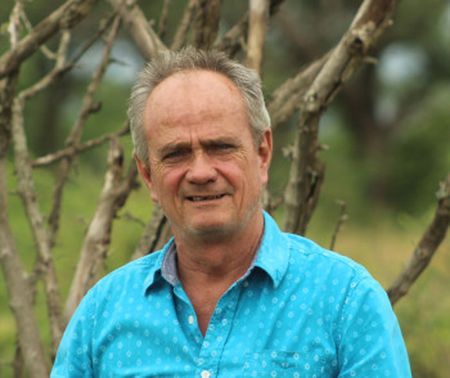
“This report tells an uncomfortable truth: many regions are living beyond their hydrological means, and many critical water systems are already bankrupt,” according to lead author Professor Kaveh Madani, the head of the UN University’s Institute for Water, Environment and Health in Ontario, Canada.
/file/attachments/orphans/Bankrupt5ProfKavehMadaniimageSupplied_621976.jpg "Prof Kaveh Madani, lead author of the new UN report on global water bankruptcy. (Photo: Supplied)")
Madani, a prominent Iranian scientist and former deputy head of his country’s environment department, fled Iran in 2018 during a government crackdown on environmentalists. He had been particularly critical of Iran’s aggressive dam-building and cloud-seeding projects.
Madani says his call for new language to describe the current situation is not simply an issue of semantics.
“Language shapes policy. Calling a chronic, self-inflicted condition a ‘crisis’ implies that societies can and should return to a pre-crisis normal. In many water-stressed regions, that normal no longer exists. Checking accounts have been drained, savings accounts overdrawn, and natural assets sold off to pay short-term bills,” he said.
“Just like a crisis and disaster, bankruptcy involves severe threats and losses, but it is not a temporary episode. It is a structural condition in which obligations systematically exceed the system’s capacity to meet them. Water bankruptcy occurs when natural income and liquid assets, even if fully mobilised, can no longer cover existing claims without unacceptable sacrifice of essential functions and damaging the natural capital.”
What are some of the big problems?
Drawing on global datasets and recent scientific evidence, the new UN report presents a sobering overview of trends, mostly caused by humans:
- Nearly 50% of large lakes worldwide have lost water since the early 1990s (with 25% of humanity directly dependent on those lakes);
- Roughly 50% of global domestic water is now derived from groundwater, and 70% of major aquifers are showing long-term decline;
- At least 410 million hectares of natural wetlands — almost equal in size to the entire European Union — have been erased in the past five decades;
- More than 30% of global glacier mass has been lost since 1970, with entire low- and mid-latitude mountain ranges expected to lose functional glaciers altogether within decades; and
- Dozens of major rivers now fail to reach the sea for parts of the year.
And the human consequences:
- At least 75% of humanity lives in countries classified as water-insecure or critically water-insecure;
- Nearly 2 billion people are living on sinking ground (mainly due to groundwater removal), with some cities dropping 25cm every year. Land subsidence linked to groundwater over-pumping now affects more than six million square kilometres, almost 5% of the global land area and nearly two billion people;
- Nearly 4 billion people face severe water scarcity for at least one month every year; and
- Drought impacts are becoming steadily more human-made and extremely costly. The report identifies a growing pattern of anthropogenic drought, meaning water deficits caused by overuse and degradation rather than natural climate variability alone.
Madani asserts that many water managers and politicians are in denial and continue to make promises, implying that the problem is only temporary and can be mitigated.
But the problems in many regions no longer resemble a crisis in the conventional sense. Some ecosystem damage was now irreversible on human time scales, and a return to “normal” was not feasible even with prohibitive economic, social and environmental costs.
He notes that policymakers, journalists and scientists often speak of a “water crisis”, a term used for everything from a failed monsoon season in a single year to the multi-decadal depletion of aquifers, the drying of lakes and wetlands, or events such as the “Day Zero” water shortage in Cape Town.
/file/attachments/orphans/Bankrupt4TheewaterskloofreservoirduringCapeTownDayZeroimageSentinel2_166884.jpg "A satellite image of the Theewaterskloof Reservoir outside Cape Town in 2018 during the city’s Day Zero crisis. (Source: Sentinel-2)<br>")
While the “crisis” terminology was powerful, it was conceptually loose when used continually to describe perpetual problems, without triggering any action.
“Many decision-makers blame these issues on climate change to evade responsibility and accountability. Nonetheless, the similar patterns of chronic overuse and degradation across the world are not temporary deviations caused solely by climatic anomalies; they are the cumulative result of decades of systematic overspending of surface and groundwater, pushing systems toward their boundaries and into a failure mode.”
His paper proposes that “water bankruptcy” is therefore a more meaningful and useful term, providing the first formal, scientific definition of a concept grounded in hydrology, ecology, and socio-economics.
/file/attachments/orphans/Bankrupt6StatesofwaterthreatsImageUNwaterreport2026_807422.jpg "From water stress to water bankruptcy. (Table: UNU-INWEH)")
He also uses the analogy of a cheque account and a savings account, with surface water (rivers, lakes, dams) forming the day-to-day cheque account, and groundwater the longer-term savings account
“Many aquifers recharge slowly, accumulating water over decades to millennia. Some hold fossil groundwater that is effectively non-renewable on human time scales. Water savings that societies inherited from their ancestors give them resilience in times of drought and water shortages.
/file/attachments/orphans/Bankrupt8TableofWater_UseSourceOurWorldinData_236182.jpg "A chart showing growing global use of freshwater over the past century. (Source: Our World in Data / UNU-INWEH)
<br>")
“The savings account must be kept healthy and recharged during the high-income (wet) years. This account is meant for emergencies and strategic investments, not for covering chronic overspending.”
The report emphasises that not every basin and country is water-bankrupt. However, “enough critical systems around the world have crossed these thresholds”.
The regions most at risk are:
- The Middle East and north Africa region, where there is high water stress, climate vulnerability, low agricultural productivity, energy-intensive desalination, and sand and dust storms;
- Parts of South Asia, where groundwater-dependent agriculture and urbanisation have produced chronic declines in water tables and local subsidence; and
- The US Southwest, where the Colorado River and its reservoirs have become symbols of over-promised water.
/file/attachments/orphans/Bankrupt9EthiopiaPhotoAnoukDelafortrieECHOEU_695634.jpg "An Ethiopian woman and her child travel in search of water following another drought in 2016. (Photo: Anouk Delafortrie / Echo / EU)<br>")
The UN report further emphasises that water is an issue that crosses traditional political boundaries.
“It belongs to north and south, and to left and right. For that reason, it can serve as a bridge to create trust and unity between and within nations. In the fragmented world we live in, water can become a powerful focus for cooperation and for aligning national security with international priorities.
This should include preventing further irreversible damage such as wetland loss, destructive groundwater depletion and uncontrolled pollution.
/file/attachments/orphans/Bankrupt2-DumpTruckPeruPhotoWikimediaCommons_608981.jpg "A dumper truck releases toxic waste into the Huallaga River near Tingo María, Peru. (Photo: Wikimedia Commons)")
“Bankruptcy management requires honesty, courage, and political will,” Madani adds. “We cannot rebuild vanished glaciers or reinflate acutely compacted aquifers. But we can prevent further loss of our remaining natural capital, and redesign institutions to live within new hydrological limits.
“Despite its warnings, the report is not a statement of hopelessness,” adds Madani. “It is a call for honesty, realism, and transformation. Declaring bankruptcy is not about giving up; it is about starting fresh. By acknowledging the reality of water bankruptcy, we can finally make the hard choices that will protect people, economies, and ecosystems. The longer we delay, the deeper the deficit grows.” DM