



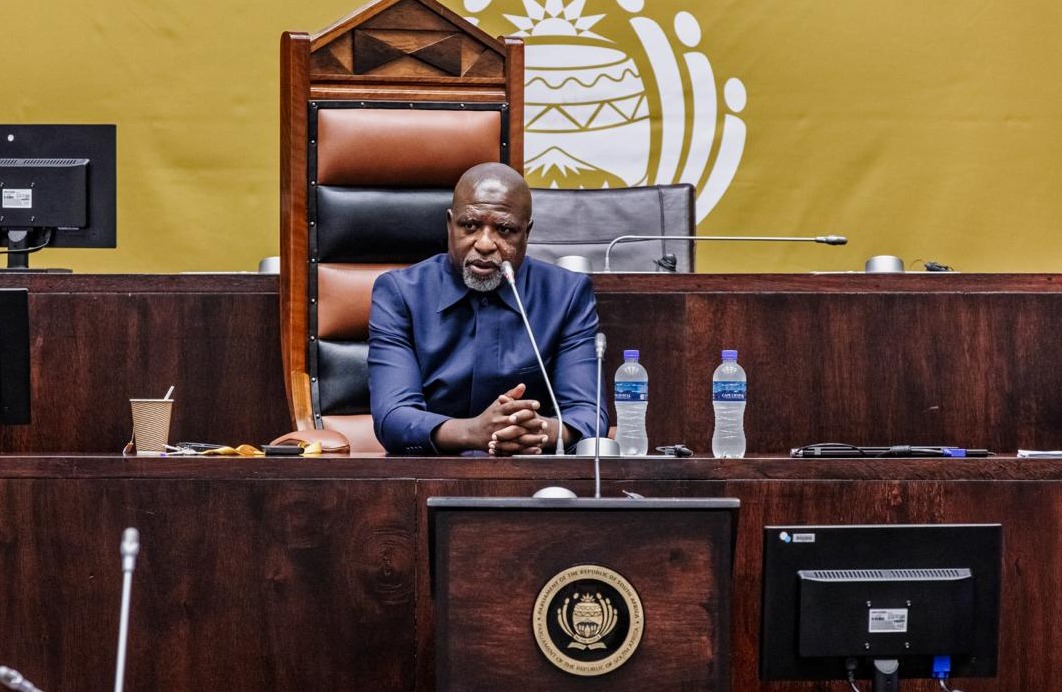
 Soviet Lekganyane, the chairperson of the parliamentary ad hoc committee that finished its public hearings into the Mkhwanazi allegations on 18 March 2026. (Photo: Zwelethemba Kostile / Parliament RSA)
 About six months after the start of the parliamentary committee meant to unpack allegations that a drug trafficking cartel has infiltrated policing and political networks, public hearings have concluded.
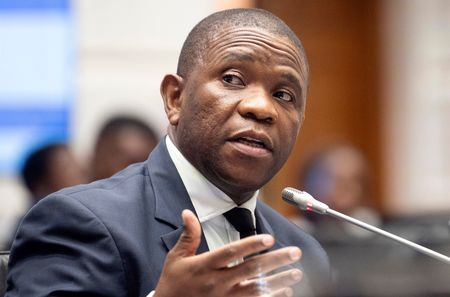
Now the work starts to compile an oversight report, which will likely see a broad range of recommendations aimed at a reform agenda. One of these, says DA MP Ian Cameron, chairperson of the police oversight committee and a member of the ad hoc committee, is to call the SA Police Service (SAPS) back to Parliament for constant accountability.
The committee finished its public hearings on Wednesday, 18 March, after starting in October. When the committee started, it heard from KwaZulu-Natal Police Commissioner Nhlanhla Mkhwanazi, who, while unpacking some of his claims in July 2025, also said the media and parliamentarians should be jailed if they revealed classified information.
He returned on Wednesday, 18 March, to the committee, where he expanded further on the bitter, public rivalry with fellow top cop, the now-suspended Deputy National Police Commissioner Shadrack Sibiya.
‘Start with the kingpins’
Cameron said, “We need to focus on very specific, let’s call them kingpin names, and start from there”.
One of the names he mentioned was that of Lieutenant-General Molefe Fani, the South African Police Service’s (SAPS’s) divisional commissioner of supply chain management.
During his testimony, Fani said criminally accused Vusimuzi “Cat” Matlala should not have been granted a contract with the SAPS via his MediCare24 company, which was worth R360-million.
“I think it’s a scandal that he hasn’t been fired and permanently charged yet,” said Cameron in response to evidence at the committee that Fani might have been much more involved in the process of approving Matlala’s contract than he initially told the committee last year.
/file/dailymaverick/wp-content/uploads/2025/10/ED_577591-1.jpg "Ian Cameron, the National Assembly Chairperson of the Portfolio Committee on Police. (Photo: Gallo Images / Brenton Geach)")
Another member of the committee, Sibonelo Nomvalo, the newly appointed secretary-general of the uMkhonto Wesizwe (MK) party, told Daily Maverick: “I think to a certain extent we did not go deeper and that has been caused by our limited capacity, and maybe our limited time... But also, you can’t run away from the fact that we are in a politically polluted environment.”
Part of the problems of the committee, Nomvalo said, was the “political disagreement on issues that were obvious that we should take further”, including calling additional witnesses such as Crime Intelligence’s General Feroz Khan, who has been linked to alleged criminal activities, as Mkhwanazi pointed out during his testimony on Wednesday, 18 March 2026.
“We are still dissatisfied about the decision that we took of not calling the president to come and appear before the committee,” said Nomvalo, a lawyer turned politician, on Cyril Ramaphosa.
“We projected him as a first-class citizen as if he’s bigger than the Constitution because he was supposed to come like everybody and be questioned here and be treated like everyone,” he said.
Initially, the president’s name was floated as someone to appear before the committee, but this was rejected in favour of the provision of a written response. The Presidency submitted this response earlier this week.
/file/attachments/orphans/ED_595189_402489.jpg "The MK party’s Sibonelo Nomvalo at the Parliamentary ad hoc committee inquiry into alleged corruption and political interference in the criminal justice system at Good Hope Chambers on 10 February 2026 in Cape Town, South Africa. (Photo: Gallo Images / Brenton Geach)")
Other issues raised by Nomvalo include the lack of a forensic investigator at the committee, which the Economic Freedom Fighters had also called for.
“We did not test the documentation before us... There are documents which were supposed to be perused and to test their identity, their authenticity and so on, that has never happened,” he said.
“Many revelations have been made, and it was now left to our wisdom to take further those revelations,” he said.
The Senzo Mchunu question
One of the biggest reasons for Mkhwanazi’s explosive media briefing, which led to both the ad hoc committee and Madlanga Commission, was the disbandment of the Political Killings Task Team (PKTT), which focused on the murders of politicians and traditional leaders, largely in KwaZulu-Natal.
The decision was taken by Police Minister Senzo Mchunu on 31 December 2024. He claimed in his testimony that he took this decision based on complaints against the team by violence researcher Mary de Haas and police whistleblower Patricia Mashale, as well as cost concerns and the need to bring the task team into a more traditional structure.
With there being five members of the African National Congress (ANC) on the committee, there had been an expectation that the party would rally around Mchunu.
ANC Chief Whip Mdumiseni Ntuli told Daily Maverick: “I think we’ve done our work in a way that I would imagine the ANC supporters and non-supporters will be proud of us, in the sense that many people have written us off – that we’re going to walk into this committee and simply become a defence mechanism for anybody who belongs to the African National Congress, whether it be the current or the former ministers, and I think were disappointed [by] that expectation.
“I think we have conducted ourselves in a way that is befitting of Members of Parliament, which is to act truly like public representatives and act in the best interests of the public.”
/file/dailymaverick/wp-content/uploads/2025/08/WhatsApp-Image-2025-08-05-at-12.07.36.jpeg "Mdumiseni Ntuli at the ad hoc committee meeting on Tuesday. (Photo: Zwelethemba Kostile / Parliament of RSA)")
He said the challenge was “of course, because when you are sitting in a meeting like this, and some of the allegations involve your own members, your own colleagues, your own leaders, it worries you because it makes you think that to some extent, this might result in the electorate passing a particular judgement on your own organisation, but the fact [is] that we are not hiding it, we we are not masking the difficulties”.
Over the last two elections (both national and municipal), the ANC has dropped in support. Naturally, as Ntuli is head of the elections within the party, a further drop would concern it.
“I do think that the most constructive and objective electorate will never punish the ANC for what has happened because the ANC accept that certain things have not been done well, including by some of our own leaders,” he said.
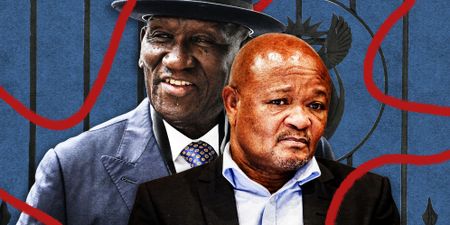
This is in reference to Mchunu and former police minister Bheki Cele both being linked to Matlala.
“I think we have weathered the storm in my own view, relatively well,” he said.
What’s next?
The committee has been accused in some quarters of being a forum for political point scoring rather than getting to the root of alleged infiltration within the policing network.
The chairperson of the committee, Soviet Lekganyane, told Daily Maverick: “Remember we’re not the police and we’re not Crime Intelligence… We are a committee of Parliament and we work within the means that we have.”
He added: “We think that the work that we have done so far is leading us somewhere. I can’t use the word sufficient or adequate, but I can say it’s leading us somewhere.
“If we come across cases that need forensic investigation, they will obviously be referred to the respective authorities that have competence to investigate such matters, so we have done our oversight work.”
The work of the committee, Lekganyane argued, would continue, as two committees, police and justice, would further have oversight over law enforcement and the justice sector.
When asked about the recommendations the committee might come up with, Lekganyane said: “The committee surely is going to recommend the reform of whether legislative or policy reforms in the criminal justice system.”
He said he “strongly believed” that what would come out of the final report would help to “retool the criminal justice system in the country. And I can tell you recommendations with far-reaching implications will be made.”
He said: “There is determination on the part of committee members to ensure that the shenanigans that have been happening in the criminal justice system come to an end.”
The committee needs to now deliberate on its findings, which will be contained in a report. This report should be completed by the end of the month due to the committee’s lifespan.
Once the report is completed and adopted by the committee, it will be tabled for official adoption within the National Assembly, where there will be a vote on whether to adopt or reject the report. DM
Comments
Scroll down to load comments...