




 South Africa’s Wiaan Mulder celebrates the dismissal of Bangladesh’s Litton Das on day three of the second Test at SuperSport Park Stadium in Centurion on 25 November. (Photo: Phill Magakoe / AFP)
Despite a rusty start to the long Test summer, with a loss to Australia in Durban, the Proteas have polished their performances to the point where they are gleaming with menace and intent as England’s tour comes into focus.
England play three Tests across December and January – matches that could put the Proteas in an unassailable position to defend their World Test Championship crown next year.
Since that heavy 214-run loss against Australia at Kingsmead, thanks largely to a fine 190 from Matt Renshaw, it’s been a procession of big performances and results from the Proteas.
They won the three-Test series against Australia 2-1 and beat Bangladesh 2-0.
And within that collective dominance, there have been multiple individual performances of varying brilliance that underpinned the team effort.
It’s hard to think of a single player who hasn’t contributed in some way, at some stage, during the four Test victories since Durban.
They are the ultimate team, moulded by wily coach Shukri Conrad and forged by the tenacity of captain Temba Bavuma. The sum is greater than the parts.

Mulder and Ackerman shine
Naturally, it was fast bowler Kagiso Rabada and captain Temba Bavuma who set the tone in the second Test against Australia.
Rabada missed Durban and returned to the arena in Gqeberha for the second Test, capturing the wicket of Aussie opener Nic Maddinson in his first over of the match. He announced his return, and the rest of the bowling unit seemed to grow taller as they skittled Australia for 99.
Bavuma had earlier scored a career-high 179 after coming to the crease with the team at 25 for three. It was a sensational, career-defining knock against a quality bowling attack, in difficult conditions with his team in a precarious position. It wholly epitomised Bavuma’s character and temperament. In a tough situation, he led from the front.
Marco Jansen added runs and took five wickets in the Aussie first innings.
And so it went on. Spinner Simon Harmer took 10 wickets in the third Test at Newlands, Ryan Rickelton scored a century in the second innings and even the struggling Matthew Breetzke’s 43 was vital for South Africa to build a decent lead.
But the real heroes who have emerged from the summer – Harmer gets an honourable mention – have been all-rounder Wiaan Mulder and opening bat Marques Ackerman.

Mulder, of course, is no stranger to the limelight, having scored a South African Test record 367 not out against Zimbabwe in Bulawayo in 2025.
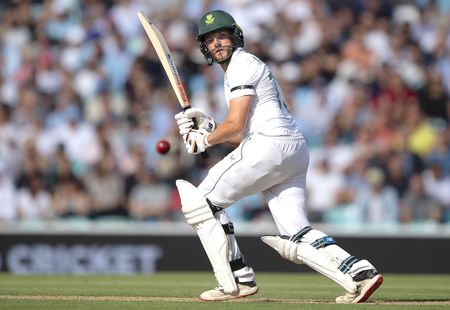
He was captain in that series and declared with plenty of time in the Test, needing only 24 runs to become the record holder for the highest individual score in Test cricket. It would’ve meant going past the great Brian Lara.

“You never know what my fate is or what’s destined for me, but I think Brian Lara keeping that record is exactly the way it should be,” said Mulder.
For those superstitious cricket watchers – and there are many – perhaps Mulder was right.
Since that day, fate has smiled on the genial all-rounder. In his own quiet way, he has become every bit as important to this generation of Proteas as Jacques Kallis was to his.

Shukri support
In 2026, Mulder has taken his contributions to a higher level because of the demands coach Conrad put on him.
Mulder is not just a fourth seamer, with the job of breaking a partnership and chipping in with some lower-order runs.
He’s viewed as a strike bowler and key batter, from whom wickets and centuries are expected. Conrad is clearly a master motivator, because Mulder has responded positively.
Skimming over the Aussie series, which included a fine 115 at Newlands in the deciding third Test – Mulder called it his finest Test innings – what he did against Bangladesh was match-winning.

In the second Test at Centurion, Mulder scored 100 in the first innings and took seven for 31 in the tourists’ second knock. South Africa won by an innings and 219 runs.
He became the first South African to score a century and take seven wickets in the same Test and the only player ever to score a triple century and take seven wickets in an innings.
That’s something not even Garfield Sobers, Kallis, Imran Khan or Ian Botham managed.
When told of that record, Mulder was typically self-effacing.
“This is a once-off, and those guys did it for many years,” said Mulder.
“I don’t worry much about records, but it’s cool to contribute, and in my career in this team, I’ve fulfilled so many different roles. I just wanted a chance to give it my best shot, and Shuks has always backed me, whatever the role is.
“So, to do something special is really cool and that’s happened twice in my international career. The Aussie 100 was probably my best one, but records don’t matter much to me, because I just want to win.”
Ackerman heroics
Opening bat Ackerman has taken a longer road to the Test arena, making his debut at the age of 30. He’d also never opened the batting in first-class cricket.
It was another Conrad masterstroke. Ackerman is a fine strokemaker who likes to score quickly.
Even with the demands of opening the batting in Tests, his strike rate is an incredible 91.08 in four Tests. In those four matches he has scored 470 runs in six innings, with two centuries and two fifties at an average of 78.33.
It’s still very early in his career, and that average will almost certainly start coming down. But the evidence is clear that a decade spent toiling in the domestic game, learning his craft, has more than adequately prepared him for the Test arena.
Ackerman is short and compact. At just 1.68m tall, he has always prioritised defence.

His technique is ideal for a Test opener, playing the ball under his eyes, seldom pushing at the ball, especially early on.
“I’ve always been the smallest guy in my age group, growing up. Always,” said Ackerman. “And growing up in Joburg, there’s a lot of good cricketers, a lot of good schools, and I wanted to be different.
“Do I work hard on all the expansive shots? Probably not as much. It’s more my defensive game, leaving well and getting into good positions.”
Of course, opening the batting at the highest level is one of the hardest jobs in sport, and there will always be a ball with your name on it, but Ackerman has demonstrated he can mitigate against it.
“People obviously see me scoring really quickly, but I put a lot of effort and work in the nets and behind closed doors,” said Ackerman.
“It’s nice to get some runs behind it to back it up, but I felt like I left really well; I defended really well. When they were in a good area and even when I walked down the wicket into the channel to try and put the bowler off their lengths, when the ball was in a good area, I still managed to leave well.
“In between all the attacking shots and maybe sometimes doing some really questionable things, I still feel like my defence and my leaving was really good. That puts pressure on the bowlers, and maybe that does make them feel like they need to change their lengths or go searching a little bit more.” DM
Comments
Scroll down to load comments...