



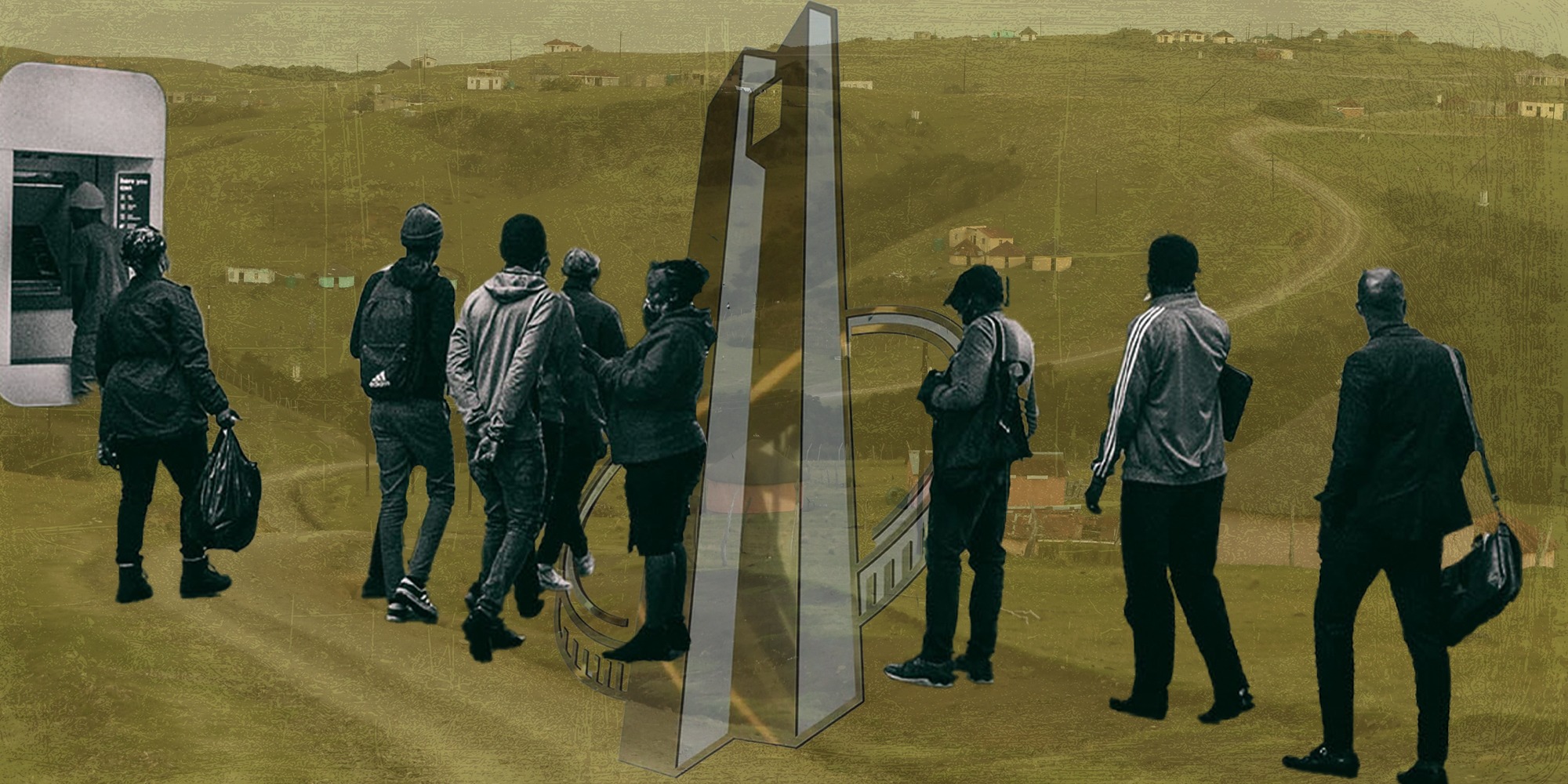
 Illustrative Image: South African Reserve Bank logo. (Photo: Waldo Swiegers / Bloomberg via Getty Images) | The village of Elliotdale in the Eastern Cape. (Photo: Felix Dlangamandla) | Custumers wait in line to use an ATM. (Photo: Guillem Sartorio / Bloomberg via Getty Images)
ATMs are tense. It’s the constant looking over your shoulder from the proudly South African distrust of others, mingled with lingering suspicion. And these money machines are attracting more attention – and some more tension – thanks to the South African Reserve Bank’s (Sarb’s) proposal to increase its role in the world of payments.
This means removing ATM branding, and setting up a shared network.

It sees this as a route to greater accessibility, in part by disrupting the current system of banks placing ATMs where they tend to be most profitable.
The proposal is a response to problems the Sarb identified in its Cost of Cash study, but it also raises questions about the role of regulator versus operator, and what happens when that line is blurred.
Why the change?
With cash remaining the preferred future payment method for about 40% of South Africans, at least according to Sarb, limiting any additional burdens involved in dealing with it really does matter.
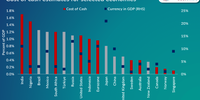
Sarb estimated the total consumer cost of cash as R88.5-billion, though only 49% of this pertains to direct costs like banking fees and the cost of travel to banks/ATMs.
The remaining 51% goes to indirect costs like time, crime and foregone interest, which Sarb is keen to point out are still big factors in people’s lives.
It’s worth noting that the study uses self-reported and modelled data, in addition to looking at the actual amount of money paid to banks. The tier one to three supply chain cost, which includes essential industry and banking services, plus costs incurred at retailers, is R27.1-billion.
Cash costs SA’s GDP an estimated 1.2%.
In with the new
Cash is key to Sarb’s modernisation plan, but its National Payments Utility also takes the digital sphere into account.
Sarb has taken a 50% stake in PayInc – previously BankservAfrica – which clears payments between banks and financial institutions. Absa, Access Bank, African Bank, Capitec, Citibank SA, FirstRand, Investec, Nedbank and Standard Bank are also PayInc shareholders.
PayInc will become the National Payments Utility, offering “inclusive, public-interest infrastructure”. Sounds great. But what does it actually mean?
It means the Payments Association of South Africa no longer manages the payment system. Made up largely of banks, the association has run on a “self-regulatory model” which Sarb is phasing out.
As of September, Payments Association of SA staff and IP have transferred to Sarb/PayInc. The Sarb is taking over regulatory duties while PayInc (which the Sarb partly owns) manages EFTs, DebiCheck, Registered Mandate, rapid payments and real-time clearing.
ATM agenda
Sarb also has a strategy to boost cash access; it wants to “streamline the cash infrastructure so that it costs less to run” and reduce non-essential “double-handling” of cash.
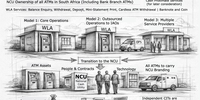
To that end, Sarb is setting up a National Cash Utility that will consolidate the infrastructure involved in dealing with cash, and under that plan it wants to transition to white-label ATMs nationwide.
The rationale behind white-label ATMs is that a “pooled network” would be less expensive to operate and could prioritise public interest. More ATMs could be placed in remote areas (since location would not rest on where a bank makes the most money via the highest foot traffic) and people would not lose money to “disloyalty fees” for using an ATM that does not belong to their bank.
Sarb has proposed that all ATMs nationwide be National Cash Utility-owned.
“The SARB plans to conduct a limited white-label ATM pilot within its own facilities. An ATM will be made available to a limited set of users, providing a controlled environment to test aspects of the proposed regulatory, technology and operational models, including the customer experience and associated service arrangements,” the bank wrote in response to Daily Maverick questions.
“The pilot is intended to inform and refine the future white-label ATM operating model and should not be interpreted as the commencement of a broader public rollout.”
The plan is to complete the “insourcing” of National Cash Utility services in 2027, moving all ATMs to white-label status in 2028 and, by 2029, t0 be looking at ATM rollouts in underserved communities.
White label, private label
In proposing that the National Cash Utility own all ATMs, Sarb may be stepping on some toes – specifically, the private companies that already operate white-label ATMs and which have a roughly 30% share of the ATM market, according to Sarb’s calculations.
These are the non-banks, or independent ATM deployers; when you withdraw from one of their ATMs, your bank pays what is known as an interchange fee to the ATM operator on your behalf.
Interestingly, these fees have not gone up since 2021, unlike the cost of pretty much everything else.
Sarb highlights higher costs at independent ATM deployers, but also that it is possible they operate in “more niche markets” – such as the underserved areas that Sarb is trying to help out.
“Shared infrastructure and targeted subsidies” could be an option here, Sarb said. Higher interchange fees could also incentivise the independent ATM deployers to put more machines in more remote locations, and they would also benefit from the elimination of disloyalty fees.
Sarb says it is chatting to the industry about this and hosting lekgotlas for stakeholders, but the latest of these, which took place on 12 November, was closed to media.
An independent ATM deployer that Daily Maverick spoke to for this piece declined to comment publicly.
Penny for the bank’s thoughts
Standard Bank’s Willie Chavalala reaffirmed the lender’s commitment to accessibility, but said the bank was looking at “access through a combination of our ATM network and alternative cash-access channels, rather than simply expanding the physical ATM footprint”.
When asked about the penalties you pay for using another ATM operator’s machines, he said that “Standard Bank supports the intention to offer wider access and interoperability at ATMs where it makes sense, while allowing banks to continue differentiating the customer experience and services offered through their own ATM networks.
“As these matters remain part of an ongoing consultation process, we would not want to pre-empt the outcome by commenting on individual pricing proposals at this stage.”
On Sarb’s white-label ATM plans, Chavalala added that they “recognise the potential for an appropriately structured National Cash Utility to reduce cost and risk across the cash value chain and improve access and interoperability”.
“Any future model will, however, need to maintain reliable customer and merchant access to cash, preserve security and operational resilience, and be financially sustainable.”
Uncharted territory
White-label ATMs existed all over the world, for different reasons. India had chosen them for the “rural objective” of boosting access and Austria for the “urban objective” of lowering costs, Sarb said.
SA is shooting for both goals.
Daily Maverick could not find examples of a country’s central bank actually owning or operating all ATMs. One article from 2013 stated the National Bank of Kazakhstan was considering legislation for an ATM system that it would operate, but this does not seem to have gone anywhere.
Places like the Netherlands have consolidated private ATM ownership.
There are some pretty big implications to nationalising payment infrastructure, if you take into account SA’s challenges with public ownership of other infrastructure.
In very broad strokes, Sarb situation inverts the scenario playing out at Transnet, which is inviting private companies to invest more in our national logistics infrastructure, though Transnet has been careful to avoid framing this as privatisation.
By contrast, Sarb’s National Cash Utility pushes the state to the forefront. We will keep a close eye on how this plays out. DM
Comments
Scroll down to load comments...