



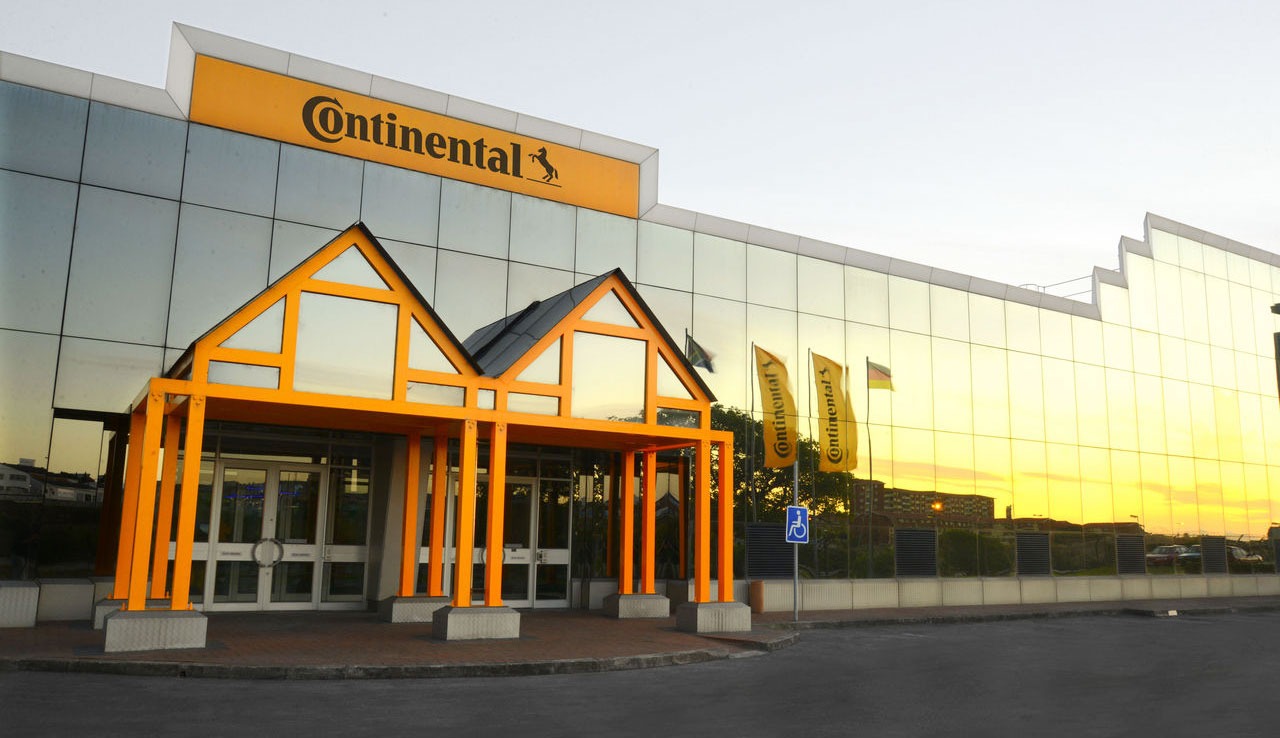
 Continental’s tyre manufacturing plant in Gqeberha, where production has been halted and up to 950 workers face retrenchment. (Photo: Supplied / Continental)
Tyre production in South Africa’s automotive hub has come to a screeching halt.
Continental, the last remaining tyre manufacturer in Nelson Mandela Bay, halted production with immediate effect on Friday, and all operations at the factory, which opened its doors in 1947, are set to end early in 2027.
Whether you believe employees who claim they were blindsided by the factory’s closure or their colleagues who say the writing has been on the wall for months, all 950 of them stand to lose their jobs.
The company announced on Friday that it had started a Section 189A retrenchment process under the Labour Relations Act “to explore viable alternatives and discuss measures to mitigate the potential impact on employees”.
“Continental is committed to maintaining an open and constructive dialogue throughout the consultation process. The company is aware that the proposed closure creates significant uncertainty for employees, and that these changes may be challenging for those affected. It is therefore committed to managing the process with transparency and respect for every employee,” said the company.
“Should no viable alternative be identified through the consultation process, operations at the Gqeberha site could be discontinued by early 2027.”
The impending closure comes 17 months after Goodyear closed its doors in neighbouring Kariega, leaving 907 employees in the lurch.

In August 2020, Bridgestone also initiated Section 189 proceedings with the 252 employees at its Gqeberha plant and closed up shop three months later.

As the last tyre manufacturer in Nelson Mandela Bay, Continental said numerous factors led to a steady decline in production in recent years from which it was unable to recover.
‘Significant pressure’
“The facility has faced sustained competitive and operational challenges over several years. Intensifying price competition from low-cost imports has placed significant pressure on the African tyre market. These challenges have been compounded by rising energy costs, supply chain disruptions and an increasingly fragile infrastructure – all of which have increased manufacturing costs and made it harder to plan ahead.
“As a result, production capacity at the Gqeberha tyre plant has been significantly underutilised in recent years, despite various turnaround efforts aimed at improving its operational performance.”
The silver lining, if you believe there is one, is that the company’s retail network under the BestDrive banner will be unaffected.

“Well, it goes without saying, but we are in for a k*k Christmas,” said an employee shortly after leaving the factory on Friday afternoon.
He said there was no warning – just a sudden announcement ordering workers to put down their tools, halting all production until further notice.
“Just like that,” he said. “For years, we poured our efforts into this place, just for the doors to be closed in our faces. What about our families? What about our kids?”
Another worker claimed that Continental recently employed several people after Goodyear closed down, creating the impression that everything was going well.
“How can you fill jobs a few months ago and now lay off 900 people? It makes no sense.”
Others, however, weren’t caught off guard. Another employee said many had seen the writing on the wall and had quietly begun searching for new work.
“The problem, however, is where do you look for work if the company you are working for is the last tyre manufacturer around? Are we just going to become part of that unemployment figure we always see on the news?”
The employees asked to remain anonymous as they were still in consultation with their union representatives.
Unverified reports from inside the factory claimed armed guards were deployed to ensure workers left in an orderly fashion, apparently in anticipation of protests.

Risk of further deindustrialisation
Nelson Mandela Bay Business Chamber CEO Denise van Huyssteen said the situation at Continental was deeply concerning, warning that it effectively wipes out tyre manufacturing in the Eastern Cape.
She added that only two tyre manufacturing facilities now remain in South Africa: Bridgestone in Brits, North West, and Sumitomo Rubber in Ladysmith, KwaZulu-Natal.
“These developments underscore the concerns we have repeatedly raised about the vulnerability of the automotive ecosystem and the growing risk of further deindustrialisation,” she said.

“South Africa is increasingly unable to compete with low-cost manufacturing countries, while our policies and responses are too slow to keep pace with the rapid changes in the global economic environment. At the same time, the influx of cheap imports into our market is displacing local manufacturers and eroding the domestic market for locally produced goods.
“The consequences extend far beyond the immediate loss of manufacturing capacity and jobs. There are likely to be significant knock-on effects across the broader automotive value chain as the demand base for locally manufactured components, content and related services continues to shrink.”
She added that pressure continues to mount on Gqeberha manufacturers as energy costs, logistical inefficiencies and ailing municipal services – like water and electrical infrastructure – present more challenges than solutions.
“Automotive manufacturing, and manufacturing more broadly, is approaching a tipping point. Without urgent and decisive intervention to address these underlying structural challenges, the sustainability of local manufacturing will be placed at further risk.”
Van Huyssteen called on decisive and coordinated leadership from the relevant government departments to create an enabling environment that protects and develops industrial capacity.
Unemployment figures
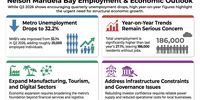
Earlier this month, the business chamber unpacked the third-quarter unemployment figures for Nelson Mandela Bay, which indicated a slight improvement from the second quarter, but a staggering deterioration from the previous year.
In the third quarter of the current financial year, unemployment figures improved to 32.2% from the previous quarter’s 33.1%. However, compared to the same period a year ago, when the rate stood at 27.1%, the picture is dire.
According to the chamber, these percentages translated to approximately 183,000 unemployed people in the third quarter of the current year, compared to 136,000 for the same period a year ago.
Weighing in on the developments at Continental, the Motor Industry Staff Association (Misa) echoed Van Huyssteen’s concerns about the potential knock-on effect on the broader automotive and manufacturing sectors.
While the union voiced its relief that the tyre company’s retail component will remain operational, as its members predominantly work in the tyre retail space, Misa’s CEO of operations, Martlé Keyter, said the closure of manufacturing is bound to ripple through the entire value chain.
“Behind the number 950 are 950 families now facing the festive season not knowing whether there will be a paycheque in the new year. In a province where more than four in every 10 people looking for work cannot find it, a retrenched worker has almost nowhere to go. Every effort must be made to keep this plant open before a single job is lost,” said Keyter.
She said the union was calling on Continental to exhaust every avenue to save jobs, while urging the government to treat the loss of manufacturing jobs in the Eastern Cape as an emergency requiring urgent intervention. DM
Comments
Scroll down to load comments...