


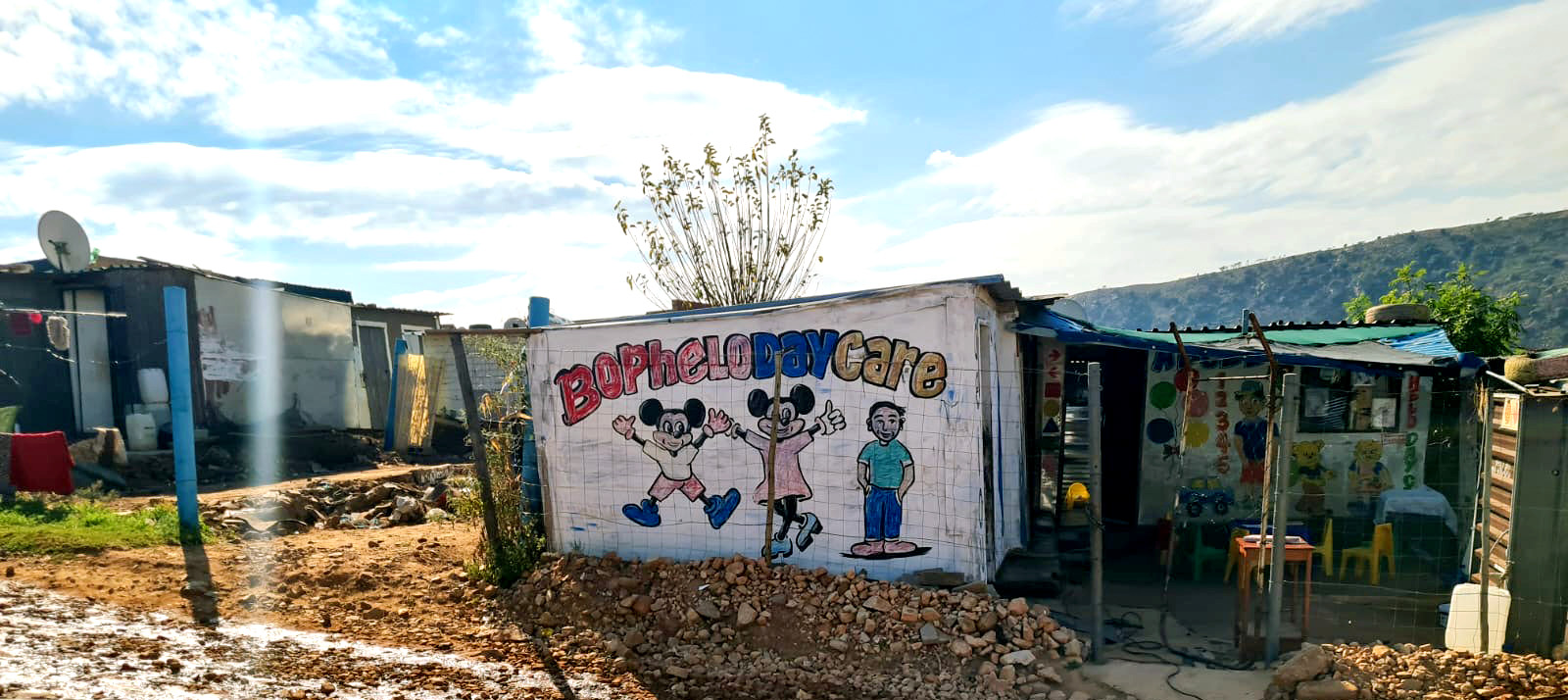
 The Bophelo Day Care Centre in Mamelodi. SA’s early learning system promises subsidies but leaves under-resourced preschools struggling to fund the infrastructure needed to qualify. (Photo: Supplied)
When Thandeka* lost her job as a seamstress in 2011, children from her neighbourhood in a Knysna township began gathering at her house to play.
One day, she nailed a board to a pole announcing that she was opening a crèche. Fifteen years later, in September 2026, her preschool, Siyakha Educare*, finally achieved Silver registration with the government, qualifying it to apply for the early learning subsidy of R24 per eligible child per day – approximately R9,500 a month for its 18 children.
What made the difference was a once-off grant of about R42,000 for repairs to the building. Fifteen years of struggling to meet requirements ended in less than two months.
Thandeka’s story exposes a fundamental contradiction in South Africa’s early learning system. In poor communities, preschools are generally established by women who open their homes to children whose parents have few other options. The government regulates these centres and subsidises those that qualify, but largely leaves the women themselves to finance the infrastructure needed to meet its requirements.
Yet early childhood development is a national priority. International research shows that investing in the early years helps break the cycle of poverty, address inequality and boost productivity. In October, President Cyril Ramaphosa said early learning “lies at the very heart of our country’s future” and repeated the commitment to universal access by 2030.
Fifteen years to get through the gate
Thandeka admits that she initially kept her preschool below the radar. She knew that if it came to the attention of the Knysna Education Trust (KET), which assists centres with government registration, she would face requirements she could not afford to meet. When Knysna Education Trust identified Siyakha Educare in 2022, it was operating from an RDP house with serious health and safety deficiencies.
Unable to meet the requirements for even conditional registration under the system in place since 2010, the preschool finally obtained Bronze registration in May 2025 under the government's simplified Bana Pele system.
But in May 2026, when Thandeka sought to progress to Silver, an environmental health inspection identified broken windows, unsafe classrooms and kitchen facilities, inadequate fencing and hazardous outdoor areas. Knysna Education Trust’s assessment also found a leaking roof on a rusted frame, insufficient toilets and exposed sewage.
Thandeka had hoped simply to obtain the health inspection report needed for Silver registration, which would allow her to access government funding. Instead, the inspector was so concerned about the safety risks that she was ordered to fix the problems immediately or close her preschool.
In July, Knysna Education Trust provided an infrastructure grant for repairs to the roof, fencing, sanitation and windows. Siyakha received environmental health clearance in August and Silver registration in September.
Across town, Nomsa* faced similar obstacles. Having worked at two preschools, she knew children in her community were sometimes left home alone while their parents worked. In 2012, she persuaded a neighbour to swap houses so she could accommodate 20 children, charging no fees for the first three months.
On land not zoned for education and without municipal services, water had to be carried in daily. Later, two donated shipping containers served as classrooms, but because they rested on bricks rather than proper foundations, the centre could not obtain fire clearance. Moving them required a crane and builder Nomsa could not afford. That obstacle alone delayed registration for five years.

What broke the deadlock was Vangasali, a short-lived government campaign that put funding before compliance. In 2021 it gave Nomsa a two-year conditional registration and access to the subsidy while her site was still non-compliant.
She saved a little of it each month until she could afford the improvements. Vulindlela Preschool* achieved Silver registration in 2023 – 11 years after opening. That registration has since lapsed, because Silver is a conditional registration that lasts only three years. She is now back in the process.
Why did it take so long to get registered? Neither woman lacked commitment or the willingness to comply. What they lacked was money.
Principals must pay upfront for health, food safety and fire inspections without knowing whether their centres will pass. Findings often require building improvements they cannot afford. Under the previous system, if those improvements were not completed in time, approvals lapsed and inspections had to be paid for again.
Because approvals depend on one another, a delay in one part of the process can stall the entire application.
Principals were caught in a cycle: paying for inspections, falling short on one or two requirements, then waiting for luck, charity or years of saving to fund repairs before starting again.
A lower bar, but the same bill
To the Department of Basic Education’s credit, registration has become considerably easier in recent years. Under Bana Pele, Bronze places a centre on the government’s database, Silver requires little more than a health inspection report, even one listing faults still to be fixed, and Gold requires the full set of approvals. Only Silver and Gold centres qualify for the early learning subsidy.
The government has also increased its investment. The 2025 Budget added R10-billion over three years, raising the subsidy from R17 to R24 per child per day. More than 954,000 children now benefit. These are important advances. But an estimated 20,000 programmes remain unregistered, and many centres still cannot afford the improvements needed to meet basic safety standards. (“Programme” is the government's term for any crèche, preschool, playgroup or day-mother service.)
In February 2026, the Treasury cut R800-million from the subsidy allocation, reducing it from R5.1-billion to R4.3-billion because spending was expected to be too slow. Too few centres were reaching Silver or Gold and being signed up for the subsidy quickly enough to use the money. The minister of Basic Education said the funds were redirected to Grade R pressures.
Here lies the contradiction: money set aside to support early learning could not be spent fast enough and was redirected elsewhere, while women running preschools are left to find the money to make their buildings safe.
The simplified registration system allows centres to access subsidies sooner, but at R24 per child per day, against an estimated R93 needed to run a compliant programme in a poor community, the subsidy is already stretched across food, wages, electricity and other operating costs. There is little left to repair a leaking roof, install a toilet or make an unsafe building sound.
Children can therefore attend subsidised centres that still fail basic safety standards, and health inspectors can still order them to close, as Thandeka discovered. The gate has been lowered, not removed, and the cost of fixing the building remains with the women.
In fairness, the government does fund some ECD infrastructure, but the amounts are small and have been slow to reach centres. Nationally, R161-million was allocated to infrastructure in 2025/26. In the most recent years reported, maintenance support reached only 181 centres in 2021/22 and 170 in 2022/23 across the country, and a third of the 2022/23 maintenance budget went unspent.
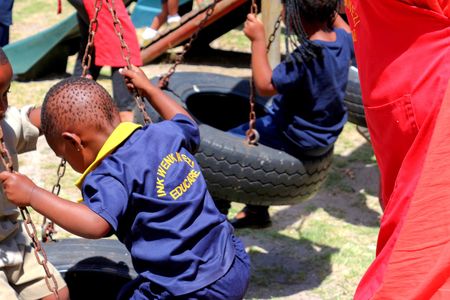
Who pays instead?
The burden falls largely on women providing early learning in communities where it is desperately needed, but who can least afford the costs.
Vulindlela charges R200 a month; Siyakha R500-R600. Across Knysna’s poorer communities, fees typically range from R300 to R400, and about 30% of parents struggle to pay consistently. Fees like these, even topped up by a subsidy, cover daily running costs and little else.
“Every cent I’ve got, I try to fix there,” says Thandeka. She pays her two assistant practitioners only about R1,000 a month each. Almost three-quarters of Knysna’s ECD practitioners earn R5,000 or less monthly. The gap between the subsidy and the real cost of running a centre is absorbed through low wages, unpaid labour and repairs that never happen.
Philanthropy often fills the gap. A private estate funded Vulindlela’s flush toilet, its container classrooms were donated, and a family trust financed Siyakha’s repairs. In October, the president called on businesses to invest in early learning infrastructure and to make ECD a priority for corporate social investment. That may describe how the system survives. It should not be the basis on which it operates.
Funding the fixes, connecting the system
What would it look like if infrastructure funding were built into the registration system, rather than left to luck and social capital? What if, after an inspection, principals could access the funding they needed and act on the findings immediately, instead of spending years raising money?
In 2026, Knysna Education Trust tested an approach along these lines in Knysna. With approximately R1-million donated by local family trusts, it provided small infrastructure grants to help centres address compliance requirements identified during inspections. Registration staff identified needs, principals applied for grants, volunteer infrastructure advisers helped scope the work, and principals appointed and paid tradespeople before Knysna Education Trust verified the results.

By mid-December, 30 projects at 26 centres will have delivered more than 50 improvements, including sanitation, fencing, kitchens, classroom spaces and play structures. Three centres progressed from Bronze to Gold, Siyakha achieved Silver, and repairs helped two others retain their registration. Seven kitchens obtained food safety certificates, while other centres cleared barriers that had stalled their registration progress.
At Siyakha, the R42,000 grant made essential safety improvements possible and enabled the centre to apply for approximately R114,000 in annual subsidies. If each of the estimated 20,000 unregistered programmes needed a similar grant, the once-off cost would be about R840-million – close to the amount cut from this year’s subsidy budget. Actual costs would vary considerably, but the comparison illustrates what targeted infrastructure investments could unlock.
The benefits extend beyond the buildings. One principal, initially intimidated by managing a construction project, reflected afterwards: “I was introduced to me and my abilities.”
Money would also go further if the registration system were less fragmented. In both stories, inspectors, fire officers and registration officials did their jobs, but each dealt with only one part of the process. No one saw how separate requirements and delays accumulated over time, leaving a preschool struggling to register for more than a decade.
Better coordination between registration, environmental health, fire safety and municipal planning departments could spare principals years of navigating disconnected processes. In Knysna, work is already under way on a shared ECD data dashboard to support this coordination.
What a building cannot do, and what the state must
A building alone does not guarantee quality early learning. Children’s development is profoundly shaped by poverty, both at home and in the classroom. Within centres, it depends on how practitioners interact with children and create opportunities to talk, explore, play and learn.
That requires manageable group sizes, training, support and wages practitioners can live on. But safe infrastructure remains essential to children’s wellbeing, and centres that fail safety requirements risk closure, regardless of their registration status.
The answer is not to weaken safety standards, but to help centres meet them. That requires accessible infrastructure grants, better municipal coordination and provision for early learning facilities in new housing developments.
Thandeka has attended 90% of Knysna Education Trust’s training sessions over four years. Despite everything, she has never stopped trying to improve her preschool. She now hopes for a playground, qualifications for her assistants and Gold registration.
Nomsa’s ambition is simpler. After many years of running a preschool from the container classrooms, she wants a building of her own. She asked the church next door whether it would sell her some land. The answer was no.
These women have spent more than a decade providing a service South Africa desperately needs. They should not also be expected to build the infrastructure that makes it possible. DM
*The two principals’ stories are told with their permission; their names and those of their centres have been changed to protect their identities.
Dr Judy-Marié van Noordwyk is Managing Director of the Knysna Education Trust.
Comments
Scroll down to load comments...