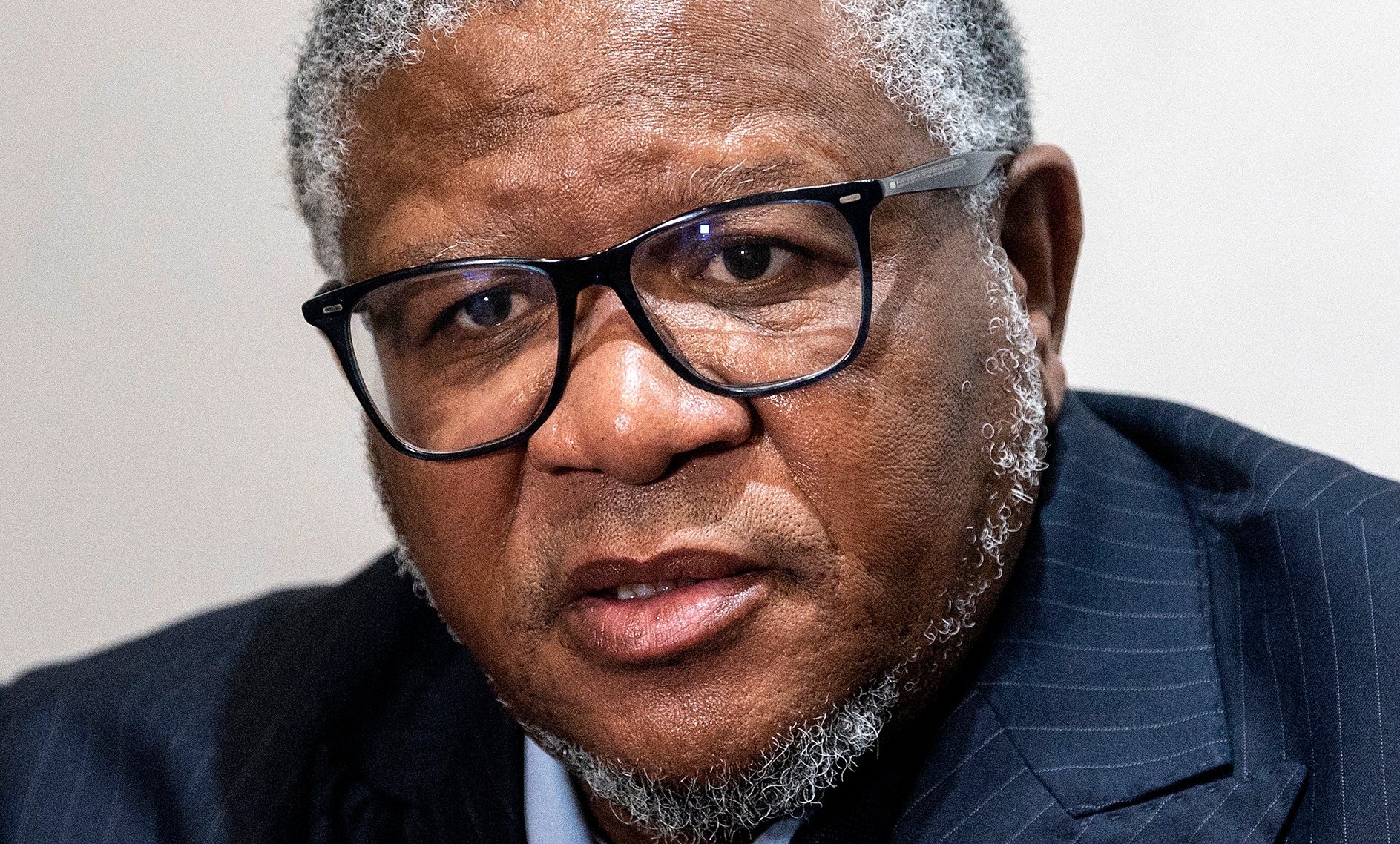
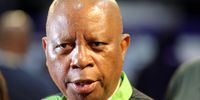
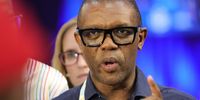
ANC Secretary-General Fikile Mbalula, who heads the party's 26-member National Negotiations Team. (Photo: Brenton Geach / Gallo Images)
The ANC has ruled out a stability pact with the DA that mirrors the national Government of National Unity (GNU).
“There was strong pushback against the DA,” said a National Executive Committee (NEC) member who requested anonymity as they are not authorised to speak publicly. The party held a post-election extended meeting of its top brass this week and then entered a blizzard of bilateral talks to find partners to govern with.
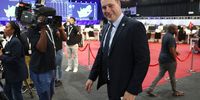
ANC Secretary General Fikile Mbalula at the election results centre in Midrand, Johannesburg on 07 November 2026. (Photo: Felix Dlangamandla)
A second source said, “[The ANC] is really unhappy with the DA.” According to numerous media reports, the ANC has decided that the DA is a coalition partner of last resort. But on Sunday afternoon (15 November), the ANC and DA formally opened talks despite reported resistance within the ANC, while both parties continue to negotiate with alternative partners.
The ANC is seriously considering going into opposition in councils where it won less than 30% of the vote and in metros where it received less than 20%. “This was part of a discussion about where we can rebuild from,” said the first source.
The ANC only entered government in 1994 and was a resistance movement from its founding in 1912 – it has much more experience as an opposition force than a government. The party also considered minority government arrangements where it requires individual pacts to pass budgets and the like. (There is a minority government in Gauteng, where the ANC enters pacts with the EFF and MK to pass budgets, important policies and provincial laws or motions.)
“A [broad, national] coalition with the DA was overwhelmingly rejected,” said the source. “There was political and subjective objection to cooperation with the DA. [It has] consistently worked against transformative policies of the ANC, like BBBEE [Broad-Based Black Economic Empowerment], Employment Equity, Bela [the Basic Education Laws Amendment Act – specifically the perceived removal of autonomy from Afrikaans-medium schools].
“I do remember a lot of pushback from the DA calling us a nanny state. Listening to the DA – which is torture – speak about a meritocracy [shows that for them], it is confined to a certain race,” said the person.
Government of National Unity ministers with Chief Justice Raymond Zondo(C). (Photo: Elmond Jiyane GCIS)
The Common Sense has reported that if the ANC and DA combine forces, this would give them a majority in 158 of SA’s 257 municipalities. This easy road to stability is not going to be taken, as the ANC and DA appear to have reached a fork in the road that places the GNU in jeopardy too if the parties do not find each other.
A second senior source said that the DA’s failure to support the first Budget tabled in 2025 had caused a crisis as it went against the spirit of the Statement of Intent that governs the national power-sharing relationship. “They have to agree on the transformation agenda. We should not allow them to push us too hard.”
This source said that reports that called the DA a coalition partner of “last resort” were incorrect. “It’s not to say we are saying ‘no’ to them. We are aware of what society says we should do.”
Asked if President Cyril Ramaphosa had shared the ANC NEC view of the withering relationship with the DA, the first source said: “The President was aligned with the view on the DA. When the President spoke, he asked: ‘How do we work without them?’”
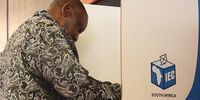
President Cyril Ramaphosa cast his votes in the 2026 Local Government Elections at the Hyde Park High School in Johannesburg on 4 November.(Photo: Siyabulela Duda / GCIS)
If the four leading parties truly heeded voter intent, new governments would be forged through a coalition between the ANC, the DA, and Gauteng kingmaker ActionSA across the province and nationwide.
In KwaZulu-Natal, governments would include the uMkhonto Wesizwe (MK) party with the DA, IFP and ANC. The ANC spent the weekend meeting eight parties, according to its social media channels.
“The NEC mandated the ANC to engage all political parties, large and small, including civic movements and independents in municipalities where no party has secured an outright majority. Our commitment is to ensure stability in all councils and decide on the most viable and effective way of serving our communities,” the party said in a statement on Friday, 13 November. It is expected to hold a briefing on Tuesday. Ramaphosa, together with a senior Cabinet and Presidency team, is out of the country on a Silicon Valley tour to inform South Africa’s AI policy.
Coalition talks: Who met whom?
Confirmed or reported bilateral meetings, 12-15 November 2026.
Thursday, 12 November: DA + ActionSA.
DA leader Geordin Hill-Lewis met ActionSA leader Herman Mashaba. Both described the discussions as constructive. ActionSA maintained its objections to the DA’s mayoral candidates Helen Zille in Johannesburg and Cilliers Brink in Tshwane.
(Source: Numerous.)
Geordin Hill-Lewis addresses the media at the election results centre in Midrand, Johannesburg, on 6 November 2026. (Photo: Felix Dlangamandla) Herman Mashaba of ActionSA at the election results centre in Midrand, Johannesburg, on 7 November. (Photo: Felix Dlangamandla)
12-14 November: IFP + seven parties.
The IFP, led by national chairperson Blessed Gwala, confirmed separate talks with the DA, ANC, EFF, MK party, ActionSA, FF+ and Afrika Mayibuye. It reported broad agreement on governance principles, but no final deals.
(Source: IFP statement.)
IFP's Mkhuleko Hlengwa at the election results centre in Midrand, Johannesburg on 5 November 2026. (Photo: Felix Dlangamandla)
Friday, 13 November: ANC + EFF.
The parties discussed council composition and maintaining administrative continuity when new councils convene. They agreed to further discussions.
(Source: ANC social media.)
Saturday, 14 November: ANC + ActionSA.
A second round of discussions. ANC Secretary-General Fikile Mbalula confirmed that ANC negotiators also attended. Discussions included a framework for constituting municipal councils.
(Source: ANC social media.)
Saturday, 14 November: ANC + Build One South Africa (Bosa).
The ANC met a delegation led by Bosa president Mmusi Maimane. They discussed municipal governance arrangements and agreed to meet again.
Their negotiating teams met in Johannesburg. MK party leaders included Duduzane Zuma. There was an agreement to engage further.
(Source: ANC social media.)
Duduzane Zuma of MKP at the Results Operations Centre (ROC) at Gallagher Convention Centre on 4 November. (Photo: Sydney Seshibedi / Gallo Images)
Saturday, 14 November: DA + MK party.
The parties met in Midrand. MK party negotiator Dali Mpofu led his party’s engagement after the DA approached Jacob Zuma. No deal was announced.
(Source: SABC News.)
Dali Mpofu during the Tshela Thupa Rally at Peter Mokaba Stadium on 25 May in Polokwane. (Photo: Philip Maeta / Gallo Images)
Saturday, 14 November: ANC + IFP.
Formal discussions on council composition and governance. The ANC subsequently confirmed another meeting would follow.
(Source: ANC social media.)
Sunday, 15 November: ANC + DA.
The ANC confirmed the meeting in photographs and statements. Talks covered municipal council composition and governance. Both sides are expected to meet again.
Other meetings
ANC + African Content Movement.
The ANC confirmed a meeting on council composition and governance, with further discussions planned.
Afrika Mayibuye's Floyd Shivambu at the election results centre in Midrand, Johannesburg on 5 November 2026. (Photo: Felix Dlangamandla)
ANC + Afrika Mayibuye.
Floyd Shivambu led the Afrika Mayibuye delegation. He subsequently indicated conditional support for coalitions with the ANC, excluding arrangements involving the DA.
Rise Mzansi’s Songezo Zibi at the election results centre in Midrand, Johannesburg on 6 November 2026. (Photo: Felix Dlangamandla)
ANC + Rise Mzansi.
The ANC confirmed talks about municipal council composition and governance. The parties agreed to meet again.
We used ChatGPT to summarise meetings and checked sources along with published photographs on social media. DM


 ANC Secretary-General Fikile Mbalula, who heads the party's 26-member National Negotiations Team. (Photo: Brenton Geach / Gallo Images)

Comments
Scroll down to load comments...