




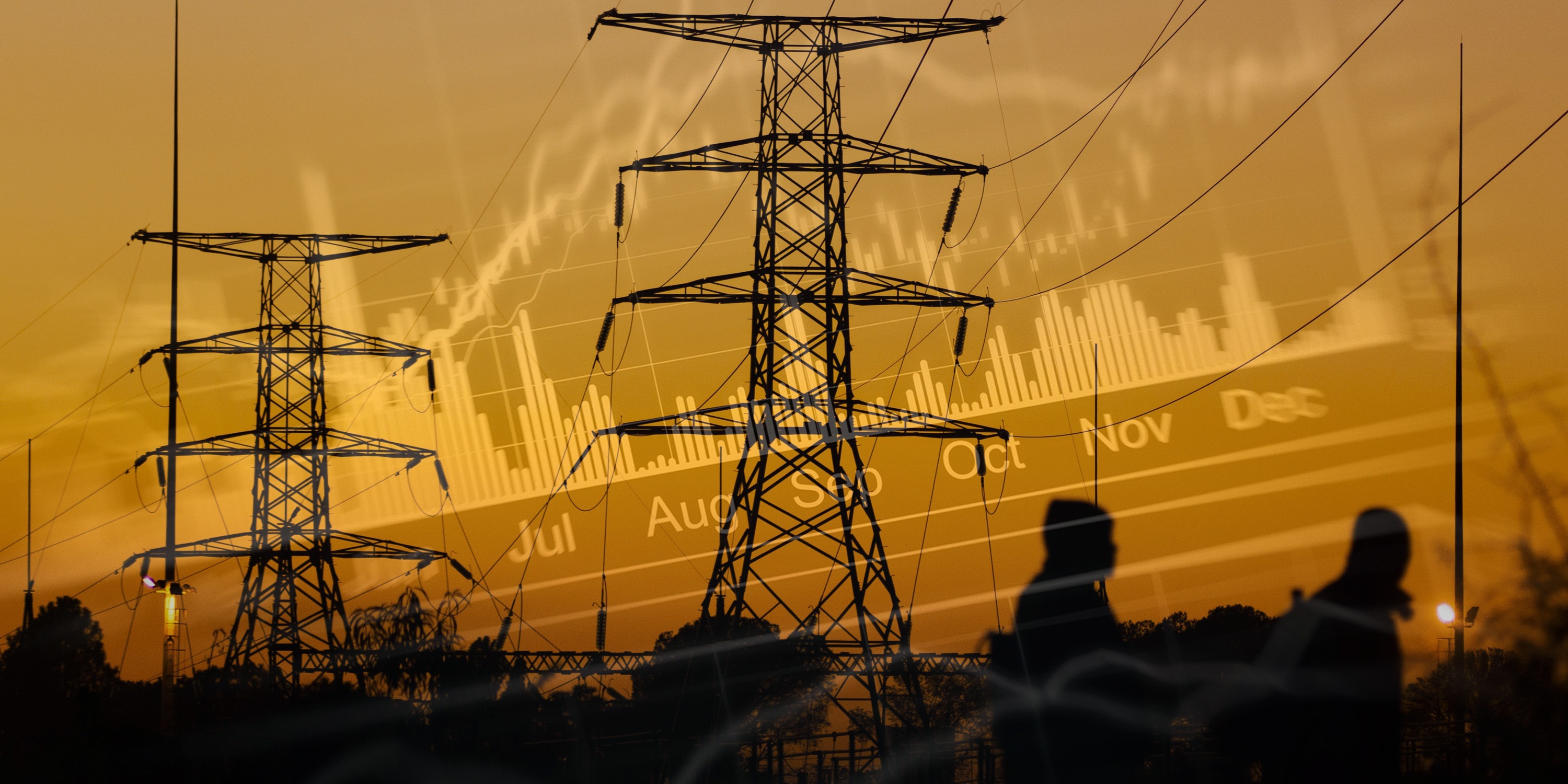
 Illustrative image | Growth and decline chart. (Photo: Adobe Stock) | Electrical power lines hang from transmission pylons. (Photo: Waldo Swiegers / Bloomberg via Getty Images)
Nelson Mandela Bay businesses are increasingly spending more on electricity than on wages or logistics, placing additional pressure on operating costs and stifling growth opportunities, expansion and further investment, says Nelson Mandela Bay Business Chamber CEO Denise van Huyssteen.
That warning comes as major industrial electricity users take the National Energy Regulator of South Africa (Nersa) to the Gauteng High Court in Pretoria over unlawfully approved municipal electricity tariffs.
Businesses in several metros – including Nelson Mandela Bay – were forced to pay 76% more for electricity during the 2025/26 financial year than it actually cost the municipality to supply the service, reports Moneyweb.
According to court papers, Nersa’s tariff approvals for five municipalities – Nelson Mandela Bay, Johannesburg, Ekurhuleni, Emfuleni and Madibeng – “are reviewable, unlawful and invalid, and fall to be set aside”.
The regulator admitted that it had approved municipal tariff applications containing significant errors without adequately checking the underlying figures.
The applicants – which include Nelson Mandela Bay-based Coega Steels – want the unlawful tariffs set aside and are seeking either retrospective credits to their electricity accounts, with interest if repayment is delayed, or temporary alternative tariffs while Nersa recalculates the charges.
Daily Maverick sent questions to Nersa on Wednesday and the Nelson Mandela Bay Municipality on Thursday regarding the errors, but neither had responded by the time of publication. Their responses will be added once received.
Jobs under threat
The stakes are particularly high in Nelson Mandela Bay, where the automotive and manufacturing sectors are key drivers of the local economy. Meanwhile, unemployment in the metro stood at 32.2% in the second quarter of 2026, down from 33.1% in the previous quarter.
Van Huyssteen said the business chamber was not involved in the case currently before the court, but warned that rising electricity costs were placing additional pressure on businesses already operating in a challenging economic environment.
“If you had to interrogate the financials of a lot of the manufacturers in the city, you’ll find that electricity has now become the biggest expense item out of everything – more than logistics, more than wages and salaries. That is a big red flag, which affects the sustainability of the businesses,” said Van Huyssteen.
“Our electricity in South Africa used to be a competitive advantage. We used to have among the cheapest electricity in the world, but now with everything that’s happened over the last few years, our electricity has progressively got very expensive. So when you compare us to other emerging countries, we’re not anywhere near the most affordable. When you’re competing against many of these countries, it’s very difficult if energy is your highest cost.”
The chamber has warned that the consequences extend beyond individual companies, affecting employees, suppliers, service providers and families whose livelihoods depend on the manufacturing sector.
At the same time, the municipality is battling substantial losses within its own electricity directorate.
Van Huyssteen said Nelson Mandela Bay had lost R1.7-billion through vandalism, electricity theft and billing failures during the previous financial year. She expects the figure to increase to R1.9-billion in the current financial year.
Van Huyssteen said stronger security measures were needed to protect critical electricity infrastructure and prevent further losses.

Daily Maverick has reported that Isuzu Motors South Africa spent close to R400,000 on diesel in a single day to keep its plant running during an unplanned 15-hour power outage that plunged businesses in Gqeberha’s Struandale and Deal Party industrial areas into darkness on Thursday, 8 October.
“You need strong security. You need proper surveillance and monitoring in place,” said Van Huyssteen.
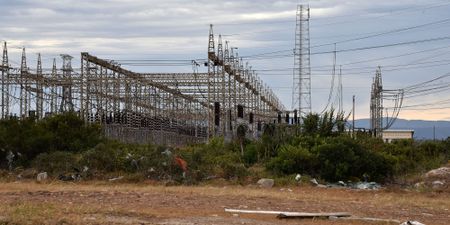
“When a substation is vandalised, the cost implications are enormous. It can leave entire areas without electricity, disrupting businesses and inconveniencing residents. It also drives up costs for the municipality, which then has to repair the damaged infrastructure – often at considerable expense.”
Although the chamber is not directly involved in the latest court proceedings, Van Huyssteen told Daily Maverick on Thursday that the companies challenging Nersa were fighting the same battle the chamber had taken to court four years ago.
“Despite that ruling, there’s been no material progress on these issues on the electricity tariffs, because they need to be cost-reflective and market-related,” she said.
Van Huyssteen said the municipality’s subsequent Cost of Supply study for the 2026/27 tariff cycle was also flawed, with the chamber having raised its concerns directly with the metro.
“As a participant in the NMB Municipality’s 2026/27 electricity tariff consultation process, the business chamber analysed the proposed 12.8% average increase and submitted our formal response in this regard.
“In our submission, we highlighted that the Cost of Supply study was incorrect and must be rectified, and that the tariff increase requested is not reflective of the Cost of Supply study outcome, irrespective of the study being flawed.”
Asked who should be held accountable for passing a flawed application, Van Huyssteen said: “Nersa is supposed to be overseeing that process. So they have overall accountability, and I think that’s why these businesses went to court with this case.”
She added that electricity revenue should be ring-fenced and spent on maintaining and improving the electricity network, rather than plugging funding gaps elsewhere in the municipality’s budget.
Need for political stability
Van Huyssteen said turning the metro around would require political stability after years of coalition uncertainty, leadership changes and administrative instability had weakened its ability to deliver basic services and maintain critical infrastructure.
She said investors had been watching developments during the local government election period and the negotiations leading to the formation of new governments.
Continued instability and turmoil within local government, she warned, could discourage investors and limit the metro’s economic prospects.
She said a stable administration needed to prioritise the needs of businesses and communities, while ensuring that key positions were filled by technically qualified, skilled and ethical people.
Rebuild plan
“I think the big thing now is we need stability. So, our hope is that we’ll have a stable local government and the priority focus will be on stabilising the municipality,” she said.
She pointed to a rebuild plan developed by civil society, which sets out what is needed to turn around the metro’s administration and improve service delivery.
The business community, she said, was willing to contribute its expertise and resources to help the municipality implement the necessary changes.
“We don’t want to take over the municipality. We don’t want to run a parallel municipality. We want them to succeed.
“You need more technical people in the municipality. So we’re willing to put a task team together to help them identify those root causes that are affecting their sustainability and a plan to fix it.”
Van Huyssteen said she hoped the incoming political leadership would accept the offer.
One of the most urgent priorities, she said, was to fill critical vacancies and put suitably qualified people in key management positions.
“There has to be a reality check in terms of the current state. And a factual check, not an emotional check, and not a finger-pointing exercise. It doesn’t matter what happened in the past.
“We have to look at how we go forward. So it must be an objective analysis of ... the biggest challenges facing the municipality. And I think we’ve got that in our rebuild plan.
“And then there must be specific actions to address them. And a lot of it starts with filling key vacancies. Because you’ve got all these acting positions at the top level,” said Van Huyssteen.
The municipality also needs to strengthen its technical workforce, including electricians, plumbers and artisans, she said.
Having qualified staff in place would not be enough, however, unless they were provided with the necessary equipment and supported by an effective supply-chain system.
Van Huyssteen said rebuilding the metro would be a lengthy process requiring cooperation between government, business and civil society.
“Getting the metro back on track is in everyone’s best interest, but it will take years to rebuild it. All the technical expertise that can be utilised needs to be utilised for the greater good, so it serves communities, businesses and residents,” she said. DM
Comments
Scroll down to load comments...