



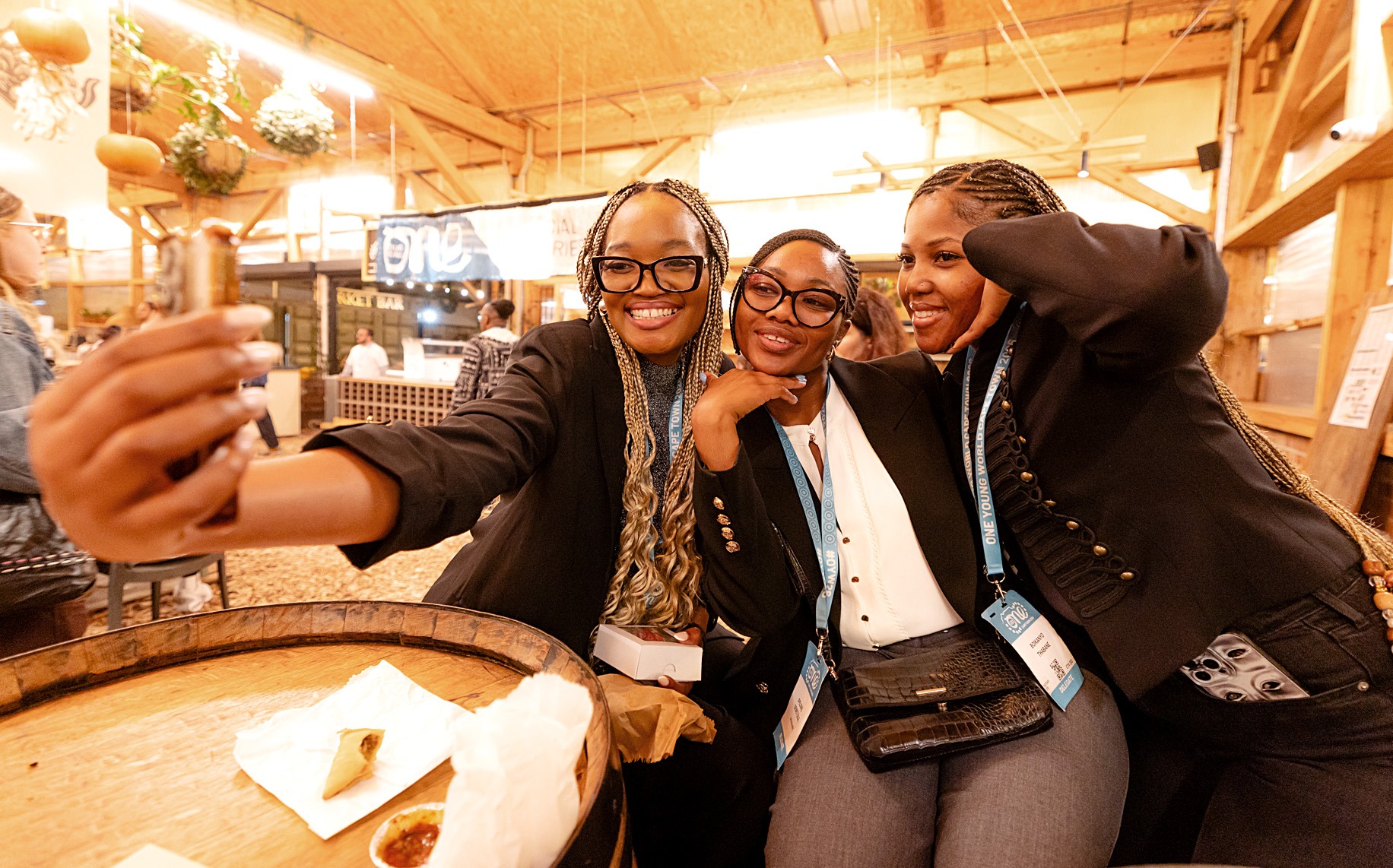
 Young leaders from around the world gathered in Cape Town to talk about solutions at the One Young World Summit. (Photo: Supplied)
On the expanded definition (LU3) of unemployment, 72.7% of South African youth aged 15-24 are without work. Job opportunities for this 10.37 million-strong cohort fell by 160,000 on year on year, according to the latest numbers from Stats SA.
It’s brutal out there, and the world is getting harsher when not even education is providing a reliable path to employment. Year-on-year figures demonstrate rising vulnerability even among qualified cohorts: graduate unemployment increased by 1.4 percentage points (up from 10.4% in Q3 2025), while other tertiary unemployment jumped by 4.0 percentage points (from 20.8% to 24.8%).
Tom Osborn, One Young World ambassador and founder of Kenyan solutions startup Shamiri, challenges the separation between economic survival and youth mental health. He argues that the traditional promise of social mobility via formal degrees has collapsed across Africa, generating intense stress and disillusionment.
“Are we defining innovation effectively? Because you cannot convince me that we have an innovation deficit,” was what he countered Daily Maverick questions about the shortage of upward mobility for the youth of the continent.
“It depends just how you’re measuring it... especially in low-resource settings, like how people hustle and go through their days and figure out life is in itself like really innovative. It’s just maybe not how we traditionally define innovation.”

Restructuring support
“I work on this from a mental health angle, which is kind of crazy because most people think mental health is not a livelihood issue ... it is a livelihood issue,” Osborn explains.
“From the perspective of my dad’s generation, if you went to high school and you went to university, you’re pretty much assured of at least some middle class ... that is no longer the case.”

“I think there are three pathways for solving this. I think the first is just a realisation that we kind of need a new blueprint outside of formal Western-derived education from the perspective of livelihoods... you do need a new pathway for thinking about what the pathway for young people is to get decent jobs and decent living.”
But he says that the challenge has come from the perspective of when governments or agencies or the private sector try to support youth entrepreneurship.
“They tend to do it in a very Western VC style ... that model doesn’t really work ... if we were to go that entrepreneurship route, we have to focus on young people who are solving problems which are right in front of them and doing it in the local entrepreneurial way.”
David Jones, co-founder of One Young World, echoes that idea with his belief that young people possess unprecedented leverage through digital and social capabilities, but he warns that global rhetoric must translate into tangible execution and purpose-driven enterprise.
“They are the most powerful generation of young adults and young people we’d ever seen,” he says of the current cohort.
“Why? Because they understood better than anyone how to use digital and increasingly social to drive change in the world... Usually they have a fresher perspective, but they don’t actually have a superpower that senior leaders don’t have, and actually they did ... because of their ability to understand and use and leverage digital and social.”
The hope fallacy
When Daily Maverick asked Jones if hope was still a powerful catalyst for change, he turned quite optimistically negative.
“No, action is the most powerful catalyst for change. By far ... what we said when we created One Young World, we said, like, the world doesn’t need another youth conference. It needs action... what hope does is it brings the people together who believe that they can deliver the action.”
When pressed about the sheer number of sponsors and partners the summit attracts, he responded with a litany of variations on what has become a common refrain in South Africa’s GNU:
“We think that business is a huge part of the solution [but they], like governments, can’t solve it alone. Charities can’t solve it alone. But I think the thing that businesses have is they have the execution and the funding that if they put their mind to something, they can actually fix it pretty fast.”
As a counterpoint to that, Prof Thuli Madonsela reflected on the leadership failures that have cascaded into the crises now affecting young South Africans.
“I distinguish between leadership and positional leadership... each one of you is leading the organisation astray because if your organisation is going astray, it’s a cumulative effect of what everyone is doing.”
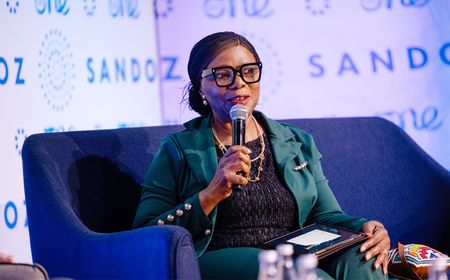
Madonsela believes that South Africa will be fixed when “we re-engineer communities to be co-creators of the future they want to be part of”.
“We’ve turned our children into consumers,” she laments. “I mean most of young people complain their parents didn’t do enough ... if it’s not their parents, it’s the state.”
But she told Daily Maverick that she doesn’t want to be understood to be saying the system has not failed young people. Madonsela maintains that the Constitution should have said, “we will expand opportunity and co-create jobs with you, co-create wealth with you”.
Not entitlement
Alistair Kennedy, head of youth development at Standard Bank, refutes the trope of youth entitlement being a root cause of the joblessness. He argues that young South African candidates who come through his pipelines exhibit extraordinary resilience, and outlines how corporate talent acquisition must move beyond marks to holistic problem-solving in the era of AI.
“I think that we do see really resilient people entering our workforce,” he explains. “We have people that have joined the grad programmes that have gone through extreme challenges to get to where they are now. So I would actually argue that in our context, people have really amazing resilience to kind of land where they are.”

Kennedy also praised the level of humanity and empathy in the current youth cohort and said that the challenge was not skills, but rather workplace readiness – which had become a growing concern since the pandemic.
From the perspective of gatherings of young leaders and entrepreneurs like the One Young World summit, it seems that the current young generation is moving forward without the need for permission.
Some of the biggest challenges were identified by Madonsela and Osborn as funnelling youth into state tenders or top-down VC incubators as a solution. This replicates dependency, and they argue instead that policy must switch focus from outdated ideas of employment towards decentralised township, rural and secondary economies.
That’s where innovation and localised solutions can flourish, and jobs can be found. DM
Comments
Scroll down to load comments...