



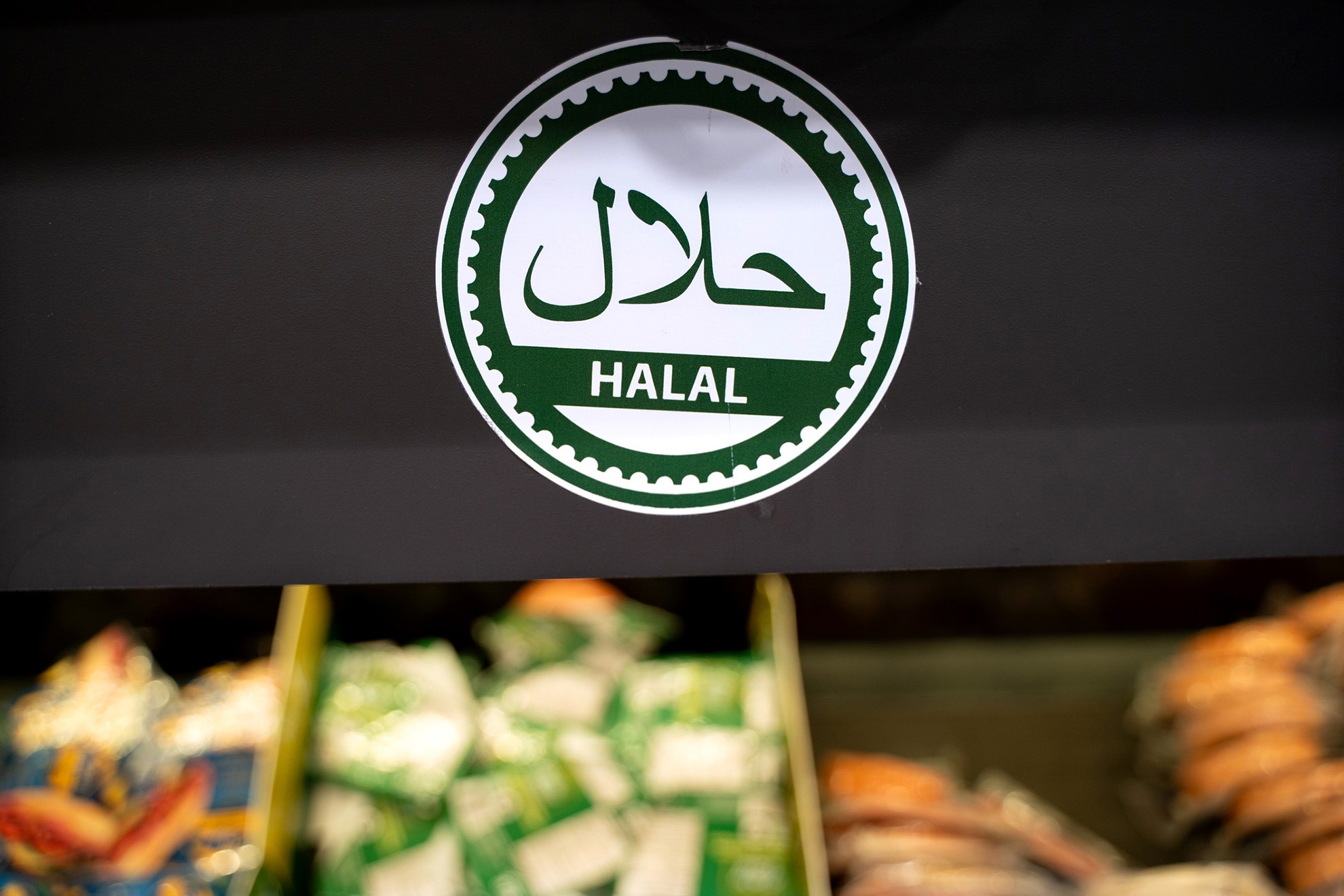
 Halaal food has become a trending topic on social media in South Africa.
(Photo: iStock)
Debates about halaal food in South Africa have been raging on social media since October, with one particular video by content creator Sokhana Saliwa gaining nationwide attention.
On 17 October Saliwa posted a video on TikTok expressing her concerns about the prevalence of halaal food in SA. In the video, Saliwa questioned why the government is allegedly allowing Muslims in SA to “dictate” the food eaten by a “Christian nation”.
Saliwa shared concerns about how the number of halaal-certified restaurants and food products was growing, while the total Muslim population was relatively small. She claimed Muslims were only 2.6% of the population.
Saliwa explained that she did not want to eat food which she claimed was “sacrificed” to a god she did not believe in, and further claimed that South Africans were being fed food that was prepared in a way the nation did not believe in.
As of 5 November, the video had 99,100 views and 2,771 comments.
Daily Maverick contacted Saliwa for comment, but had not received a response by the time of publication.
Constitutionally free
Despite Saliwa’s claims of South Africa being a Christian nation and the Muslim population only making up 1.5% of the population, according to the 2022 Census, the Constitution does not declare any religion as the official religion of the country.
The Constitution states that everyone has the right to freedom of religion, as well as the right to practise their religion.
It guarantees everyone the right to access sufficient food, which the United Nations (UN)’s Committee on Economic, Social and Cultural Rights further extends to culturally appropriate food. Everyone not only has the right to food, but the right to food that corresponds with their cultural traditions.
And to Muslims, halaal food is a fundamental element of faith, according to the South African National Halaal Authority’s (Sanha) communications manager Ebrahim Lockhat.
Debunking ‘sacrifice’
At the root of concerns about, and criticisms of, halaal food are misunderstandings, said anthropologist of food and Islam, Shaheed Tayob, in an interview with Daily Maverick.
There is the idea that animals are “sacrificed” to Allah (God) when being slaughtered. However, Tayob explained that it was important to recognise that there was a distinction between everyday halaal slaughter and sacrifice.
Sacrifice (or Qurbani) is the sacrifice of an animal to God traditionally completed on an important Islamic holiday called Eid al-Adha. The meat from this slaughter is typically distributed to family members and the poor, but is not sold.
On the other hand, halaal slaughter means an animal was slaughtered through the severance of the jugular veins with a sharp knife, so the spinal cord remains intact, and the blood then flows from the body, according to Tayob. He added that the other requirement during slaughter was invoking the name of God by reciting “Bismillah, Allahu Akbar” (In the Name of Allah, Allah is the Greatest).
The slaughter process where the jugular was severed and the spinal cord remained intact had become standard practice for slaughterhouses globally, said Tayob. Their arguments for choosing this method of slaughter was that when the blood flowed from the body, there were less impurities, which meant the meat lasted longer.
Understanding halaal
“Halaal” was more than meat and methods of slaughter.
The Arabic word “halaal” meant “permissible” or “lawful”. In the simplest sense, it was more than a dietary preference, said Lockhat. He added that the Qur’an or Islamic holy book established guidelines on what Muslims may eat.
Generally, all foods were considered halaal unless they were from sources specially prohibited in the Qur’an or Islamic narrations. For example, water was inherently halaal, Lockhat said.
Halaal foods were those that were free from any component that Muslims were prohibited from consuming according to Islamic law, and that were processed, made, produced, manufactured and stored using utensils, equipment and machinery that had been cleansed according to Islamic law.
Lockhat outlined that the consumption of alcohol, pig and carrion were forbidden. Animals such as cows, veal, lamb, sheep, goats, turkeys, chickens, duck, game birds, bison and venison were considered halaal, but they needed to be prepared according to Islamic slaughtering practices. Consuming carnivorous animals like crocodiles was generally prohibited.
Fish and seafood (with the exception of crocodiles, alligators and frogs) were generally acceptable.
Animal biproducts such as gelatine, lard and shortenings were generally not halaal unless derived from a halaal animal.
Halaal on paper
In South Africa, there were multiple halaal certification bodies such as the SA National Halaal Authority, the Muslim Judicial Council and the National Independent Halaal Trust.
These bodies provided certification to products, brands or establishments as a declaration that they met the criteria for halaal and Islamic law. Although global bodies agreed on the definition of halaal, exact standards and implementation could differ, according to Lockhat.
Halaal certification was a voluntary practice, he said. Lockhat further noted that the absence of halaal certification did not automatically mean that a product or establishment was not halaal. Entities could be halaal without certification.

Why does SA have so many halaal logos?
According to Tayob, we are in an era where culture and religion are increasingly expressed through consumption. Conservative Muslims populations in South Africa had become increasingly concerned about consumer piety, he said.
The demand for halaal-certification had grown as Muslim consumers increasingly wanted to practise their religion with public consumption, Tayob said.
Large corporations then latched onto the demand for halaal food for financial gain.
“There’s a kind of a misunderstanding about this, thinking of it as some kind of religious accommodation, but actually not realising that it’s part of the industrial consumer market,” Tayob said.
Often, large corporations which had a monopoly over the South African market and seemingly produced almost all packaged products realised that no major changes in the manufacturing process were necessary. They may only have to replace a few ingredients or change suppliers to make their products halaal, he said.
Tayob added that international companies that were already familiar with halaal certification and sold halaal-certified products in countries like Saudi Arabia and Malaysia could decide to make their South African products halaal as well.
A changing culture?
The recent debates on halaal food should not be overlooked, according to Tayob. Problems with the presence of halaal signs on products could be seen as Islamophobia, he claimed, explaining that if a retailer were to sell organic products, nobody would have complaints of organic being “dictated” to them.
There had been a push for better labelling on products, as consumers wanted to know what they were eating, Tayob said. Halaal logos simply showed that a product had been halaal certified, but did not indicate that the product belonged to an identity or was a “Muslim” product, he said.
Lockhat explained that although Sanha had received complaints about halaal food in the past, the past weeks leading up the 2026 local government elections had seen the complaints gaining momentum, with a viral shift the organisation had not seen before. Complaints reached mainstream media, with politicians like Rise Mzansi’s Songezo Zibi commenting, said Lockhat.
In a TimesLIVE article, Zibi was quoted rejecting claims that halaal food was taking over South Africa’s food industry.
South Africa did not have a mononational culture, but a massive diversity of people, with Muslims forming a significant part of the country’s fabric, Tayob said. Muslims had been in South Africa since the 17th century.
Generally, South Africa did not have widespread issues of Islamophobia, as in Europe. However, Tayob questioned if the recent Islamophobic movements in South Africa were trying to cultivate a culture like that of Europe’s.
“It seems they’re trying to cultivate this idea that Muslims are over-represented, they’re dictating what we have. They try to present it as an idea of force, that Muslims have some sort of force. So, there are all these conspiracy theories that have developed like that: ‘there’s a nefarious plot, there’s a group that’s got the intention to contaminate us or make their way in’,” Tayob said.
The conversations on social media were an attempt to use people’s fears and insecurities in a country that was very unequal, he said.
Tayob commented that Islamophobia might be difficult to sell in South Africa where certain Muslim individuals and groups had gained widespread popularity, such as Gift of the Givers, a Muslim-founded nonprofit organisation. DM
Comments
Scroll down to load comments...