



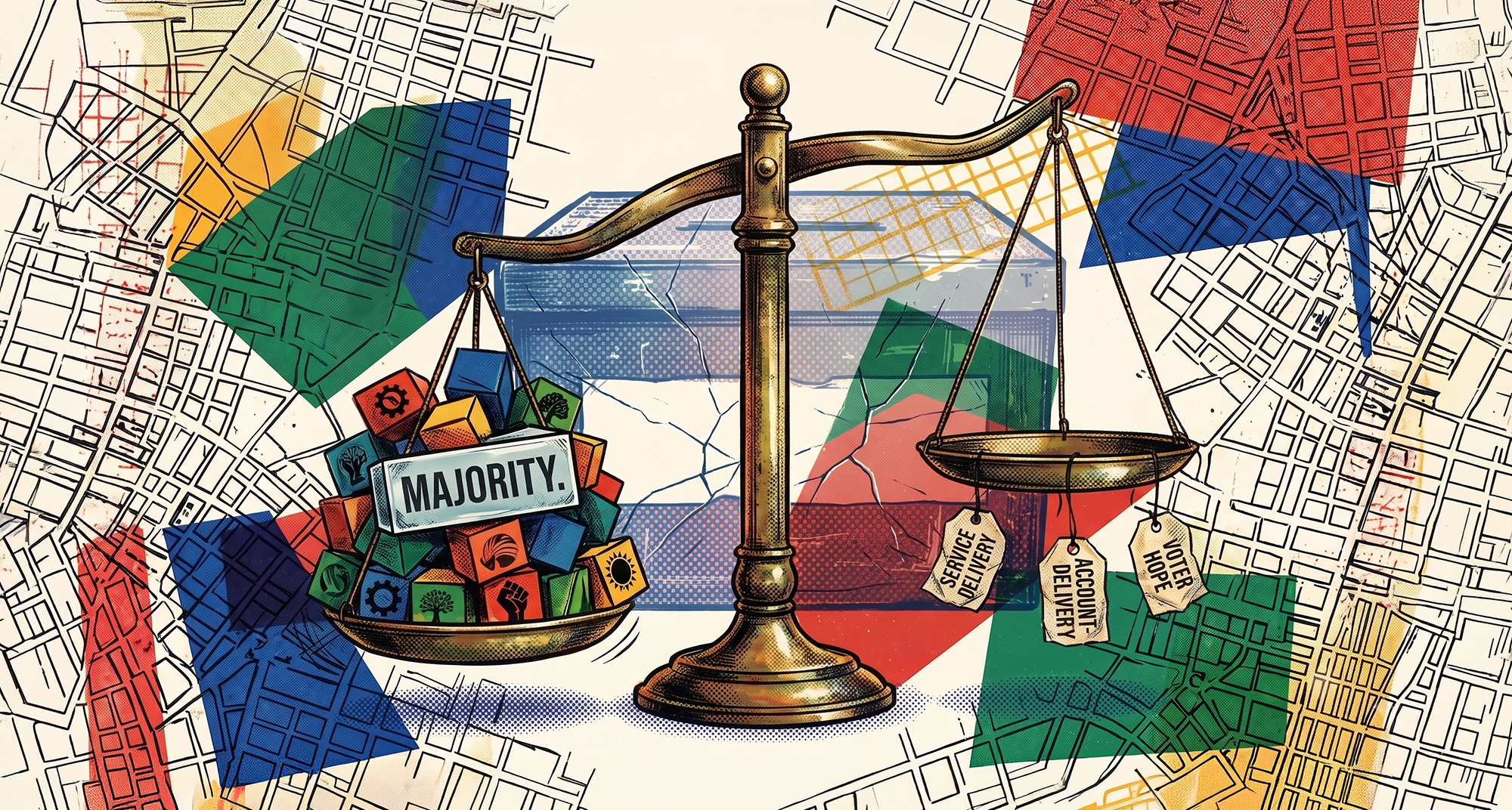
 In the local government elections, voters will have to factor in coalition possibilities. (Graphic: Kevin Momberg)
Most of you want to know the same thing at the moment: how to check the 2026 local election results for your municipality and ward, and where the metros stand.
We asked readers what they wanted to know about the local election results and more than 280 of you have written in so far.
Where can I check the results for my ward?
A word of caution: counting is still under way and the figures change as each voting district reports, so check again over the next few days.
We’ve built a live results dashboard so you can follow the count in your own council and ward as the IEC releases results. Here’s how to use it:
Open our local election results dashboard.
Under “Check your municipality”, type your town, suburb or municipality (for example Hermanus, Soweto or Polokwane), or tap “Use my location”.
Choose your council. You’ll see each party’s share of the vote so far and how much of the count is complete.
For your ward, open the ward list on your council’s page and pick your ward number. Don’t know it? Use the IEC’s ward lookup.
Use the tabs to switch between Results, Turnout, Change since 2021 and Hung councils.
Once your council’s count is complete and no party has a majority, tap “Build a coalition” to see which combinations of parties could govern.
The figures are provisional until the IEC declares the final results.
Live results for Johannesburg, Cape Town, Tshwane and the other metros
You asked most about Johannesburg, followed by Nelson Mandela Bay, Cape Town, Tshwane, Ekurhuleni and Mangaung. We’ve added direct links to each metro’s live results on our election dashboard, which updates as the Electoral Commission of South Africa (IEC) releases results:
Which councils are hung?
See the live list of hung councils so far, or by province, e.g. Gauteng and KwaZulu-Natal. The “Change since 2021” tab compares them with the last election.
When will the final local election results be declared?
The results become official only once the IEC declares them. All indications are that counting will be complete by Saturday 7 November. The final declaration ceremony is currently scheduled for Sunday evening 8 November. You can also follow results on the IEC’s official results page.
Marianne Merten explains what happens next, from coalition talks to the first council meeting.
How is my mayor chosen?
Mayors aren’t elected by voters but by the new councillors, who will choose one at the council’s first meeting.
The new council’s first meeting is called by the municipal manager. Councillors first elect a speaker: if only one person is nominated, they’re elected; if more than one is nominated, there’s a secret ballot. The speaker then presides over the election of the executive mayor, using the same procedure. This has to happen within 14 days of the IEC declaring the results.
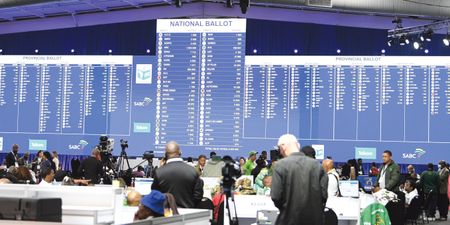
In a hung council, the mayor is whoever can win enough councillors’ votes, which is where coalition deals come in. Want to see which coalitions could reach a majority in your council? Open your council on our results page and use “Build a coalition” once its count is complete.
Subscribe to Ferial Haffajee’s Democracy local newsletter where she will answer more of your questions. You can send more questions here. DM
This article was updated on 6 November 2026 to answer new reader questions about hung councils, a step-by-step guide to our results dashboard and how mayors are chosen.
Comments
Scroll down to load comments...