



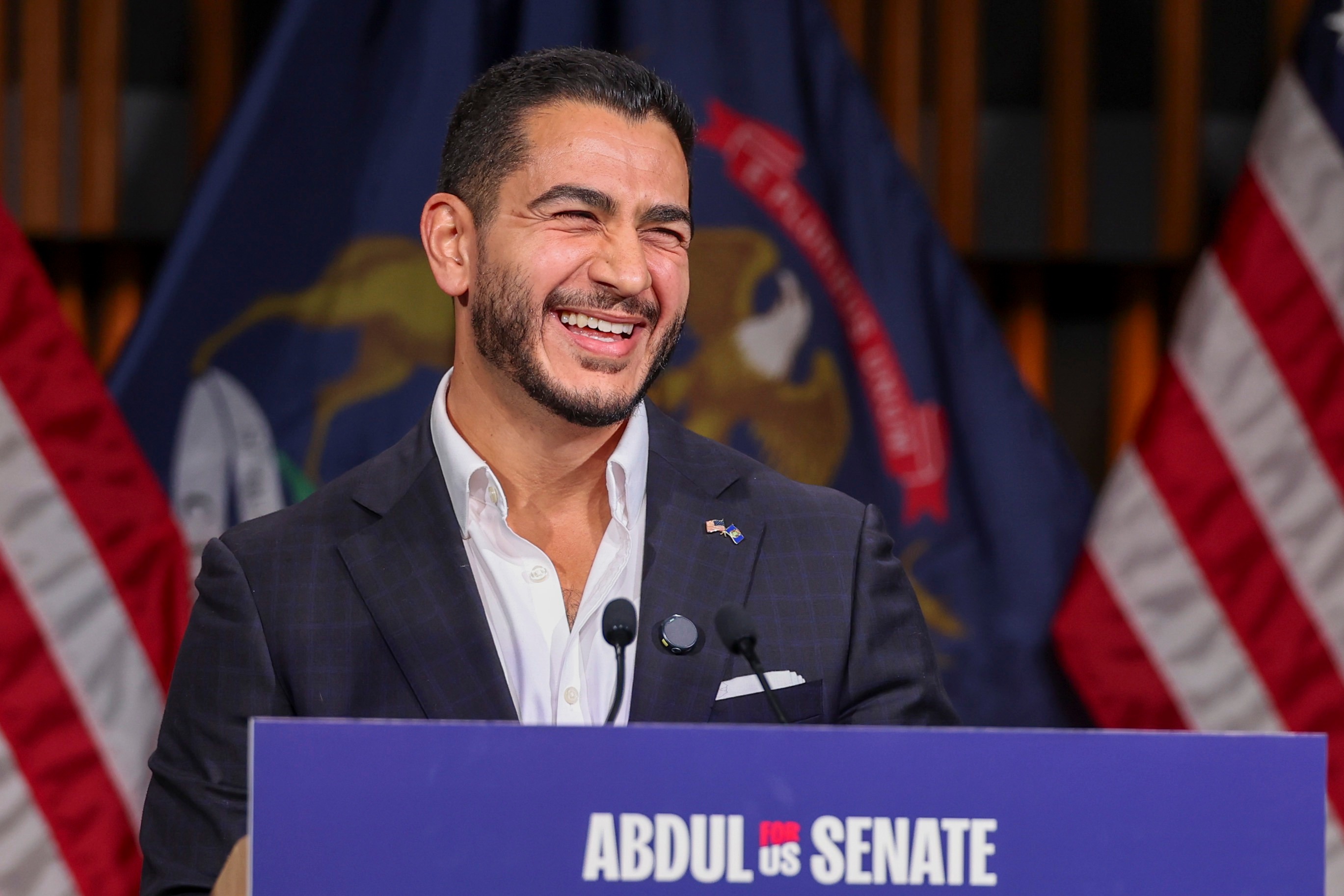
 US Senator-elect Abdul El-Sayed speaks during Michigan Democrats' election night watch party in Detroit, Michigan, USA, 04 November 2026. The 2026 midterm elections will determine congressional control and shape the final two years of President Donald Trump's term. EPA/SARAH YENESEL
El-Sayed’s victory in the closely contested election marked a breakthrough for the Democratic Party’s progressive wing and denied Republicans a chance to flip the seat of retiring Democratic Senator Gary Peters.
El-Sayed, 42, a former public health official, focused on lowering costs for working families and reducing corporate influence in politics. His platform included Medicare for All, a government-funded universal healthcare program championed by progressives in his party.
Republicans held a 53-47 Senate majority going into Tuesday’s midterm elections, with Democrats needing a net gain of four seats to take control.
His opponent Mike Rogers, 63, a former congressman and FBI agent, entered the race with strong backing from Trump and national Republicans and had sought to cast El-Sayed as a radical candidate sympathetic to Islamic extremism through alleged ties to the Muslim Brotherhood, claims that El-Sayed denies and that remain unsupported by evidence. Democrats said the attacks on El-Sayed relied on Islamophobic tropes.
Rogers also devoted significant effort to courting Jewish voters who may have been uneasy with El-Sayed's opposition to US military aid for Israel and his characterization of Israel's actions in Gaza as genocide.
But Rogers struggled to overcome voter concerns about the economy and Trump's low ratings. In the closing weeks of the race, he broke with the president on the war in Iran and the US trade dispute with Canada, arguing that ending both was necessary to help bring down costs for businesses and consumers.
(Reporting by Nathan Layne; Editing by Howard Goller)
Comments
Scroll down to load comments...