



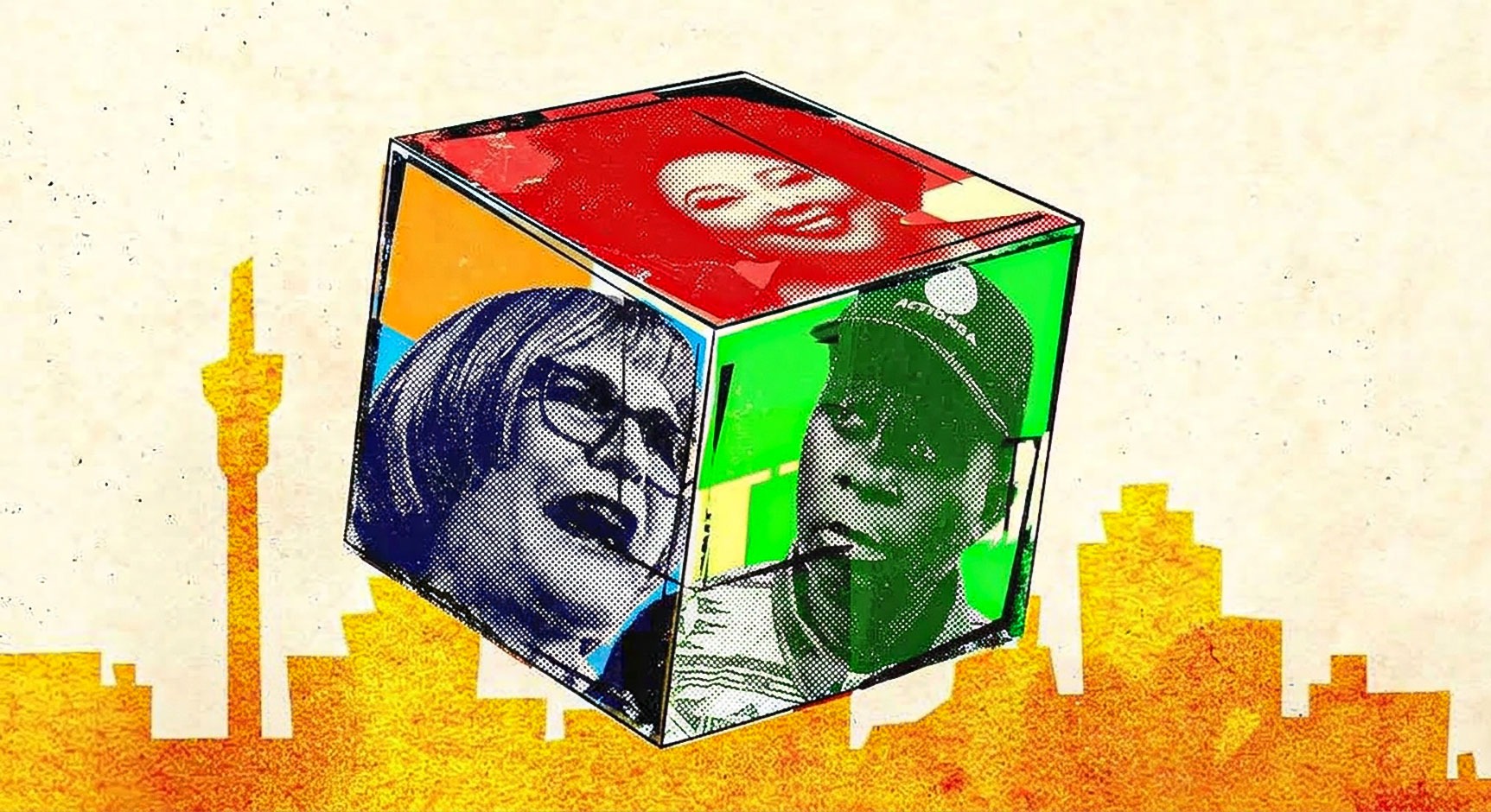
 Illustrative image: DA Joburg mayoral candidate Helen Zille. (Photo: Per-Anders Pettersson / Getty Images) | EFF Joburg mayoral candidate Dr Tlaleng Mofokeng. (Photo: Supplied / Dr Tlaleng Mofokeng) | ActionSA mayoral candidate Herman Mashaba. (Photo: Bheki Simelane) |
Johannesburg is the fulcrum that could balance – or topple – the house of cards that is coalition politics in local government. Make no mistake, the coalition that will emerge in Johannesburg will not be independent of the ones in Tshwane, Nelson Mandela Bay, Mogale City or Rustenburg.
The ANC has confirmed that coalition negotiations will be run from the office of party Secretary-General Fikile Mbalula, while the DA’s federal executive has the final say on any coalition agreements involving the party.
If the Johannesburg council can assemble a stable coalition over the next few weeks, the hope of stability will rise across the other metros. The threats of provincial administration from Premier Panyaza Lesufi and of withholding grants from Finance Minister Enoch Godongwana will recede as well.
What are the chances of a stable coalition being formed in Johannesburg? If the six Johannesburg polls conducted over the last four months are any indication, the chances are fair to slim without a change in the attitude of political parties big and small – unless a grand coalition of the ANC and the DA clears the board.
The bar charts below summarise the results of six polls held between mid-June and mid-October. There have been two polls from Ipsos, two from The Common Sense/Social Research Foundation, and one each from News24/Sabi and eNCA/Markdata.
Before reviewing the numbers, it’s important to remember that the four pollsters used different survey sizes and methodologies, including the questions around voter preferences. We will come back to this soon.
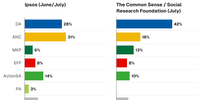
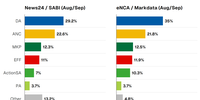
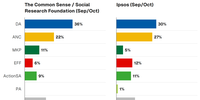
The DA came first in every poll except for the first Ipsos poll. In three of the polls (both The Common Sense/Social Research Foundation polls and the eNCA/Markdata poll), the DA had at least 35% of respondents’ support, and the gap between the DA and the ANC was at least 13 percentage points.
The DA polled at only 29.2% in the News24/Sabi poll, but when the poll allocated the 14% of respondents who identified as non-DA voters but who said there was a “fair chance” of them voting for the DA, the party’s vote rose to 39.6%, and the ANC’s fell to 19.7%.
These numbers are not very different from The Common Sense/Social Research Foundation’s first poll, by far the most favourable for the DA. There are two lessons here: first, how you ask a question matters if you want to understand voting intent, and second, the squeezing of opposition parties could be the difference between a DA in government and one that remains in opposition.
There are five large parties in Johannesburg: the DA, ANC, MK, EFF and ActionSA. The polls have them winning between 84% and 91% of the vote. Only the DA or the ANC can head a coalition.
The DA refuses to work with the EFF and MK; the party is also not fond of the PA. That leaves the ANC or ActionSA as coalition partners.
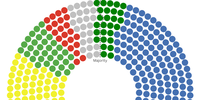
If the DA does as well on Wednesday as in the first Common Sense poll, the party should have no problem forming a coalition with either party. The chart below shows how a DA-ActionSA coalition could achieve a majority.
If the election results are closer to the numbers in the eNCA/Markdata poll, the DA’s job of forming a coalition without the ANC falls pretty much to zero. The chart below shows that a DA-ActionSA coalition would need the seats of every small party just to make it halfway.
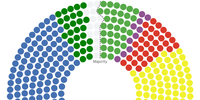
Of course, if the results look anything like either of the Ipsos polls, then the DA has no path to government without the ANC – and any coalition between the top two parties would be on more equal terms than previous scenarios.
The ANC is the party with a full range of options for coalition partners under the latest Ipsos polling conditions. With ActionSA, an ANC-EFF coalition would need just one more seat for a majority.
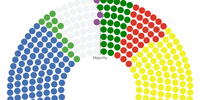
For the DA, any share of the vote above 40% should put it in a commanding position to form a coalition. Anything below 35% and the party would prefer to remain in opposition unless it can form a coalition with the ANC as the senior partner. Any share of the vote within this range could still mean victory for the DA, if it has the appetite for another round of coalition politics. DM
Comments
Scroll down to load comments...