



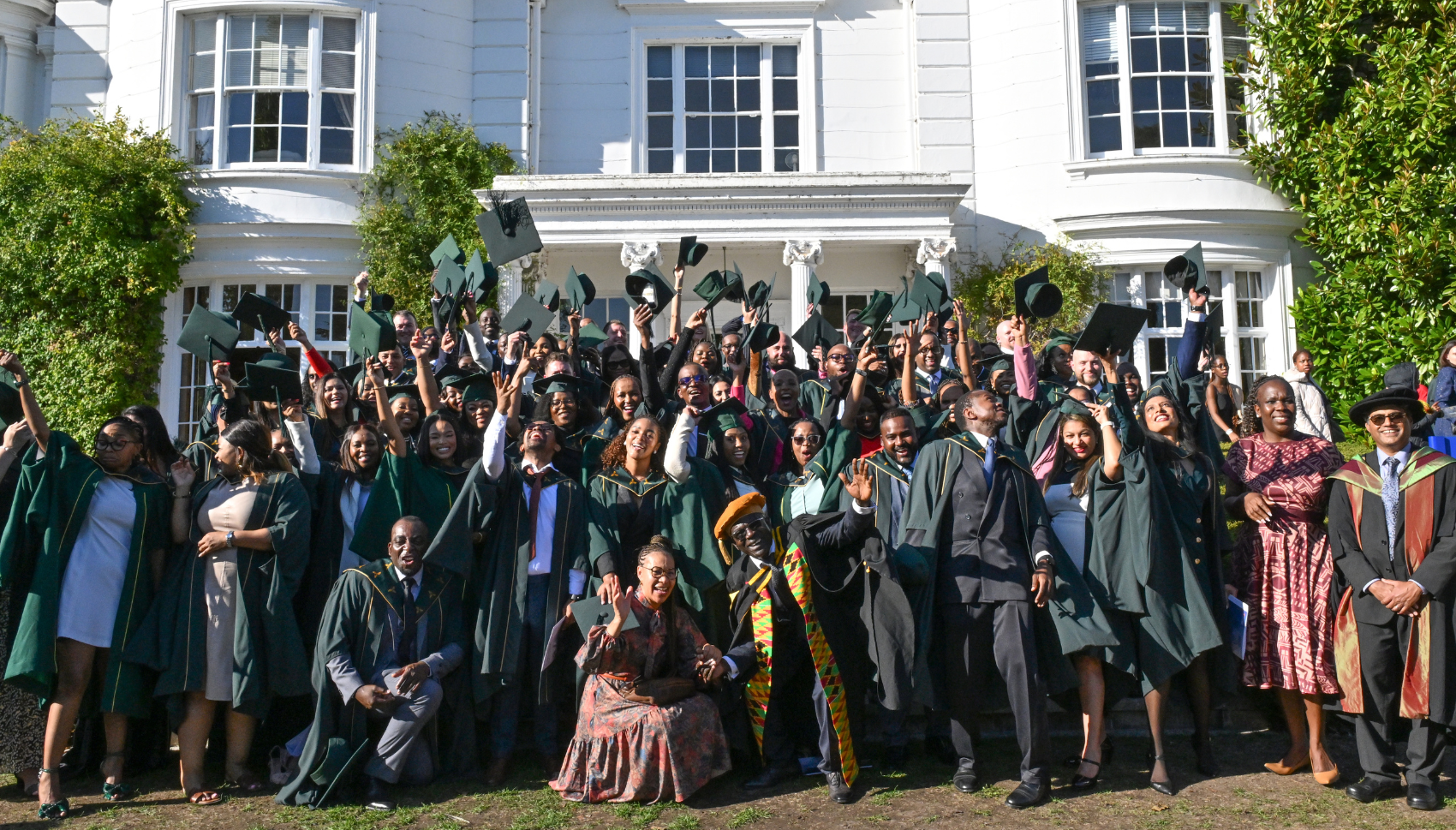
 Henley Business School’s graduates
Henley Business School, part of the University of Reading, has reached its highest position yet in the Financial Times Executive MBA ranking. Its Global Executive MBA is 32nd in the world in 2026, first in South Africa and third in Africa.
The result follows a 19-place rise in 2025, so the programme has climbed 20 places in two years. Participants this year gave it an average satisfaction score of 9.42 out of 10.
Henley is one of only two business schools in South Africa to meet the criteria for this year’s ranking. It is also the only Executive MBA delivered in South Africa with dual accreditation, which means the degree is awarded in both the UK and South Africa. Leaders complete a demanding international qualification over 24 months while their careers, organisations and families remain anchored at home.
Something few business schools in Africa can offer
Jon Foster-Pedley, Dean and Director of Henley Business School Africa and Associate Pro Vice-Chancellor for Global Engagement (Sub-Saharan Africa) at the University of Reading, says the ranking reflects what sets the programme apart from others in Africa: the reach of its international operations.
‘Henley and the University of Reading work across the UK and Europe, in China and throughout Africa. That gives our participants something few business schools on this continent can offer. They learn from the Global North and the Global South and can explore how the same commercial problem is handled in Shanghai, in London and in Johannesburg,’ he says.
Foster-Pedley says the main thing participants gain is better judgement, and that it comes from having their thinking challenged by people who run large international businesses.
The Financial Times figures support this. Henley rose two places to sixth in the world for the work experience of its participants and kept seventh place for international course experience.
Launched in Africa in 2024, the Global Executive MBA brings South African, UK, Nordic and European cohorts together through five international residential visits over 24 months. Participants combine academic study with practical work in their own organisations, so what they learn applies at home and abroad.
The measures that matter
Henley also rose eight places in the ranking to 19th in the world for overall satisfaction and held first place in the UK and South Africa for the third year running.
‘Alumni tell us again and again that the programme has changed their networks, their confidence, their careers and their outlook,’ says Lyneth Zungu, Director of MBA Programmes at Henley Africa.
Grace Harding, chief executive of Ocean Basket and a current Global Executive MBA participant, says the programme has changed how she runs a complex international supply chain, a franchise network and thousands of staff. ‘Since starting this programme, I’ve been the best CEO of my career,’ she says.
‘Rankings are not the only measure of a business school, but they set a reliable standard,’ adds Zungu. ‘To take part, schools must publish verified data on outcomes, salaries and the make-up of each class. Taken together, these rankings show that Henley’s Global Executive MBA holds up on the measures that matter: student outcomes, academic quality, teaching, responsible leadership and international reputation.’
A commitment to bringing different perspectives into the classroom
Guided by its mission to build the people who build the businesses that build Africa, Henley has chosen to create a raft of new scholarships that are designed to broaden participation in this prestigious programme. The business school already runs one of the largest, privately funded scholarship schemes in Africa, as part of its commitment to widening access to quality teaching and learning.
The new Global Executive MBA scholarships, launched this year, focus on three catalytic sectors: women in executive leadership, creative and cultural economies, and sustainability and responsible leadership.
‘Real, systemic progress begins long before policies are drafted or balance sheets are balanced; it happens at the point of origin, determined entirely by who is present, participating, and shaping the agenda when pivotal decisions are made,’ says Foster-Pedley.
The 2026 Women in Leadership scholarship has been awarded to Daisy Thobakgale, a standout technology strategist and enterprise transformation leader. Daisy is a senior project manager at Zimele Technologies and has guided large institutions through complex digital transformations.
She is a candid, uncompromising advocate for structural gender equity in corporate spaces, observing: ‘Never have organisations spoken more confidently about equality, yet few conversations remain as uncomfortable as naming inequality itself.’
The scholarship for Sustainability and Responsible Management has been awarded to pioneering climate advocate and institutional strategist David Le Page.
David is the co-founder and director of Fossil Free South Africa, a Cape Town-based non-profit supporting a just transition away from the multi-dimensional threat of fossil fuels and towards a thriving and equitable economy that's no longer based on exploitation of people and planet.
In the Creative and Cultural Industries category, two partial scholarships were awarded to Richard Kingon, a distinguished classical musician, ensemble conductor, music educator, and Yamaha Artist, and Shane Maja, CEO of the South African State Theatre (SAST) and a cultural policy strategist with over two decades of executive experience across the performing arts and screen sectors.
Because of the strong field of scholarship candidates, partial scholarships have been awarded to several additional candidates in each of the three fields.
The leaders Africa needs right now
Foster-Pedley said that the strong group of scholarship recipients represents precisely the kind of bold, innovative, and courageous leadership the continent needs right now.
‘By bringing innovators from the creative arts, climate justice, and technological transformation into our Global MBA, we are not just broadening the conversation in the classroom; we are building the critical capabilities of the people who will build the businesses that build Africa.’ DM
The next intake of Henley’s Global Executive MBA in South Africa is in October 2027, and places are limited. For more information, visit Henley Business School Africa. Applications for next year’s scholarship will open in March 2027. Follow Henley Africa on social media and watch for updates.