



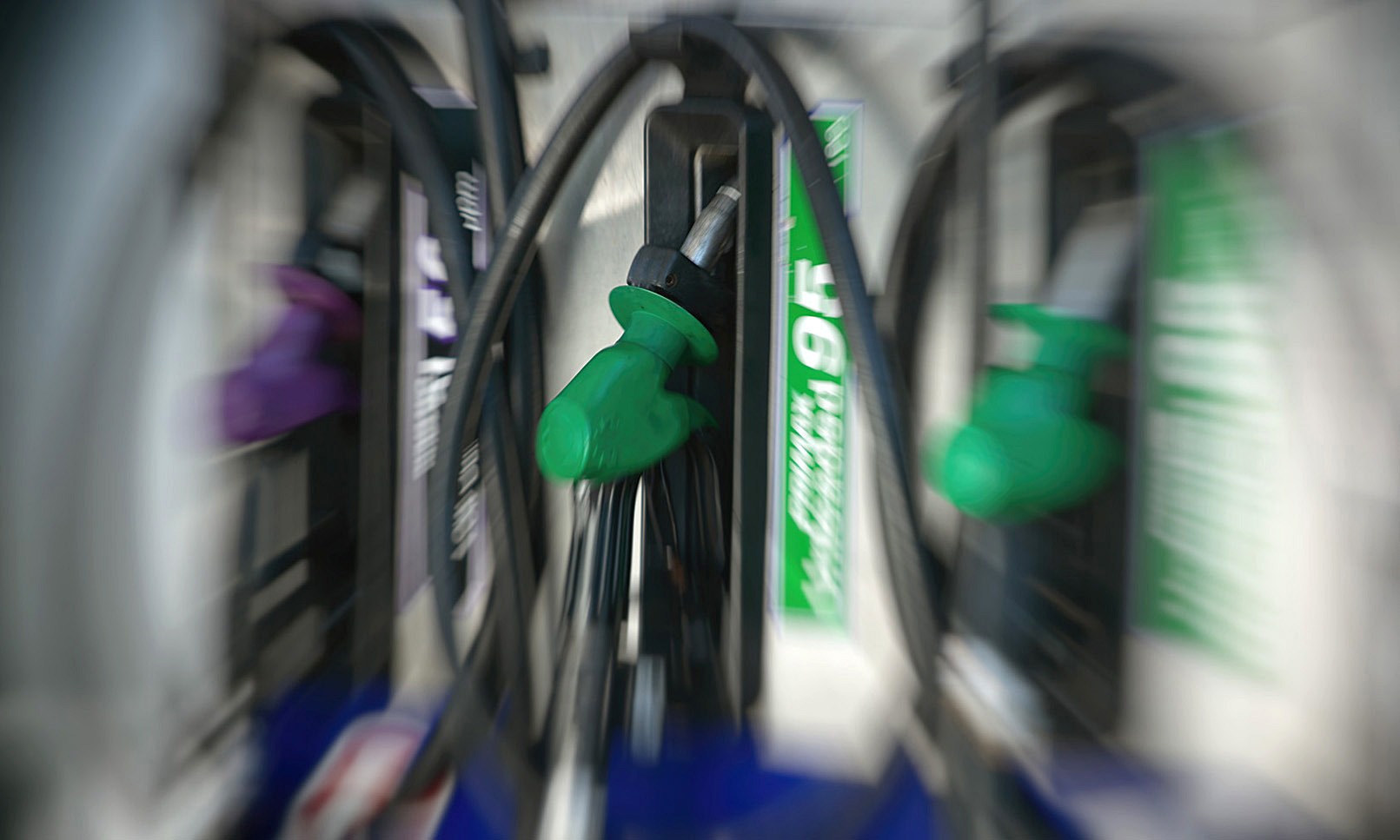
 The South African petrol price was hiked to record of more than R30 per litre. (Photo: Gallo Images / Misha Jordaan)
Although October’s rise in fuel prices has not reflected in South Africa’s food prices yet, these record high fuel prices have squeezed household budgets, forcing transport costs to compete with access to food.
Maverick Citizen has been tracking the prices of 14 basic food items that can be bought with the R370 Social Relief of Distress (SRD) grant. Between September and October, Maverick Citizen’s food basket increased by 0.5%.
The basket has increased by R2 from R388.86 to R390.86, owing to a R1 increase in sugar beans and beef stock. It remains R20.86 more expensive than the R370 SRD grant value.
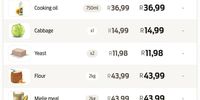
While the Pietermaritzburg Economic Justice and Dignity (PMBEJD) Group’s household affordability index for October reports that the average cost of the Household Food Basket for a family of seven (which is the average size of a low-income family in South Africa) is now R5,512.53. This is a 0.4% or R24 increase from September.
The Household Food Basket is not nutritionally complete, but is rather a basket of food items which women in low-income families try to secure each month for their families considering affordability constraints. According to the report, to feed a family of seven a basic nutritious diet for the month of October would cost R6,692.25.
In this same month fuel reached record high prices, with petrol rising to above R30 a litre and diesel to more than R35 due to oil price hikes linked to the US war on Iran.
Squeezing the budget
According to economist Haroon Bhorat, South African households typically spend about 14% of their expenditure basket on transport. However, this statistic does not account for lower-income households who commute by taxi or bus and spend an even higher share of their income on transport.
This year South Africa has seen higher taxi fares, an increase in travel by taxi and fewer people using their own vehicles, said senior researcher at the Institute for Economic Justice (IEJ) Mzwanele Ntshwanti.
When the cost of transport increases, it competes with the money households have for food, said PMBEJD programme coordinator Mervyn Abrahams. Expenses such as transport and electricity are typically prioritised before food, so when South Africans increase their spending on transport they are forced to spend less on food, he added.
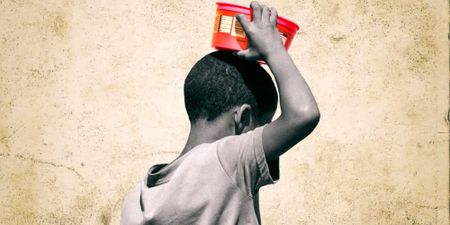
If children particularly don’t have access to nutritious food, because it is unaffordable, it could create a chain reaction, Abrahams said. These children would be more likely to be stunted and need medical care growing up.
These children would not be able to access a proper education and would most likely enter the workforce as labourers earning low wages and, in turn, wouldn’t be able to provide their children with sufficient access to nutritious food.
“South Africa’s future development is built upon the plate of food that children consume today,” he said.
South Africa needs relief from high fuel prices
The IEJ has criticised South Africa’s heavy reliance on imported fuel (a significant amount imported from the Gulf) and has called for the country to revive its oil-refining capacity.
According to Ntshwanti, if South Africa were able to import crude oil and refine it domestically, this could result in lower fuel prices.
The IEJ has also called for South Africa to ramp up its use of renewable energy sources, such as incentivising the shift towards electric public transport, including electric vehicle taxis, he said.

On 21 October, in his Medium-Term Budget Policy Statement (MTBPS) speech, Finance Minister Enoch Godongwana announced the reduction of fuel levies from 4 November. The diesel levy would drop by R3 per litre and petrol by R1.50 per litre.
This should bring lower fuel prices and temporary relief to South Africans, Bhorat said. Abrahams also maintains that the reduction is a positive development, since the price of diesel plays a big role in farming, the food value chain, the logistics chain and ultimately in food price inflation.
Savings from social grants
According to the MTBPS, the SRD grant will be extended for another year, although it mentions no increase of the grant value.
It is no surprise that the value has not increased, said IEJ junior basic income researcher Siyanda Baduza. The grant, which was said to be temporary, has been extended year after year for the past six years, with only one increase, in 2024, he added.
According to Baduza, the grant is of unjustifiable value and not connected to any objective determinant of need.
The minister also announced in his MTBPS speech that R13-billion in savings had been identified over the medium term from reducing fraud in social grants. These savings had been identified through enhanced biometric enrolment and beneficiary verification.
About R6-billion of this comes from underspending on the SRD grant, Baduza said. The main reason for the underspending is that the gap between the number of approved SRD grant recipients and the number recipients actually paid every month has been widening, he explained.
About 800,000 beneficiaries are approved but do not get paid, he said. This was mainly due to last year’s introduction of biometric verification processes which approved beneficiaries must complete.

SRD recipients who do not have access to a smartphone with a good-quality camera and a smart ID card cannot complete this verification process. When people cannot complete the verification their grants are eventually cancelled and form part of Treasury’s savings, Baduza said.
According to Baduza, these savings are not being driven by responsible savings mechanisms, but rather by exclusion. DM
Comments
Scroll down to load comments...