


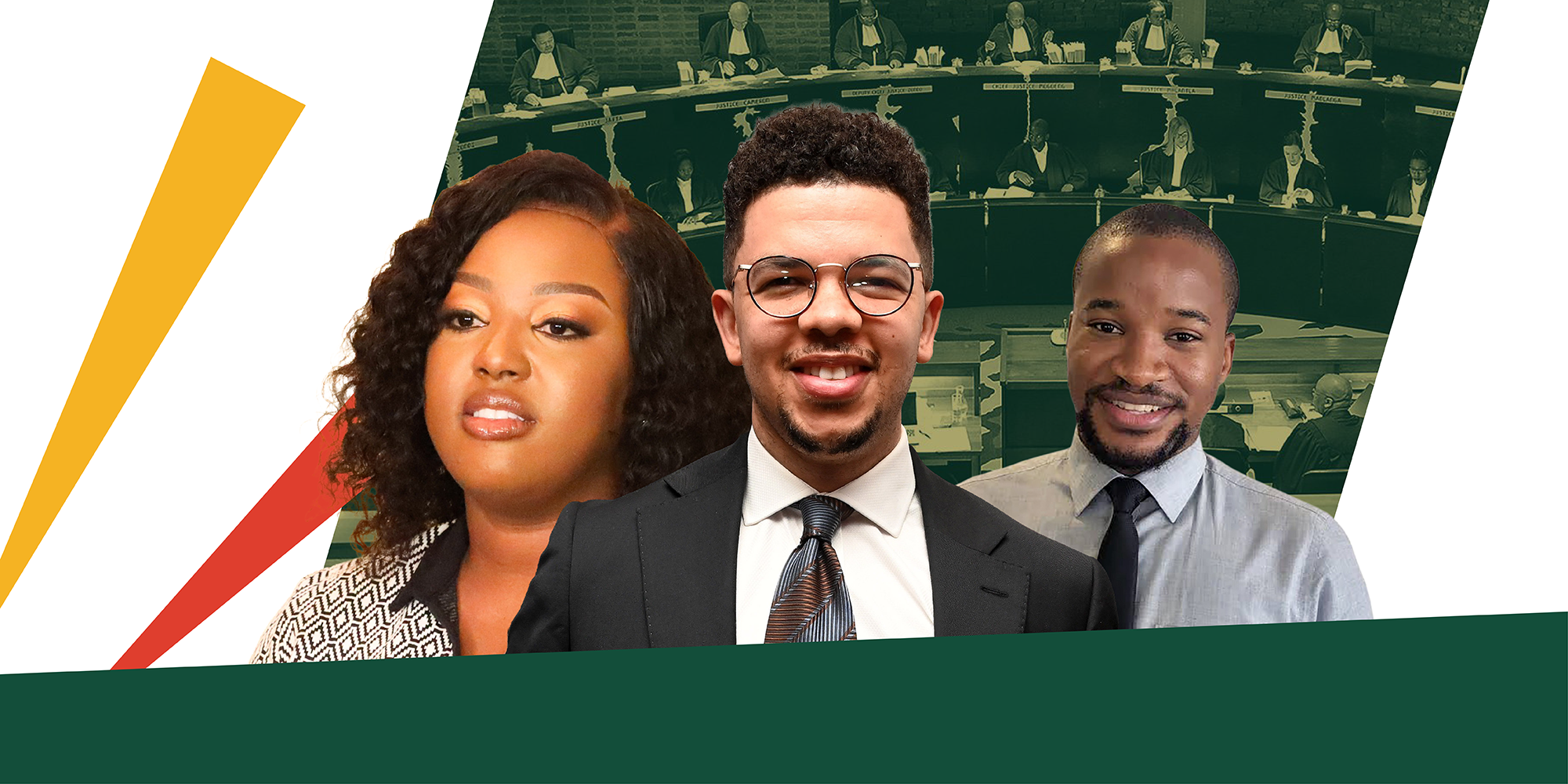
 From left: Mbali Ntuli (Photo: Luba Lesolle / Gallo Images), Sizwe Mpofu-Walsh (Photo: Oupa Bopape / Gallo Images) and Mbekezeli Benjamin (Photo: Facebook) (Graphic: Kevin Momberg).
Equal on paper, unequal in practice
South Africa’s Constitution promised more than the vote. It set out a vision of dignity and equality in daily life. Thirty years on, Mbali Ntuli, founder and CEO of the civic organisation Ground Work Collective, said political freedom was real, but people’s ability to build a life remained unequal.
“We’ve achieved something extraordinary in terms of political freedom,” said Ntuli.
South Africans can vote, organise, speak freely and challenge the government. Rights are equal on paper, but opportunities are not: birthplace, family income, school and community shape people’s prospects.
“We’ve allowed economic circumstances to place conditions on the enjoyment of that freedom,” she said.

That divide, Ntuli said, lay behind much of the frustration with democracy. A family without water or a child in a poorly resourced school was confronting the gap between constitutional promise and daily life. The frustration was legitimate, she said, but the Constitution was not a government programme: it established the principles and obligations through which the government was meant to work.
Having served as a councillor and a member of a provincial legislature, Ntuli said service failures often came down to political leadership, administrative competence, budgets and accountability. She did not blame the Constitution alone, nor did she argue that the settlement should be beyond criticism.
Apartheid had entrenched inequality in land, education and economic opportunity; democratic governments had also had decades to address those conditions.
“We must be able to hold two truths simultaneously,” she said.
Ntuli considered it fair to question whether the political transition had left economic power too concentrated. But she rejected the claim that the Constitution made land reform impossible: Section 25 provided for reform, restitution and equitable access to land. Weak implementation, corruption and inadequate support had also impeded progress.
For Ntuli, rights became meaningful when people could use them to shape their lives. Citizens needed accessible ways to understand budgets, identify who was responsible for services and demand answers. She called for stronger accountability between voters and their representatives, including electoral reform.
The next generation, she said, should not have to choose between defending the Constitution and demanding a better society.
“Those two things should be inseparable.”
The Constitution points the way, but are we doing the work?
“The Constitution is a piece of paper,” said Mbekezeli Benjamin, research and advocacy officer at Judges Matter, which focuses on bringing accountability and transparency to the judiciary. Its promises, he argued, depended on people and institutions acting on them.
Thirty years into democracy, Benjamin believes the Constitution still points towards a more equal society, and the failure lies in the systems meant to realise that promise, not in the text itself.
Poverty and inequality persist, unemployment is widespread, and land restitution has been an “abject failure”, he said. For many, the right to dignity, housing or healthcare has not translated into security or opportunity.
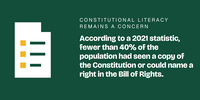
Yet Benjamin cautions against reading that unfinished work as proof that nothing has changed. Compared with the apartheid era, South Africans can vote, protest and openly criticise those in power with far less fear of reprisal, though activists still face threats and violence.
The Constitution has also helped secure rights such as same-sex adoption and same-sex marriage, freedoms once far from guaranteed. He points to social grants, school meals and wider access to education, water and electricity as real gains.
“It’s not the kind of freedom that would have been delivered without the Constitution,” he said.

To show how corruption can undermine rights, Benjamin asks us to imagine someone waiting all day at a clinic for medicine while the money meant to buy it has been stolen.
“That obviously will diminish my sense that I have a right to healthcare,” he said. That gap between promise and experience fuels disillusionment, especially as political leaders grow more distant from communities.
Benjamin’s answer is not to abandon democracy, but to practise it beyond election day: choose leaders carefully, know what each sphere of government is responsible for, and stay engaged.
He cites the Phala Phala matter, where the Constitutional Court found Parliament had acted irrationally in its oversight role and sent the report back to be reconsidered. For Benjamin, that kind of accountability is a safeguard South Africans should not take for granted.
“Democracy is hard to maintain. It requires a lot of work. We can’t just relax and hope that things will come to us. We must be active,” he said.
The Constitution’s promise remains unfulfilled — and open to question
Sizwe Mpofu-Walsh, an academic and host of the SMWX podcast, says South Africa must protect what the Constitution has achieved without treating its current form as untouchable.
“The more time goes on, the more anticlimactic and disappointing the constitutional project appears,” Mpofu-Walsh said.
The gap between where South Africa was and where its drafters might have expected it to be, he said, was “way, way below the mark”.

Mpofu-Walsh does not blame the Constitution alone. Government failures, the influence of economic elites and the inability to deliver basic services all help explain why its promises remain unfulfilled. But, he argued, the scale of poverty, inequality and misgovernance was too great to leave the Constitution itself beyond scrutiny.
That scrutiny must account for both what the Constitution has made possible and what it has not.
“The Constitution has made very important gains, especially around individual liberty, especially around workers’ rights, gender equality, environmental rights. But we just have not seen the same progress when it comes to economic equality, racial justice, and a state that delivers,” said Mpofu-Walsh.
His concern is not only the rights and values the Constitution sets out, but how it distributes power and responsibility across the state – and whether that design is working.
Mpofu-Walsh said that debates around the Constitution often focused on the Bill of Rights and founding principles, overlooking the Constitution’s role in shaping how government operated.
The Constitution divided responsibilities among national, provincial and local government, with some functions shared across tiers. Mpofu-Walsh argued that this could blur who was accountable when services failed or decisions were not carried out.
“We have to think deeper about how we secure accountability, and the Constitution can’t be off the table in that process,” he said.
Mpofu-Walsh was clear that rethinking the Constitution should not mean taking its hard-won protections for granted. The right to vote, marriage equality and the wider guarantees of the Bill of Rights remained profound gains. But protecting those gains, he argued, did not require treating the document as finished – or untouchable.
“We shouldn’t cling to a particular version of the Constitution. What really matters is the overall constitutional project,” he said. DM

This story is part of a series marking 30 years since the signing of the Constitution. The series has been made possible, in part, by the support of the Friedrich Naumann Foundation.

Comments
Scroll down to load comments...